GongzhengGongzhengGongzhengGongzheng GongzhengGongzhengGongzhengGongzheng GongzhengGongzhengGongzhengGongzheng GongzhengGongzhengGongzhengGongzheng

Quick Release Valves For Commercial Vehicles Wholesale

Brake Response Components

Quick Release Valves For Commercial Vehicles

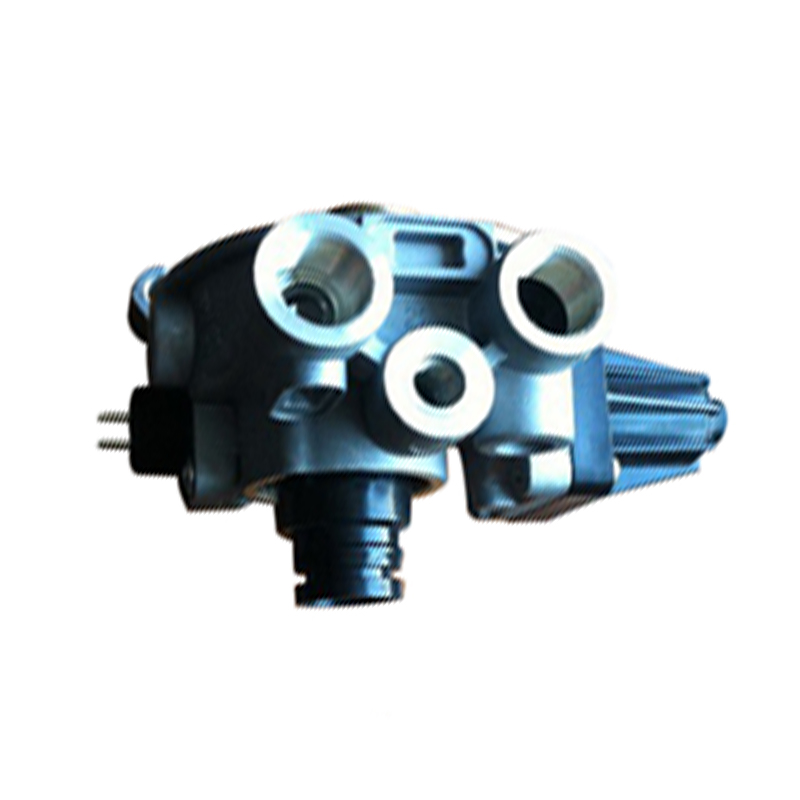
Quick release valves for truck and trailer axles. They give front axle and parking circuit brake chambers a fast, local exhaust path, shortening release time compared with venting all the way back through the cab.

  • Standard two-port and three-port delivery configurations
  • Exhaust cover and diaphragm kits supplied separately
  • Matched to common front axle and parking circuit layouts
2 – 3Delivery ports per valve
13 barMaximum supply pressure
100%Diaphragm lift and seal tested before shipment
48 HPort layout reply within two working days
Product Overview

What Is a Quick Release Valve for Commercial Vehicles?

Definition

A quick release valve is a simple pneumatic valve mounted close to a pair of brake chambers, most often on a front axle, that lets air fill the chambers through a normal supply line but vents them locally through a large exhaust port when the pedal is released. By moving the exhaust point from the driver's cab to the axle, it removes the long return path that would otherwise slow brake release at the front wheels.

Air travelling to the front axle brake chambers of a truck has a reasonably direct route from the pedal valve, but the return journey when the brakes are released still has to pass back through the same length of pipe unless something shortens it. A quick release valve solves this the opposite way to a relay valve: rather than amplifying a small signal into a large supply, it simply gives the exhausted air a short, wide path to atmosphere right at the axle, so the front brakes let go as fast as they came on.

A Simple Diaphragm, Not an Amplifier

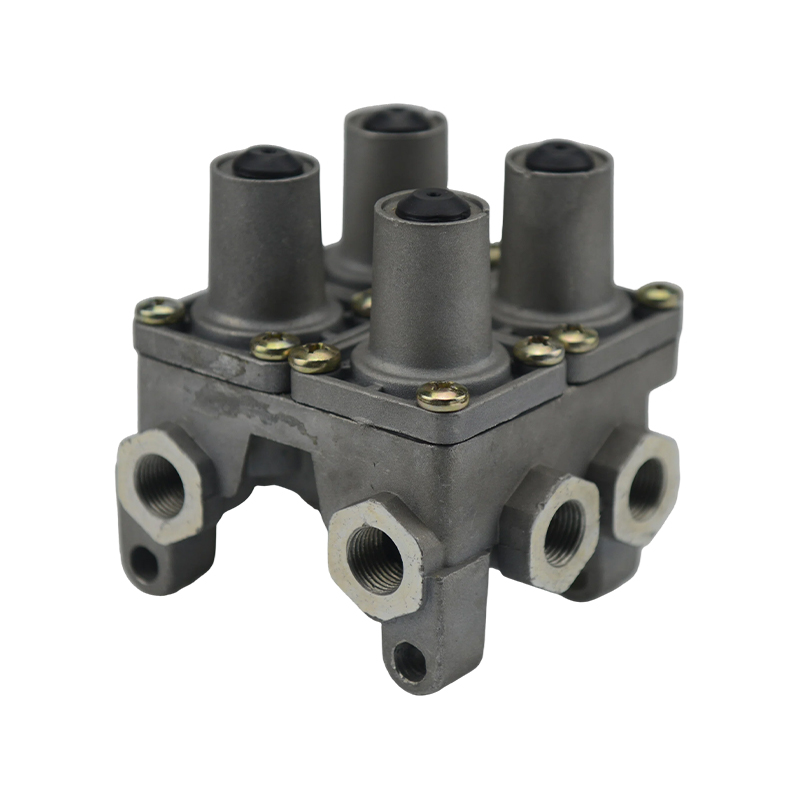
Unlike a relay valve, a quick release valve has no reservoir connection of its own and does no amplification. Supply air arrives at a single inlet port, lifts a rubber diaphragm off the exhaust seat, and passes through to two delivery ports feeding the left and right brake chambers. When the pedal is released and supply pressure drops, the diaphragm reverses, closing the inlet path and opening a large exhaust port, so both chambers vent together, close to the axle rather than back through the cab.

Where It Sits in the Circuit

Quick release valves are most commonly found on the front axle of a rigid truck or tractor unit, since the front brake line is often longer relative to chamber size than the rear circuit, which typically uses a relay valve instead. Some vehicles also use a quick release valve on other circuits, such as a parking brake delivery line feeding chambers on both sides of an axle, wherever a fast, simultaneous release from a single supply line is useful.

Balanced Delivery to Both Sides

Because a single diaphragm serves both delivery ports, a quick release valve naturally balances pressure to the two chambers it feeds, useful for keeping left and right brake application even. If one delivery line develops a leak, however, the valve will still try to supply both ports from the same source, so a leak on one side can affect pressure on the other, which is a useful diagnostic clue when brakes seem to apply unevenly.

Diaphragm Wear and Common Faults

The diaphragm is the only moving part, and it ages from heat, ozone exposure and oil contamination in the air supply, eventually cracking, hardening or losing its seal. A quick release valve with a failing diaphragm typically either leaks constantly from the exhaust, or delivers air slowly because the diaphragm no longer lifts cleanly off its seat, both of which are simple, low-cost diaphragm replacements rather than a sign of a bigger fault.

Not to Be Confused With a Relay Valve

Because both valves are mounted at the axle and both improve brake response time, they are sometimes mixed up. A relay valve has its own reservoir connection and amplifies a small control signal into high flow. A quick release valve has no reservoir connection of its own and simply passes supply air through, exhausting it quickly on release. Fitting one in place of the other will not work, since the port functions are different.

Matching a Replacement Valve

Match the number of delivery ports, the port thread size, the exhaust cover style and the mounting bracket. Quick release valves are mechanically simple, so most failures are diaphragm related, but the housing size and thread must still match the original for the lines to reconnect without adapters.

  • Fit point: close to a pair of brake chambers, often the front axle
  • Function: vents both chambers quickly and locally on release
  • Internal part: single rubber diaphragm
  • Ports: one supply, two delivery, one large exhaust
  • Not an amplifier: no reservoir connection of its own
  • Service parts: diaphragm kit, exhaust cover, seals

Technical Data

Quick Release Valve Model Range

Standard configurations below. Custom port threads and mounting patterns can be produced to your drawing.

Table 1 — Genuine gzbrake.com Ref NO. and OE cross-reference data for representative European Quick Release Valve products.

Ref NO.Product NameApplicationTechnical SpecificationOE / Cross-Reference (Sample)Cross-Ref. CountProduct Line
9735000280Quick Release Valve for European SeriesDAF, MERCEDESPort 1 = M22x1.5VOSS,Port 21,22 = 2xM22x1.5VOSS,Port 23 = M16x1.5VOSS,Port 3 = Snap-onDAF:1505154 / MERCEDES:0044292344,00442929442European Quick Release Valve
9735000310Quick Release Valve for European SeriesDAF, MERCEDESPort 1 = M22x1.5VOSS,Port 21,23 = 2xM22x1.5VOSS,Port 22 = M16x1.5VOSS,Port 3 = Snap-onDAF:1518273 / MERCEDES:0044292544,00442930442European Quick Release Valve
9735000380Universal European Quick Release Valve (M22 Interfaces)MAN, RVI, SCANIA, DAFPort 1 = M22x1.5,Port 2 = 4xM16x1.5,Port 3 = M22x1.5MAN:N2509990170 / RVI:5021170468 +2 more4European Quick Release Valve
9735000510Compact Trailer Control Quick Release ValveDAF, MAN, RVI, SCANIAPort 11,12 = 2xM22x1.5,Port 2 = 4xM16x1.5 with Filter,Port 3 = M22x1.5DAF:1505155 / MAN:N2521160028 +2 more4European Quick Release Valve
9735000530Enhanced Low-Noise Quick Release ValveSCANIAPort 11,12 = 2xM16x1.5,Port 2 = 2xM16x1.5,Port 3 = SilencerSCANIA:19356731European Quick Release Valve
1194339Specialized Anti-Condensation Quick Release ValveSCANIA, DAF, MANPort 1 = M22x1.5,Port 2 = 4xM16x1.5,Port 3 = M22x1.5SCANIA:1738495 / DAF:1504911 +1 more3European Quick Release Valve
9750010000Electronically Piloted Quick Release ValveDAF, IVECO, MAN, MERCEDES +2 morePorts: M 22x1.5Pre-set value: 0.7 barDAF:1506490,720000 / IVECO:02472250 +4 more6European Quick Release Valve
9735000000 (+4)Standard Commercial Vehicle Quick Release ValveMAN, MERCEDES, NEOPLAN, RVI +4 morePorts:1,2,3:M22*1.5 Port 1 = G3/8',Port 2 = 2xG3/8',Port 3 = G3/8' Port 1 = 1/2'PTF SAE...MAN:81521156009,81521156017,81521156018,81521156021,90810114192,99000350057 / MERCEDES:00042...20European Quick Release Valve

Ref NO. and cross-reference numbers above are drawn directly from our European Quick Release Valve product range on gzbrake.com. Cross-reference lists are sampled for space; contact us with your vehicle's OE number or chassis details for the complete, current cross-reference list and stock availability.

Common Vehicle Coverage

Mercedes-Benz ActrosMercedes-Benz AtegoMAN TGSMAN TGXScania G-SeriesScania R-SeriesVolvo FMVolvo FHDAF CFDAF XFIveco StralisIveco EurocargoRenault PremiumSchmitz CargobullKrone TrailerSetra CoachNeoplan BusSolaris Urbino
About Us
Zhejiang Gongzheng Machinery Co., Ltd.
Zhejiang Gongzheng Machinery Co., Ltd. is professional China Quick Release Valves For Commercial Vehicles Manufacturers and Wholesale Quick Release Valves For Commercial Vehicles Factory. Our core products include ABS (Anti-lock Braking System) and EBS (Electronic Braking System) control units, air dryers, air brake valves, and spring brake chambers, designed to meet the rigorous demands of the global commercial vehicle industry.

With advanced production technology, strict quality control, and a commitment to innovation, we provide reliable and efficient solutions for truck and trailer manufacturers worldwide. Our products comply with international standards, ensuring safety, durability, and superior performance in diverse operating conditions.

Key Products:
ABS & EBS Control Systems – Enhancing vehicle safety and stability.
Air Dryers – Ensuring clean, moisture-free air for braking systems.
Air Brake Valves – Precision-engineered for optimal braking performance.
Spring Brake Chambers – Robust design for heavy-duty applications.
At Zhejiang Gongzheng Machinery, we prioritize customer satisfaction, technological advancement, and sustainable growth. Partner with us for trusted braking solutions that drive excellence.

Safety. Reliability. Innovation.
  • 0m2
    Factory Area
  • 0+
    Founded In
  • 0+
    Number of Employees
  • 0+
    Customer Service
Working Principle

How a Quick Release Valve Speeds Up Brake Release

A single diaphragm does all the work. Five stages describe a full apply and release cycle.

Pedal Applied

The driver presses the brake pedal. Supply air travels from the foot brake valve to the quick release valve's single inlet port.

Diaphragm Lifts

Rising supply pressure lifts the diaphragm off the exhaust seat and opens the path through to both delivery ports.

Chambers Fill

Air passes through the valve body to both brake chambers roughly evenly, applying the brakes on both sides of the axle.

Pedal Released

Supply pressure falls as the pedal valve exhausts back at the cab. Pressure on the delivery side now exceeds supply-side pressure.

Local Exhaust

The pressure difference reverses the diaphragm, closing the inlet path and opening the large exhaust port, so both chambers vent quickly right at the axle.

What Happens When a Quick Release Valve Fails

  • A hardened or torn diaphragm often leaks air constantly from the exhaust cover, even with the brakes off.
  • A diaphragm that no longer lifts cleanly slows brake application on both sides it feeds.
  • A stuck diaphragm can leave one or both chambers pressurised after the pedal is released, causing brake drag.
  • A blocked exhaust cover, from dirt or ice, slows release even with a healthy diaphragm.
  • Because one diaphragm feeds two chambers, a fault here tends to affect both sides of the axle together rather than just one wheel.
Product Features

Simple, Robust and Easy to Service

With only one moving part, a quick release valve is one of the simplest components in the brake system, but its diaphragm quality still decides how well the whole circuit performs.

Single-Diaphragm Design

A reinforced rubber diaphragm gives reliable, repeatable lift and seal across a long service life.

Large Exhaust Passage

A generous exhaust port and cover minimise back-pressure during release, maximising the speed benefit.

Balanced Two-Port Delivery

A single chamber above the diaphragm feeds both delivery ports evenly from one supply.

Optional Exhaust Cover

Covered exhaust versions keep dirt and water out of the valve while still venting quickly.

Compact, Lightweight Body

Aluminium housings keep the valve light and easy to mount close to the axle.

Simple Field Service

A diaphragm kit restores full performance without needing to replace the whole valve body.

Selection Guide

How to Choose the Right Quick Release Valve

Four checks decide whether the valve fits the circuit and delivers the expected release speed.

  • 01

    Count the delivery ports

    Most front axle valves have two delivery ports, one per chamber. Some parking circuit applications use a three-port version.

  • 02

    Check the exhaust type

    Open exhaust designs suit clean environments, while covered exhaust versions keep out dirt and water on vocational vehicles.

  • 03

    Match the port threads

    Supply and delivery ports are typically M16 × 1.5 or M22 × 1.5. Confirm sizes against the existing lines before ordering.

  • 04

    Verify the mounting bracket

    Bolt spacing and orientation vary between chassis. A photo of the installed valve helps confirm the correct variant.

  • 05

    Check the flow capacity

    A valve sized for two small chambers may restrict flow on a larger axle. Match the port bore to the chamber size and the number of ports in use.

Table 2 — Circuit type and typical quick release valve configuration.

Circuit TypeTypical ConfigurationNote
Front axle service brakeTwo-port, open or covered exhaustMost common application
Parking circuit, three chambersThree-port versionLess common, check original layout
Trailer axle groupTwo-port, open exhaustConfirm supply line routing
Bus front axleTwo-port, covered exhaustProtects against wash-down water
Vocational truck front axleTwo-port, covered exhaustBetter protection from dust and debris

Layouts are typical and vary between chassis makers. Always confirm against the vehicle's air circuit diagram.

Applications

Where These Quick Release Valves Are Fitted

Any vehicle with brake chambers a meaningful distance from the pedal valve can benefit from a quick release valve. Here are the circuits and vehicle types we supply them for most.

Front Axle Service Brakes

The classic application, giving fast local exhaust for the two front brake chambers on trucks and buses.

Parking Brake Circuits

Some layouts use a quick release valve to vent multiple spring brake chambers together when the parking brake is released.

Trailer Axle Groups

Long air lines on trailers benefit from a local, fast exhaust path at the axle rather than a return trip to the coupling.

City Buses

Frequent, repeated braking rewards any reduction in release time, and covered exhaust versions resist wash-down water.

Coaches

Long wheelbases make the front axle a natural candidate for a quick release valve.

Tippers and Construction Trucks

Dusty environments favour a covered exhaust type to protect the diaphragm and seat.

Refuse Collection Vehicles

High cycle counts during collection rounds put diaphragm durability to the test.

Fleet Overhauls

Diaphragm kits and complete valves restore original release speed on higher-mileage vehicles.

Installation

Installation Notes for Workshops

A quick release valve is mechanically simple, but a few details still decide whether the repair lasts.

Depressurise the Circuit

Drain the relevant reservoir and confirm zero pressure before disconnecting any line.

Identify Supply and Delivery Ports

Read the port markings on the housing. Reversing supply and delivery will prevent the valve from working correctly.

Fit a New Diaphragm if Servicing

If repairing rather than replacing, always fit a new diaphragm rather than reusing the old one, since it is the only wear part.

Renew Port Seals

Fit new sealing washers or O-rings at every port; a leak here is easy to miss and hard to trace once the valve is back in service.

Mount With the Exhaust Clear

Position the valve so the exhaust cover or port is not obstructed by chassis components, mud flaps or brackets.

Test Apply and Release

Charge the system, apply and release the brakes several times, and confirm both chambers fill and vent together with no leakage from the exhaust when off.

Quality
Components
Service Life
Professionalism
Delivery
Customization
Inventory
Why Gongzheng Only

By cooperating with us, you can obtain

Your Single Source for Braking Performance and Safety.

The ISO quality management system covers every process. We have obtained certifications such as Germany's TUA, ensuring that both original equipment and after-sales products meet the strict quality standards of commercial vehicle manufacturers.

Quality

Over 70% of the components for our products are manufactured in-house, which guarantees product quality.

Components

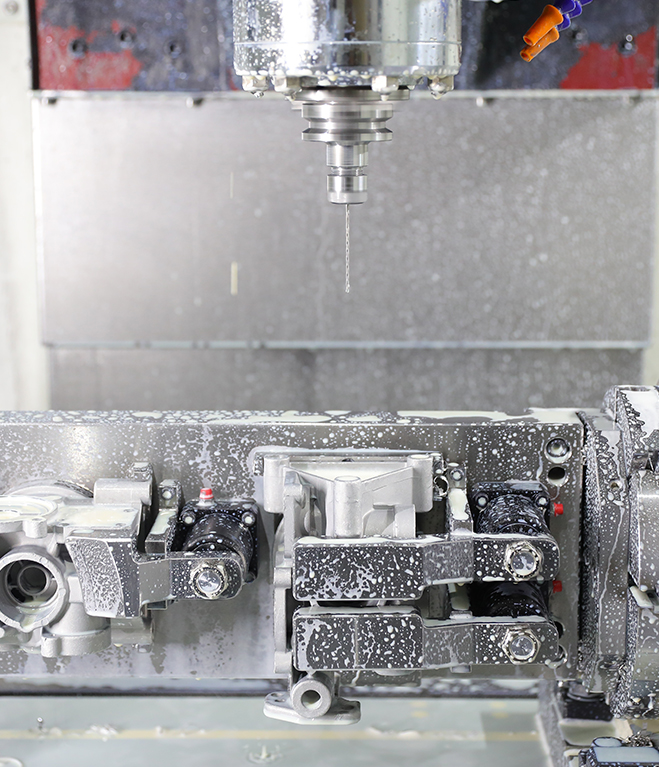
High-quality raw materials, precise calculation, professional design, and strict production testing ensure that all products manufactured by Gongzheng Jinggong are durable.

Service Life

We have long provided direct supporting services for large enterprises. Our long-term close cooperation with commercial vehicle brands and manufacturers in R&D and testing has made us more professional and experienced.

Professionalism

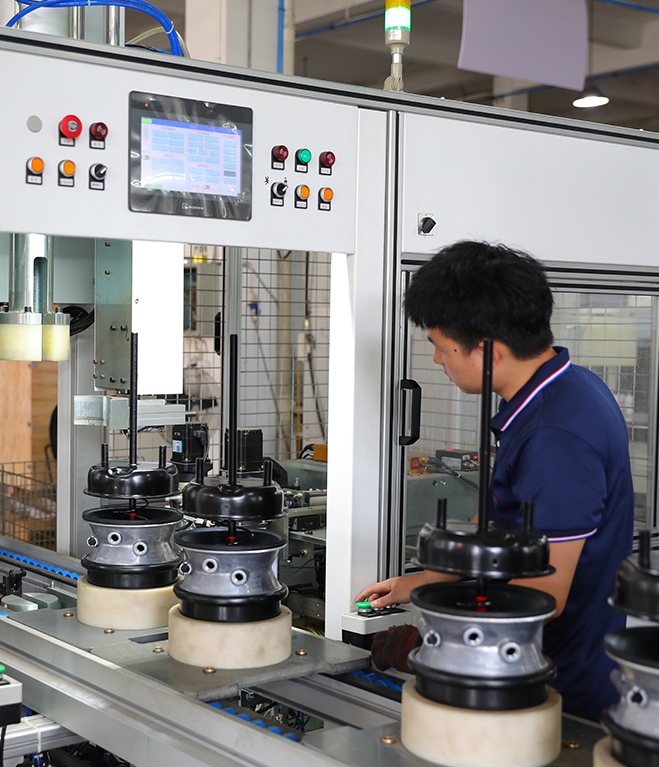
Automated production and accurate, fast logistics services are sufficient to meet customer requirements.

Delivery

We have an independent R&D team. In addition to standard parts, we also offer customization services to meet customers' special needs.

Customization

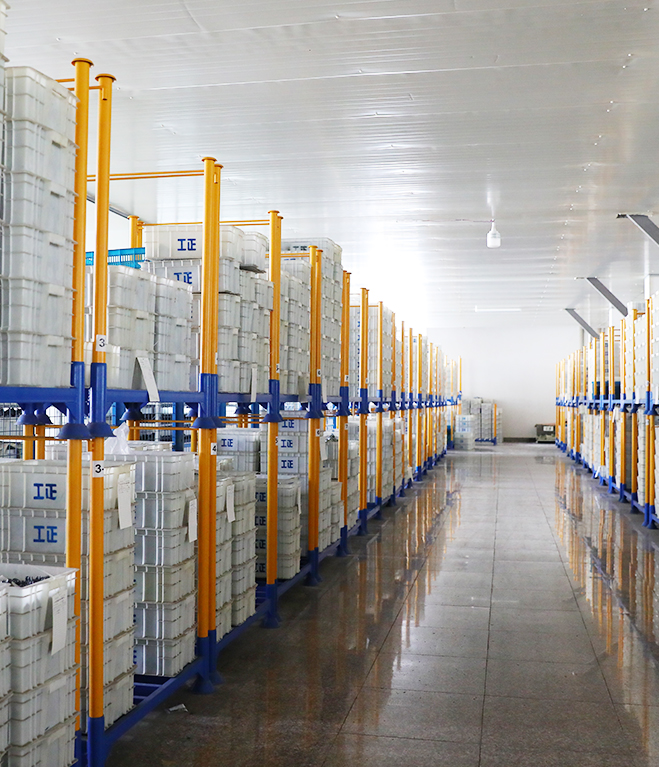
We maintain a standing inventory of over 200,000 units, enabling us to handle large-volume orders and urgent orders.

Inventory
Maintenance

Diaphragm Inspection and Replacement Schedule

With only one wearing part, maintenance is straightforward, but a worn diaphragm is easy to overlook until it starts leaking constantly.

Table 3 — Recommended inspection and replacement schedule for quick release valves.

ItemIntervalWhat to Check
Exhaust port or coverEvery serviceCheck for continuous air leakage, mud, ice or debris blocking the exhaust.
Brake release timeEvery 12 monthsCompare front axle release time with the rear axle; a lagging front axle suggests a diaphragm problem.
Diaphragm conditionEvery 3 years or 300,000 kmReplace if cracked, hardened or torn, even if no leak is currently present.
Port seals and fittingsWith each disturbanceRenew any hardened or flattened seals when lines are disconnected.
Mounting bracketAnnual inspectionCheck for cracks, corrosion and loose fasteners, especially on vocational vehicles.
Balance between delivery portsEvery 12 monthsConfirm both chambers fill and release evenly; uneven behaviour suggests a one-sided line fault or diaphragm issue.
Exhaust cover sealEvery 12 monthsOn covered exhaust versions, check that the cover seal is intact and not perished.

We supply diaphragm kits, exhaust covers, seal sets and complete replacement valves for every model listed on this page.

Diagnostics

Quick Release Valve Troubleshooting Guide

Because the valve has only one moving part, most faults trace directly back to the diaphragm, the exhaust path or a line problem.

Table 4 — Common quick release valve symptoms, causes and corrective actions.

SymptomLikely CauseRecommended Action
Constant hiss from the exhaustHardened, cracked or torn diaphragm.Replace the diaphragm kit or the complete valve.
Both chambers fill slowlyDiaphragm not lifting cleanly, or a restricted supply line.Check the supply line first, then replace the diaphragm if the fault remains.
Brakes drag after releaseDiaphragm stuck against the delivery side, or a blocked exhaust.Clear the exhaust and replace the diaphragm.
One chamber weaker than the otherLeak in one delivery line, since both share the same diaphragm chamber.Check both delivery lines for leaks before replacing the valve.
Slow release only on one axleQuick release valve missing, bypassed or diaphragm failed at that axle.Confirm the valve is present and fit a new diaphragm or valve.
Water or ice in the exhaustMissing exhaust cover or a perished cover seal in cold conditions.Fit a covered exhaust version or renew the cover seal.
Valve rattles or knocksLoose mounting bracket or a worn diaphragm retainer.Tighten the mounting and inspect the diaphragm retainer.
No air reaches either chamberBlocked or disconnected supply line, or a diaphragm stuck closed.Check the supply line and replace the valve if the diaphragm does not move.

If release time is still slow after the diaphragm is replaced, check the supply and delivery lines and the brake chambers themselves for restriction or damage.

Terminology

Quick Release Valve Glossary

Plain-language definitions of the terms you will see on air brake diagrams, workshop manuals and part listings.

Quick Release Valve
A valve that admits supply air to two or three brake chambers and vents them locally through a large exhaust on release.
Diaphragm
The single flexible disc inside the valve that opens the inlet path or the exhaust path depending on pressure balance.
Supply Port
The single port that receives air from the foot brake valve or another upstream source.
Delivery Port
One of the ports feeding an individual brake chamber.
Exhaust Port
The large port through which both chambers vent together on release.
Exhaust Cover
An optional cover over the exhaust port that keeps out dirt and water while still allowing air to vent.
Relay Valve
A related but different valve that amplifies a small control signal into high flow, unlike a quick release valve which only passes supply air through.
Brake Release Time
The time taken for a brake chamber to vent and the brake to disengage after the pedal is released.
Front Axle Circuit
The brake circuit most commonly fitted with a quick release valve, due to its typically longer pipe run.
Parking Circuit
A circuit sometimes fitted with a quick release valve to vent multiple spring brake chambers together.
Brake Chamber
The pneumatic actuator at the wheel that converts air pressure into mechanical brake force.
Balanced Delivery
The tendency of a single-diaphragm valve to supply similar pressure to both of its delivery ports from one source.
Questions

Frequently Asked Questions

Twelve questions our distributors, workshops and fleet buyers ask most often about quick release valves for commercial vehicles.

It lets supply air fill a pair of brake chambers normally, but vents them quickly through a large local exhaust when the pedal is released, instead of the air travelling all the way back to the pedal valve.

Most commonly on the front axle of a truck or tractor, since the front brake circuit often has a longer pipe run than the rear, which typically uses a relay valve instead.

A relay valve has its own reservoir connection and amplifies a small control signal into a large flow. A quick release valve has no reservoir of its own; it simply passes supply air through and provides a fast local exhaust on release.

A constant hiss from the exhaust, slow brake application, brakes that drag after release, or uneven pressure between the two chambers it feeds are the most common signs.

In most cases a diaphragm kit repairs the valve fully, since the diaphragm is the only wearing part. Replace the complete valve only if the housing itself is damaged or corroded.

Because a single diaphragm feeds both delivery ports from the same chamber, a leak on one delivery line can draw down pressure available to the other side as well.

A covered exhaust protects the diaphragm and seat from dirt, water and wash-down spray, and is generally preferred for buses and vocational vehicles working in wet or dusty conditions.

Yes. Send the OEM number, the vehicle make and model, or a clear photo of the valve. Our technical team will confirm the matching model and port layout, and reply within two working days.

Yes. Diaphragm kits, exhaust covers and seal sets are available for the models listed on this page. Ask us for the matching part numbers.

Yes. It is part of the service brake circuit, and a fault that slows brake release or application affects both braking performance and brake heat build-up, so it should be repaired promptly.

Yes. Stocked valves ship within 3 to 7 working days of payment, and even a single piece can be ordered to check fitment before you commit to a larger quantity.

Yes. We can produce valves with alternative port threads and mounting patterns to your drawing, and supply them in neutral cartons or under your own brand.

Need the right quick release valve for your axle?

Send us the OEM part number or a photo of the valve and its ports. We will confirm the correct model and configuration within 48 hours.