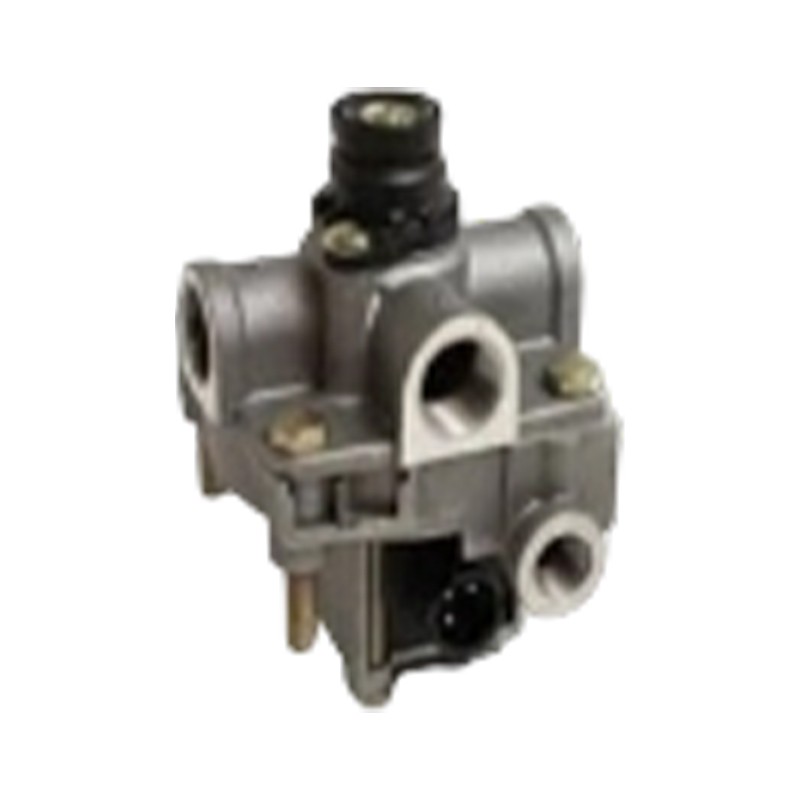
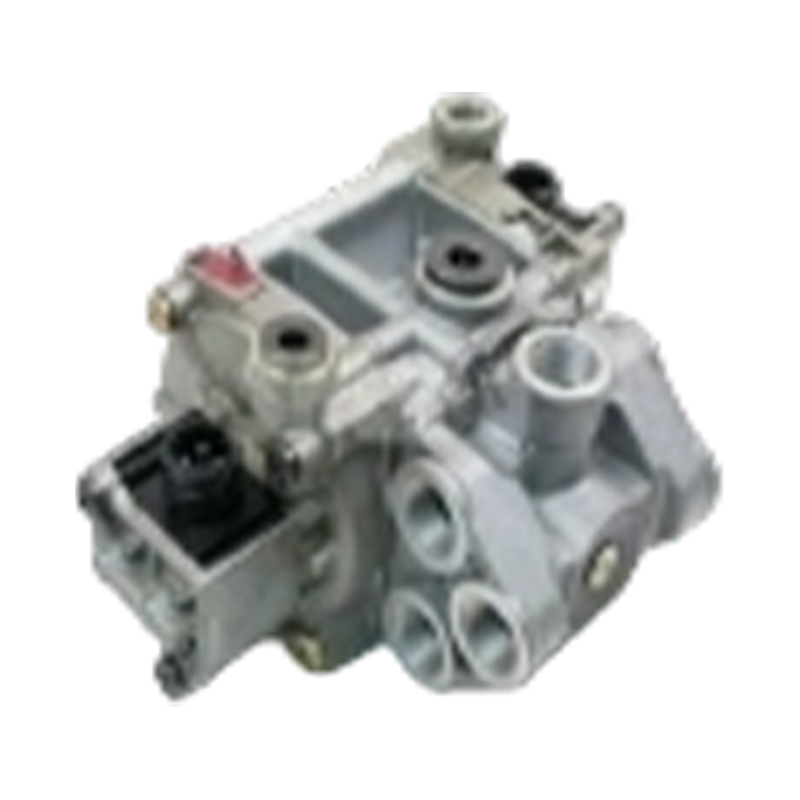
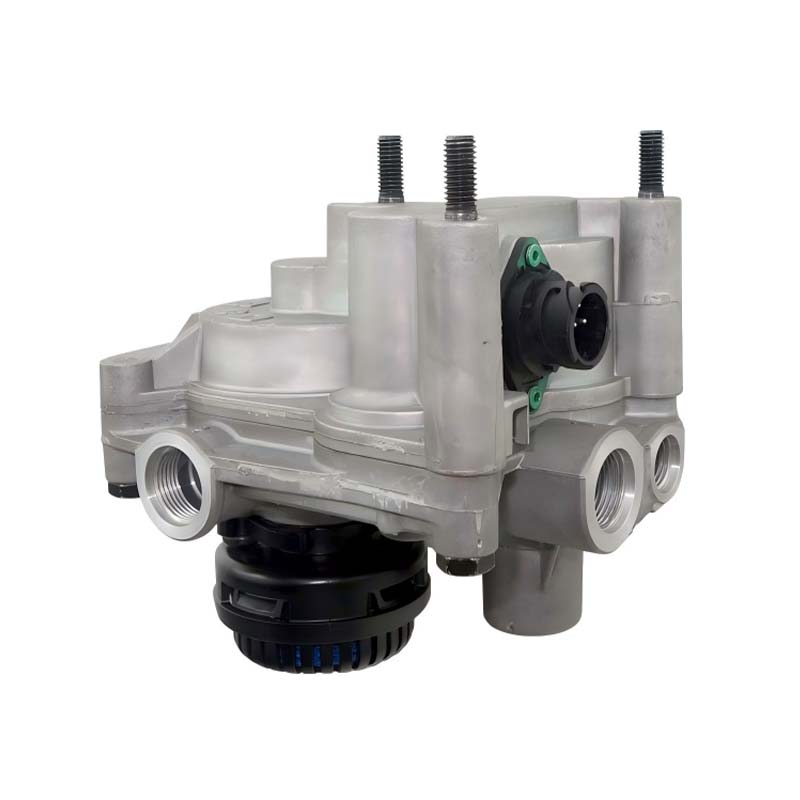
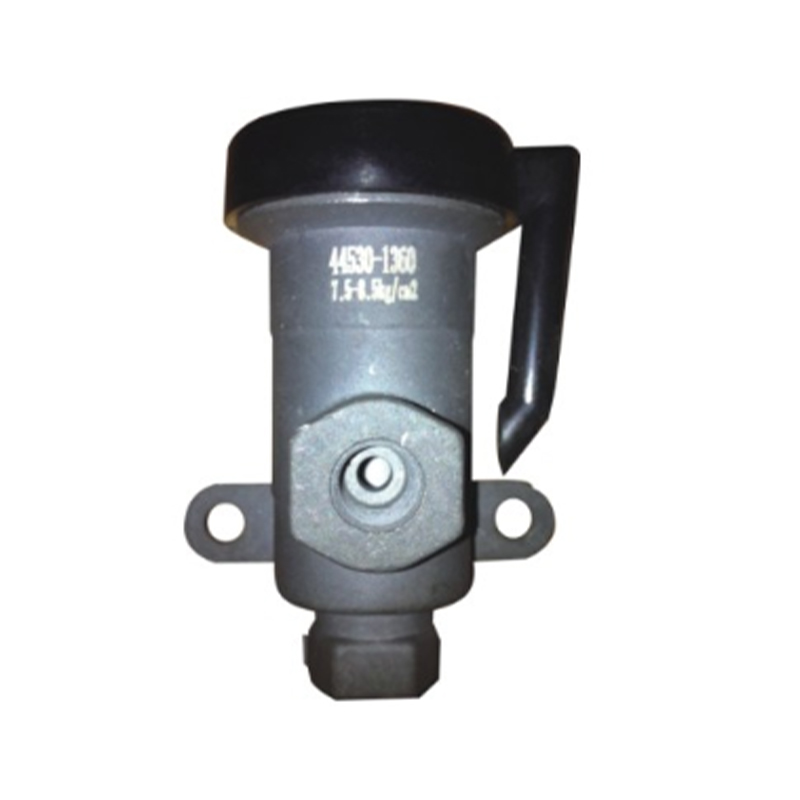
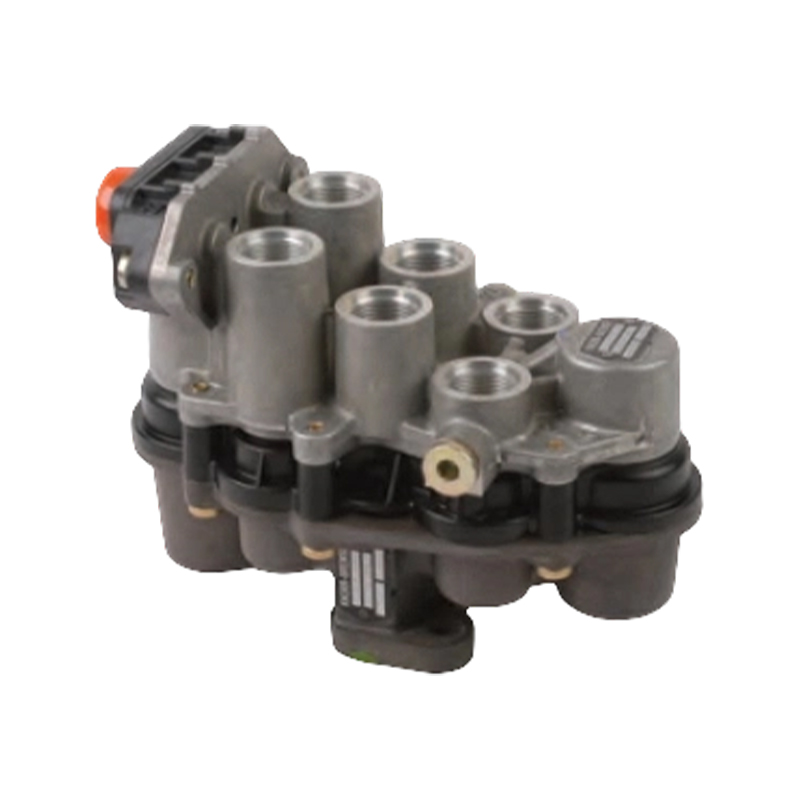
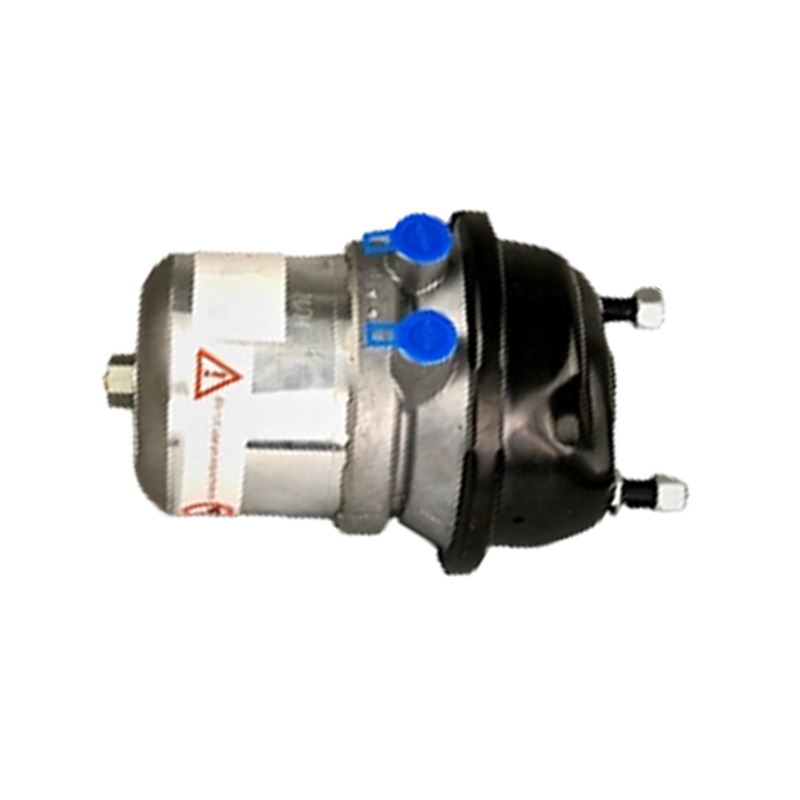
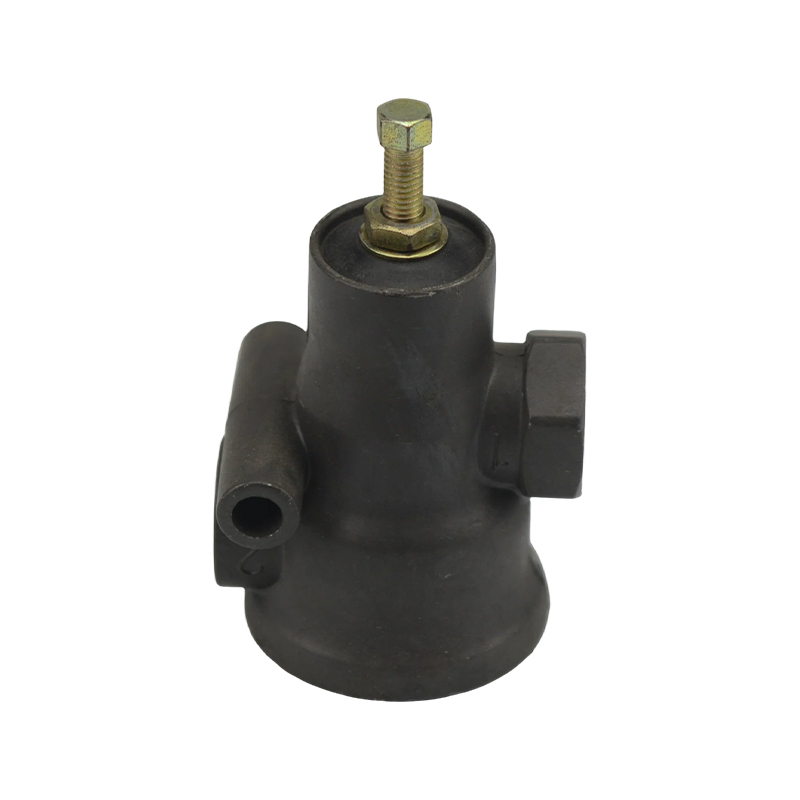
A gearbox control valve is a pneumatic or electro-pneumatic valve that directs compressed air to the shift cylinders of a heavy truck's transmission, moving the range, splitter or main shift forks to select the correct gear. It takes a command, either a mechanical linkage position or an electrical signal from the transmission control unit, and turns it into the precise cylinder movement needed to engage a gear ratio.
Heavy truck gearboxes with many ratios, often twelve or sixteen speeds, are usually built as a main gearbox combined with a splitter and a range section, since a single mechanical shift pattern cannot cover that many combinations directly. Moving between these combinations needs pneumatic power, because the forces involved are too high for the driver to manage through a simple lever alone. The gearbox control valve is the component that takes the driver's or the electronic control unit's shift request and delivers air to the correct cylinder in the correct sequence.
Range, Splitter and Main Shift Functions
A range valve, usually a 5/2 double-acting design, moves the range section between low and high ratios, effectively doubling the number of usable gears. A splitter valve does the same for the splitter section, giving an intermediate step between main gears. On manual boxes these are usually operated by a switch on the gear lever; on automated manual transmissions the transmission control unit commands them directly, along with the main shaft shift cylinders.
Interlock Protection
Because range and splitter changes must happen at the correct point in the shift sequence, many control valve assemblies include a mechanical or pneumatic interlock that prevents a range change while the main box is still engaged in gear, or prevents two shift cylinders from being commanded at once. This interlock protects the gearbox from damage that could result from an out-of-sequence shift request.
Manual Linkage Versus Electro-Pneumatic Control
On a conventional manual gearbox, the range and splitter valves are typically operated by a mechanical switch built into the gear lever knob, which sends a pneumatic signal directly to the valve with no electronics involved. On an automated manual transmission, a set of solenoid valves under the direct command of the transmission control unit replaces the mechanical switch, allowing the control unit to time shifts precisely and to blip the throttle or manage clutch engagement as part of the same event.
Shift Cylinder Air Supply
Gearbox control valves draw their air from a dedicated gearbox circuit, often protected by its own outlet on the multi circuit protection valve, since a shift cylinder losing air mid-shift could leave the gearbox in an indeterminate position. Filtered, dry air matters more here than in many other circuits, because shift cylinder seals and valve seats are relatively small and sensitive to contamination.
Common Symptoms of a Faulty Control Valve
A gearbox that is slow to change range, that occasionally fails to complete a range or splitter shift, that shows a fault code on an automated transmission, or that makes an audible air leak near the gearbox housing during a shift are the most frequent complaints traced back to the control valve or its solenoids rather than to the gearbox mechanism itself.
Matching a Replacement Valve
Match the transmission make and model, whether the system is manually switched or electronically controlled, the solenoid voltage where applicable, the port thread and the interlock configuration. Transmission manufacturers use their own valve designs, so cross-brand substitution is rarely straightforward.
- Fit point: on or near the gearbox housing
- Function: directs air to range, splitter and shift cylinders
- Control types: mechanical switch or solenoid
- Protection: mechanical or pneumatic interlock
- Air source: dedicated gearbox circuit
- Service parts: solenoid coil, seal kit, interlock parts