GongzhengGongzhengGongzhengGongzheng GongzhengGongzhengGongzhengGongzheng GongzhengGongzhengGongzhengGongzheng GongzhengGongzhengGongzhengGongzheng

Mechanical Load Sensing Valves For Trailers Wholesale

Trailer Brake Force Control Components

Mechanical Load Sensing Valves For Trailers

Mechanically actuated load sensing valves for trailers with leaf spring and mechanical suspension. They reduce brake pressure when the trailer is empty and restore full pressure when it is laden, preventing wheel lock and meeting braking compatibility requirements.

  • Multiple reduction curves to match trailer weight and axle layout
  • Lever, rod and bushing kits supplied separately
  • Data plate cross reference supported
50%Maximum brake pressure reduction when empty
10 barMaximum input pressure
100%Curve tested on the bench before shipment
48 HCurve and linkage reply within two working days
Product Overview

What Is a Mechanical Load Sensing Valve for Trailers?

Definition

A mechanical load sensing valve is a brake pressure regulator mounted on the trailer chassis and linked by a lever and rod to the axle. It measures how far the suspension is compressed, which is a direct indication of how heavily the trailer is loaded, and adjusts the brake pressure sent to the brake chambers to suit. An empty trailer receives a reduced pressure, and a fully laden trailer receives the full pressure.

A trailer that weighs seven tonnes empty can weigh thirty-five tonnes or more when laden, yet the brake system has to work safely at both extremes. If the same pressure went to the brake chambers regardless of load, an empty trailer would receive far more braking force than its light axles could use, and the wheels would lock and skid long before the vehicle stopped. A laden trailer, on the other hand, needs every bar of pressure available. The load sensing valve is the mechanism that lets one brake system perform properly in both conditions.

Why Braking Force Must Follow the Load

The maximum braking force a tyre can generate depends on the vertical load pressing it onto the road. When a trailer is empty, the tyres carry little weight, so full brake pressure locks the wheels, overheats the tyres and destroys stability. When laden, the same pressure is entirely appropriate. Regulations on braking compatibility between a towing vehicle and its trailer, such as those in UNECE Regulation No. 13, set limits on how brake force is distributed, and the load sensing valve is the standard means of meeting them on trailers with mechanical suspension.

Lever, Rod and Reduction Curve

The valve body is fixed to the chassis, and its lever is connected to the axle by a vertical rod or a spring link. As load increases, the axle moves closer to the chassis, the lever turns, and an internal cam or piston moves accordingly. Inside the valve, a control piston and a balanced valve stage vary the ratio between input pressure and output pressure. Below a certain jump-in pressure the output equals the input. Above that point the output rises more slowly on an empty trailer, following a characteristic curve, and more closely on a laden trailer.

Mechanical Versus Air-Suspension Types

The mechanical version described here is designed for trailers with steel leaf springs or other mechanical suspensions, where the distance between axle and chassis changes in proportion to load. Trailers with air suspension normally use a pneumatic type that senses the bellows pressure instead. The two types look different and are not interchangeable, so the suspension type must be identified before ordering.

Setting the Valve to the Data Plate

Each valve carries a data plate that lists the required output pressures at the laden and unladen conditions for a given input pressure, together with the lever and linkage dimensions. After installation, the linkage is adjusted so that the measured pressures match those values on a test gauge. The adjustment is then locked and often sealed. A valve that is not set correctly is not merely inefficient; it is a fault that affects braking legality.

Wear, Corrosion and Common Failures

Mechanical valves are exposed to road spray, salt and dirt, and the linkage is a frequent source of trouble. Worn bushings, a bent lever, a changed rod length after a spring replacement, or a corroded pivot can all shift the setting without any visible fault. Inside the valve, dirt and moisture cause piston sticking and seat leakage, which appear as slow brake release or unexplained low braking on a laden trailer.

Matching the Valve to the Trailer Data Plate

Match the data plate reference, the lever and rod configuration, the port threads, the required reduction curve and the mounting position. Two load sensing valves that look alike can have very different curves, so the data plate reference or the original OEM number is essential.

  • Fit point: trailer chassis, linked to the axle
  • Function: adjusts brake pressure to suit axle load
  • Sensing: lever and rod respond to suspension deflection
  • Suspension: leaf spring and mechanical types
  • Setting: adjusted and locked to a data plate
  • Service parts: lever, rod, bushings, seal kit

Technical Data

Load Sensing Valve Model Range

Standard configurations below. Custom curves, linkage lengths and port threads can be produced to your drawing.

Table 1 — Genuine gzbrake.com Ref NO. and OE cross-reference data for representative European Load Sensing Valve products.

Ref NO.Product NameApplicationTechnical SpecificationOE / Cross-Reference (Sample)Cross-Ref. CountProduct Line
4757120000High-Protection Load Sensing Valve for DAF/RVI SeriesDAFPort 1 = M16x1.5,Port 1-2 = M22x1.5,Port 2(s) = 2xM22x1.5,Port 2(u) = 4xM16x1.5,Port 4 ...DAF:1325324RVI AI397800011European Load Sensing Valve
4757120040Mechanically Linked Load-Sensing ValvePort 1 = M16x1.5,Port 1-2 = M22x1.5,Port 2(s) = 2xM22x1.5,Port 2(u) = 4xM16x1.5,Port 4 ...European Load Sensing Valve
4757145000Universal European High-Pressure Load Sensing Valve (3.8 Bar Control Pressure)MERCEDESPort 1,2 = 2xM22x1.5,Port 1/4 = M22x1.5,Port 41,42 = 2xM12x1.5,Port 43 = M16x1.5male,Co...MERCEDES:69843137121European Load Sensing Valve
4757155000Multi-Delivery Load Sensing Valve for DAF/SCHMITZ SeriesDAF, SCHMITZPort 1 = M16x1.5,Port 1-2 = M22x1.5,Port 2(s) = 2xM22x1.5,Port 2(u) = 4xM16x1.5,Port 1/...DAF:1506232 / SCHMITZ:82830110002European Load Sensing Valve
4757210030Pneumatically Controlled Intelligent Load-Sensing Regulating ValveSCANIAPort 1 = M22x1.5VOSS,Port 2 = 2xM22x1.5VOSS,Port 1/4 = M16x1.5VOSS,Port 41,42 = 2xM16x1...SCANIA:1935115DAF 13872141European Load Sensing Valve
4757100360 (+2)Load Sensing Valve with VOSS Interfaces for MERCEDES SeriesMERCEDES, VOLVOPort 1 = M22x1.5VOSS,Port 2 = M22x1.5VOSS,Port 4 = M16x1.5VOSS,Port 3 = Snap-onControl ...MERCEDES:0044318312 / VOLVO:1625753 +1 more3European Load Sensing Valve
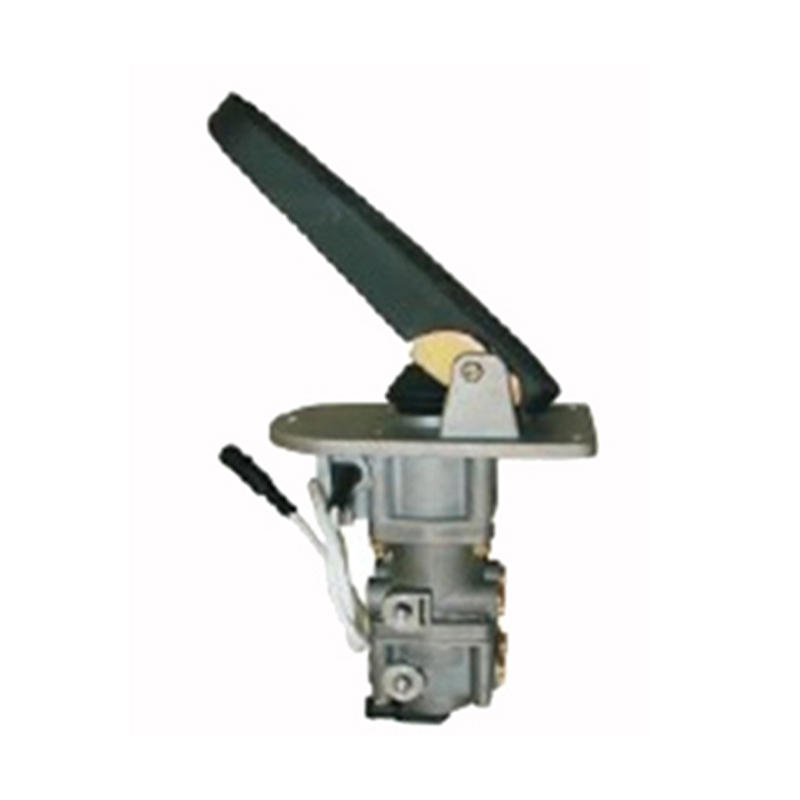
4756040100 (+2)Air Brake Hand Control ValveDAF, IVECO, KNORR, MAN +2 morePort 1(S) = M22x1.5,Port 2(Z) = M22x1.5,Empty Laden Pressure = 1.6Bar,Half Laden Pressu...DAF:0719701,700124,719701 / IVECO:01271399 +9 more11European Load Sensing Valve
4757200010 (+4)European Load Sensing Valve with VOSS Interfaces and SilencerRENAULT, OTOKAR, DAF, EVOBUSPort 1 = M22x1.5VOSS,Port 21 = 2xM22x1.5VOSS(on the same side),Port 1/4 = M16x1.5VOSS,P...RENAULT:5010260527 / OTOKAR:13C2508600AA +3 more5European Load Sensing Valve

Ref NO. and cross-reference numbers above are drawn directly from our European Load Sensing Valve product range on gzbrake.com. Cross-reference lists are sampled for space; contact us with your vehicle's OE number or chassis details for the complete, current cross-reference list and stock availability.

Trailer Manufacturer Reference List

Schmitz CargobullKrone TrailerKögel TrailerKässbohrerFlieglWieltonFaymonvilleMeiller TipperLangendorfBenaluLamberetFruehaufKaiser TrailerFeldbinder TankerMagyar TankerSpitzer SiloVan Hool TrailerLawrence David
About Us
Zhejiang Gongzheng Machinery Co., Ltd.
Zhejiang Gongzheng Machinery Co., Ltd. is professional China Mechanical Load Sensing Valves For Trailers Manufacturers and Wholesale Mechanical Load Sensing Valves For Trailers Factory. Our core products include ABS (Anti-lock Braking System) and EBS (Electronic Braking System) control units, air dryers, air brake valves, and spring brake chambers, designed to meet the rigorous demands of the global commercial vehicle industry.

With advanced production technology, strict quality control, and a commitment to innovation, we provide reliable and efficient solutions for truck and trailer manufacturers worldwide. Our products comply with international standards, ensuring safety, durability, and superior performance in diverse operating conditions.

Key Products:
ABS & EBS Control Systems – Enhancing vehicle safety and stability.
Air Dryers – Ensuring clean, moisture-free air for braking systems.
Air Brake Valves – Precision-engineered for optimal braking performance.
Spring Brake Chambers – Robust design for heavy-duty applications.
At Zhejiang Gongzheng Machinery, we prioritize customer satisfaction, technological advancement, and sustainable growth. Partner with us for trusted braking solutions that drive excellence.

Safety. Reliability. Innovation.
  • 0m2
    Factory Area
  • 0+
    Founded In
  • 0+
    Number of Employees
  • 0+
    Customer Service
Working Principle

How a Mechanical Load Sensing Valve Works

The valve turns suspension deflection into a change in brake pressure ratio. Five stages describe a brake application.

Load Sensed

The lever and rod register the distance between axle and chassis. A laden trailer sits low on its springs, and an empty trailer sits high.

Cam Position Set

The lever turns an internal cam or spring seat to a position matching the load. This sets the ratio between input and output pressure.

Brake Applied

The driver applies the brakes. Control pressure enters the valve at the input port and begins to rise.

Pressure Modulated

Below the jump-in pressure the output follows the input. Above it, the valve reduces the output on an empty trailer according to the curve, and follows the input more closely when laden.

Pressure Released

When the driver releases the pedal, input pressure falls and the valve exhausts the chambers, restoring rest position.

What Happens When the Load Sensing Valve Is Wrong

  • If the valve does not reduce pressure on an empty trailer, the wheels lock early and cause tyre flat spots and instability.
  • If the valve reduces pressure on a laden trailer, braking is weak and stopping distances increase.
  • A changed rod length after a spring replacement shifts the setting and produces unequal braking between tractor and trailer.
  • A stuck or leaking valve gives slow brake release and heat build-up in the trailer brakes.
  • A bent lever, worn bushings or a corroded pivot cause inconsistent output that is difficult to diagnose by feel.
Product Features

Built for Accurate Braking at Every Load

A load sensing valve has to work reliably across thousands of loading cycles and every kind of road condition.

Multiple Reduction Curves

Different valve variants match different axle loads, empty weights and brake ratios, so one supplier can cover most trailer designs.

Adjustable Lever and Rod

Linkage length and lever angle are adjustable so the valve can be set to the data plate values on the vehicle.

Sealed Adjustment Points

Tamper-evident seals protect the setting once it has been checked and approved.

Sealed Balanced Piston Stage

A balanced piston and O-ring seals give repeatable output pressure with low hysteresis.

Corrosion-Resistant Linkage

Zinc-plated levers and rods and sealed bushings stand up to road spray and salt.

Wide Trailer Coverage

Single-axle, tandem and tri-axle configurations are supported with matching mounting kits.

Selection Guide

How to Choose the Right Load Sensing Valve

Five points decide whether the valve reduces pressure correctly and matches the trailer's braking requirements.

  • 01

    Identify the suspension type

    Confirm that the trailer has a mechanical suspension such as leaf springs. Air-suspended trailers need a pneumatic load sensing valve that responds to bellows pressure.

  • 02

    Read the data plate

    The plate on the valve lists the curve, pressures and linkage dimensions. It is the most reliable reference for choosing a replacement.

  • 03

    Check the linkage geometry

    Measure the distance from the valve to the axle bracket and the length of the rod. A different geometry changes the stroke and therefore the output pressure.

  • 04

    Match the ports

    Inlet and outlet ports are normally M22 × 1.5, though smaller units use M16 × 1.5. Confirm the position of each port on the body.

  • 05

    Confirm the curve and reduction

    Empty weight, laden weight and axle ratio decide how much reduction is needed. If you are unsure, send the trailer's brake calculation or type approval details.

Table 2 — Trailer type and typical load sensing valve setup.

Trailer TypeTypical SetupNote
Single-axle light trailerSingle valve, mid reductionLever and rod, leaf spring
Tandem-axle trailerSingle valve on lead axleSet to tandem laden weight
Tri-axle semi-trailerSingle valve, high reductionCheck curve for heavier empty weight
Tipper trailerCompact valve, protected mountingRod exposed to dirt, use sealed bushings
Trailer with bogie suspensionSpring link typeConfirm deflection range

Treat these setups as a starting point. Always check them against the trailer's brake calculation and type approval documents.

Applications

Where These Load Sensing Valves Are Fitted

Any trailer with mechanical suspension and a wide range between empty and laden weight benefits from a load sensing valve. The trailer types below account for most of our orders.

Curtainsider and Box Trailers

Cargo weights vary widely from trip to trip, so brake force must follow the load automatically.

Tipper Trailers

Heavy aggregate loads and light empty return runs place extreme demand on brake force distribution.

Tanker Trailers

A tanker travels full one way and empty the other. The valve keeps braking balanced in both conditions.

Container Chassis

A container chassis can be empty, or carrying anything from a light to a maximum-weight box.

Livestock and Refrigerated Trailers

Load distribution and stopping stability are both critical to safety and to cargo protection.

Low-Loaders and Plant Trailers

Very high laden weights and very light empty weights require careful curve selection.

Agricultural and Drawbar Trailers

Mechanical suspensions and highly variable loads make load sensing a basic requirement.

Fleet Overhauls

Replacing a worn or maladjusted valve restores correct braking and helps trailers pass roadworthiness tests.

Installation

Installation Notes for Workshops

A load sensing valve is only accurate when it is set correctly. Follow the steps below to avoid the setting errors that cause repeat visits.

Read the Data Plate

Note the curve, required pressures and dimensions listed on the plate before removing the old valve, or use the plate supplied with the new valve.

Park on Level Ground

Park the empty trailer on level ground with the wheels chocked and the suspension settled, so the reading is not affected by a slope.

Inspect the Linkage

Check the rod, ball joints and bushings. Fit new bushings if there is any play, as play in the linkage moves the setting.

Mount and Connect

Fit the valve to the bracket, attach the lever to the rod and connect the supply, control and delivery lines to the correct ports. Fit new seals.

Adjust with a Test Gauge

Connect a test gauge to the outlet, apply the specified input pressure and adjust the rod length or lever angle until the outlet pressure matches the data plate for the empty condition.

Lock and Seal

Tighten the lock nut, apply the tamper seal and record the settings. If possible, repeat the check in the laden condition.

Quality
Components
Service Life
Professionalism
Delivery
Customization
Inventory
Why Gongzheng Only

By cooperating with us, you can obtain

Your Single Source for Braking Performance and Safety.

The ISO quality management system covers every process. We have obtained certifications such as Germany's TUA, ensuring that both original equipment and after-sales products meet the strict quality standards of commercial vehicle manufacturers.

Quality

Over 70% of the components for our products are manufactured in-house, which guarantees product quality.

Components

High-quality raw materials, precise calculation, professional design, and strict production testing ensure that all products manufactured by Gongzheng Jinggong are durable.

Service Life

We have long provided direct supporting services for large enterprises. Our long-term close cooperation with commercial vehicle brands and manufacturers in R&D and testing has made us more professional and experienced.

Professionalism

Automated production and accurate, fast logistics services are sufficient to meet customer requirements.

Delivery

We have an independent R&D team. In addition to standard parts, we also offer customization services to meet customers' special needs.

Customization

We maintain a standing inventory of over 200,000 units, enabling us to handle large-volume orders and urgent orders.

Inventory
Maintenance

Setting Checks and Linkage Replacement Parts

The valve rarely needs adjustment, but the linkage does wear. A simple schedule keeps braking accurate and legal.

Table 3 — Recommended inspection and replacement schedule for mechanical load sensing valves.

ItemIntervalWhat to Check
Linkage rod and bushingsEvery 6 monthsCheck for play, bending and worn rubber; replace any worn bushing.
Lever and pivotEvery 12 monthsLook for corrosion, bending and seized pivots, which stop the valve sensing load.
Output pressure test (empty)Every 12 monthsCompare with data plate value at the specified input pressure.
Output pressure test (laden)Every 12 months, where possibleConfirm the output rises to near the input pressure under load.
Exhaust portEvery serviceCheck for constant air leakage or blockage that could stop release.
Seal kitEvery 2 years or 250,000 kmReplace seals and piston stage before leakage affects output.
After suspension workEvery timeRecheck the setting when springs, axles or brackets are changed.

We supply seal kits, levers, rods, bushings and complete replacement valves for every model listed on this page.

Diagnostics

Load Sensing Valve Troubleshooting Guide

Link the symptom to its likely cause before replacing the valve. Many complaints trace back to the linkage or a change in the suspension.

Table 4 — Common load sensing valve symptoms, causes and corrective actions.

SymptomLikely CauseRecommended Action
Trailer wheels lock when emptyValve not reducing pressure, rod length wrong or linkage disconnected.Check the linkage and reset to the data plate; replace the valve if it does not modulate.
Weak braking when ladenValve stuck in the empty position or lever bent.Check the lever movement; adjust or replace the valve.
Trailer brakes drag after releaseSticking piston or blocked exhaust port.Clear the exhaust and replace the seal kit or valve.
Output pressure differs from the data plateWrong rod length, worn bushings or valve out of calibration.Replace the bushings and reset the rod length.
Braking changes after a spring replacementLinkage geometry changed by new springs.Reset the valve for the new ride height.
Constant air leakage from the valveWorn seat, damaged seal or torn diaphragm.Replace the seal kit or valve.
Uneven braking between tractor and trailerWrong curve selected or valve out of setting.Confirm the curve and re-test both empty and laden.
Lever will not move freelyCorroded pivot or seized bushing.Clean, lubricate or replace the lever and bushings.

If the symptom continues after valve replacement, the fault is usually in the linkage, the brake chambers or the trailer control line. Send us the measured pressures and the data plate values, and our technicians will help you decide whether to reset, repair or replace.

Terminology

Load Sensing Valve Glossary

Plain-language definitions of the terms you will see on trailer brake diagrams, data plates and part listings.

Load Sensing Valve
A valve that changes brake pressure according to how heavily the trailer or axle is loaded.
Automatic Load Sensing
A general term for brake force control that adjusts without driver input, according to load.
Suspension Deflection
The change in distance between axle and chassis as the load changes.
Jump-In Pressure
The input pressure at which the valve starts to reduce output on an unladen vehicle.
Reduction Curve
The graph of output pressure against input pressure for a given load condition.
Data Plate
The label on the valve listing curve, pressures and linkage dimensions for a specific trailer.
Linkage Rod
The rod that connects the valve lever to the axle bracket.
Lever Angle
The angle of the valve lever in the unladen condition, which decides the starting point of the curve.
Braking Compatibility
The matching of brake force distribution between towing vehicle and trailer, required by regulation.
Wheel Lock
The condition in which the wheels stop rotating while the vehicle is still moving, causing skidding.
Hysteresis
The small difference in output pressure between rising and falling input, caused by friction in the valve.
Tamper Seal
A seal that shows whether the setting has been disturbed since it was checked.
Questions

Frequently Asked Questions

Twelve questions our distributors, workshops and fleet buyers ask most often about mechanical load sensing valves for trailers.

It reduces the brake pressure sent to the trailer brakes when the trailer is empty and lets full pressure through when it is laden. This prevents the wheels from locking on a light trailer while still giving full braking on a heavy one.

Because tyre grip depends on the weight on the axle. A light trailer cannot use as much braking force as a heavy one. The valve matches the brake force to the weight.

A mechanical valve reads the movement of the suspension through a lever and rod, and suits trailers with leaf springs. An air-suspension valve reads the pressure inside the air springs. They are not interchangeable.

Compare the output pressure on a test gauge with the values on the data plate for the same input pressure. If the values do not match, adjust the linkage and retest.

Not safely. The curve is chosen for the trailer's empty weight, laden weight and brake ratio. A different curve changes braking behaviour and may break regulations. Always match the data plate.

Wheel lock on an empty trailer, weak braking when laden, brakes that drag, uneven braking with the tractor, and constant air leakage from the valve.

Yes. The plate lists the curve and pressures and is the fastest route to the right replacement. Send a photo with the trailer model and suspension type, and we will confirm the valve and linkage kit within two working days.

Yes. New springs can change the ride height, and therefore the lever angle and the output curve. Always reset and check the valve after any change to the suspension.

Yes. Levers, rods, ball joints and bushings are available for the models listed on this page. Quote the data plate reference and we will include the matching lever, rod and seal part numbers.

No. Removing a load sensing valve changes brake force distribution and can make the trailer illegal and unsafe. If the valve is faulty, repair or replace it.

Common curves are stocked and can be ordered in small numbers. A special curve is calibrated in a small batch after we agree the data plate values, and the delivery date is fixed on the proforma invoice. Stock items normally ship within 3 to 7 working days.

Yes. We can produce valves with alternative curves, linkage lengths and port threads to your drawing, and supply them in neutral cartons or under your own brand.

Need the right load sensing valve for your trailer?

Send us the data plate reference, the OEM part number or a photo of the valve and linkage. We will confirm the correct model, curve and linkage kit within 48 hours.