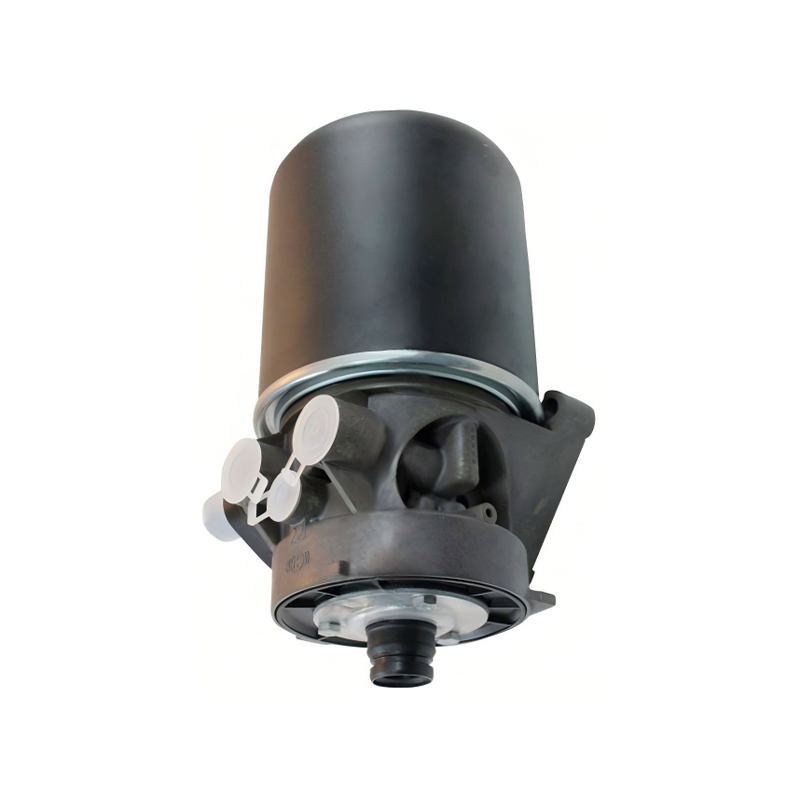
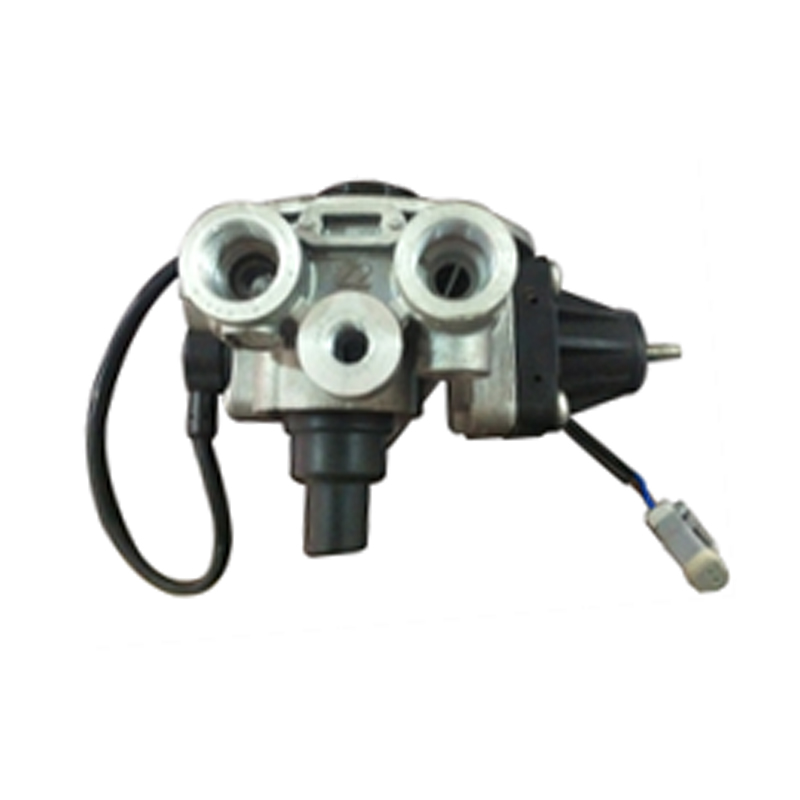
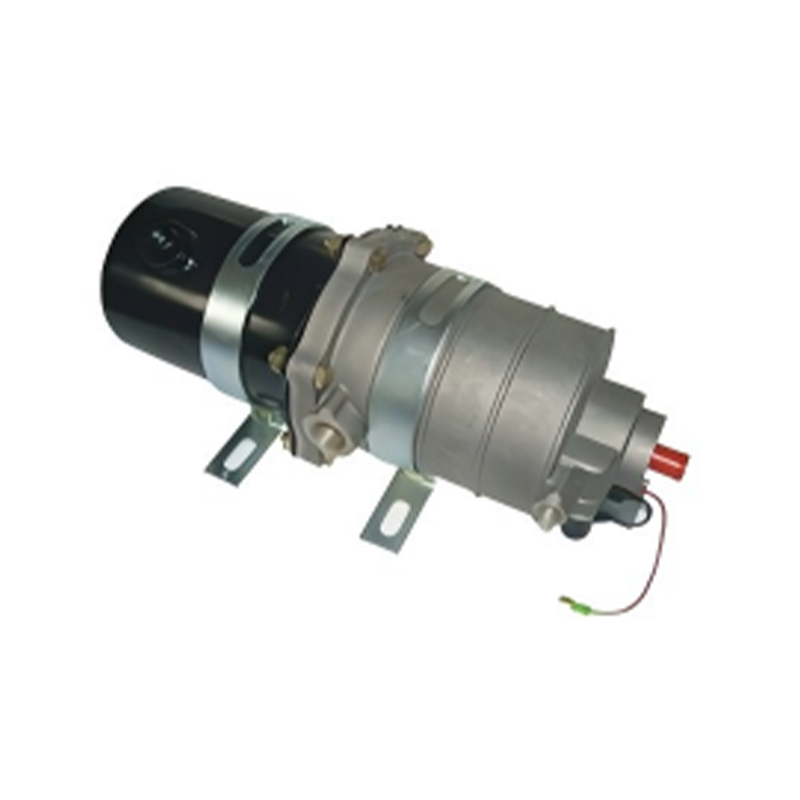
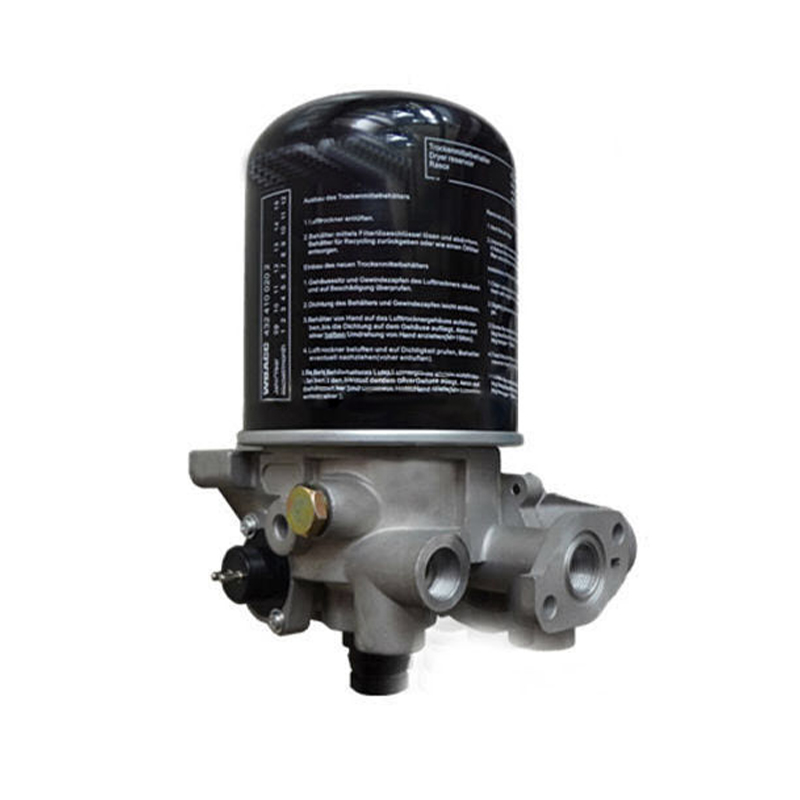
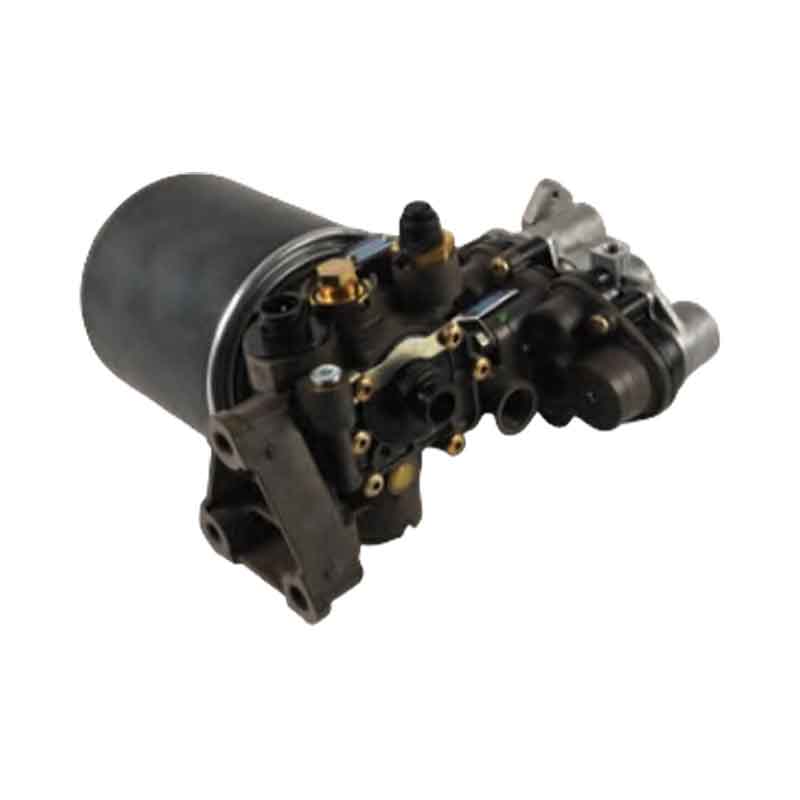
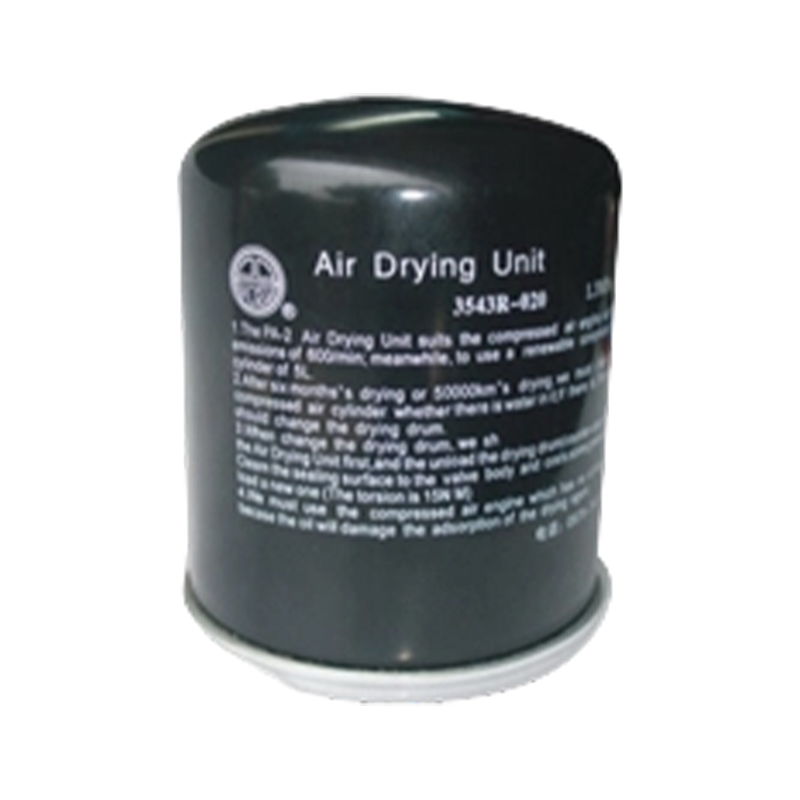
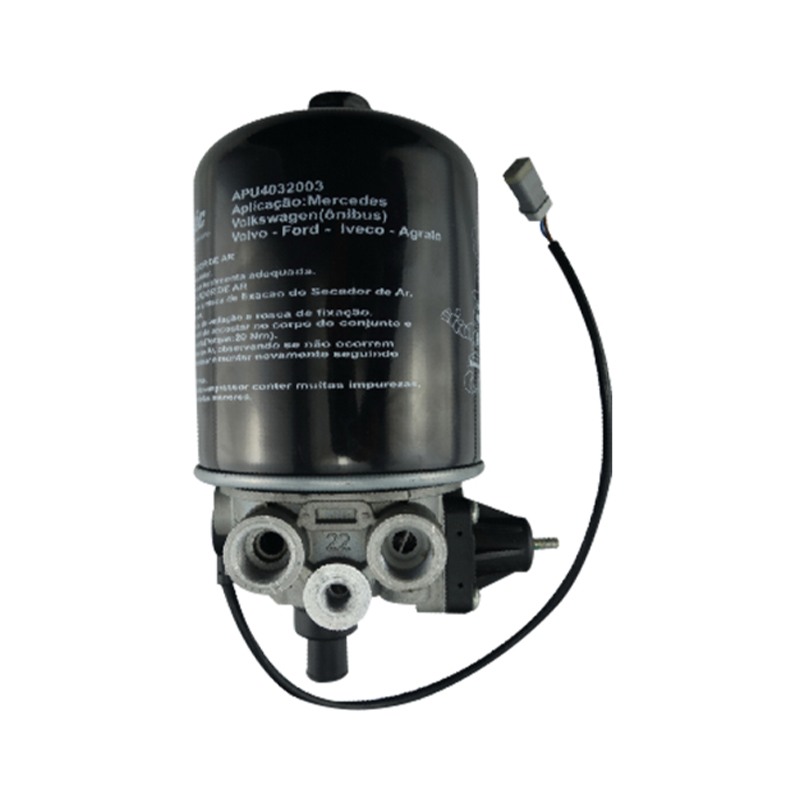
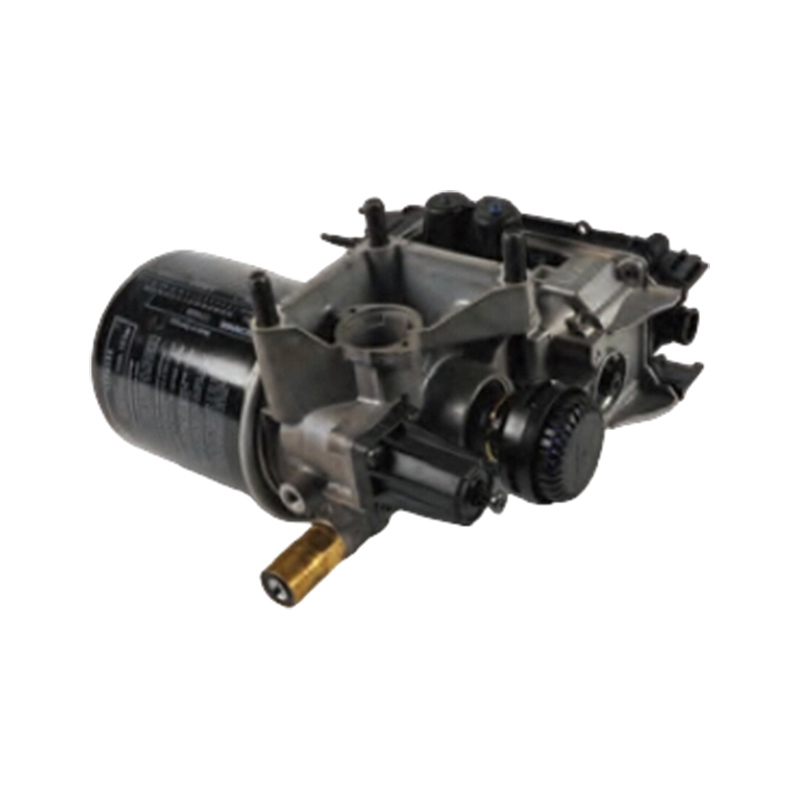
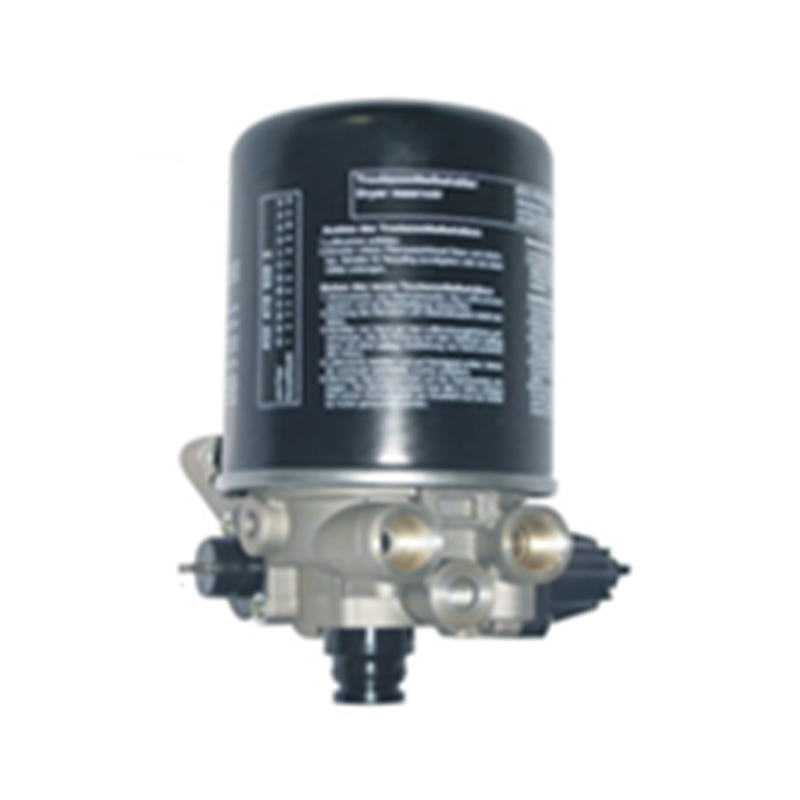
A heavy duty truck air dryer assembly is the unit fitted between the compressor and the reservoirs that removes moisture, oil aerosol and particulate from the compressed air before it reaches the brake system. It combines a desiccant cartridge, a purge valve, and in most modern designs a pressure regulator or governor function, into a single serviceable housing mounted on the chassis.
Every litre of air a truck compressor draws in already carries water vapour, and compressing that air concentrates the moisture further while adding heat, and often a fine mist of compressor oil. If that air reached the brake valves, relay valves and chambers unfiltered, moisture would condense in the coldest parts of the system, freeze in winter, corrode steel components and wash away lubrication on rubber seals. The air dryer assembly exists to intercept all of that before it becomes a problem, cleaning and drying the air on every single compressor stroke throughout the vehicle's working life.
Desiccant Cartridge and the Drying Cycle
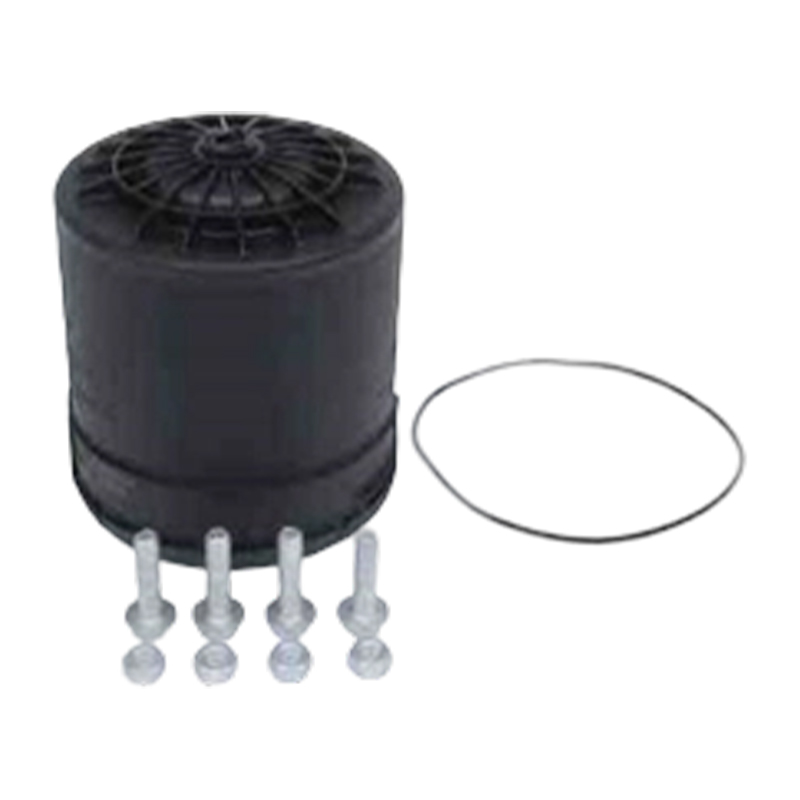
At the centre of the assembly sits a replaceable desiccant cartridge, filled with a moisture-absorbing material, usually a molecular sieve or silica-based desiccant. Air from the compressor passes through the cartridge on its way to the reservoirs, and the desiccant adsorbs water vapour as it goes. Because desiccant has a finite capacity, the cartridge needs to be regenerated regularly. When the system reaches cut-out pressure, a small volume of already-dried air is diverted backward through the cartridge and vented to atmosphere through the purge valve, carrying the collected moisture out with it and reconditioning the desiccant for the next charge cycle.
Oil Separation and Coalescing
Compressor oil carried over as an aerosol is just as damaging to downstream rubber seals and valve seats as moisture is. Most cartridge designs include an oil-coalescing stage ahead of the desiccant bed, so that oil droplets combine into larger drops and drain away rather than fouling the drying material, which would otherwise shorten cartridge life dramatically and let both oil and moisture pass through unchecked.
Integrated Governor and Pressure Protection
Many European air dryer assemblies combine the drying function with the governor, sometimes described as an air processing unit or APU. In this configuration the same housing senses system pressure, signals the compressor unloader at cut-out, and triggers the purge cycle at the same moment, coordinating three functions that would otherwise need three separate components. Simpler stand-alone dryers rely on a separate governor elsewhere in the system to provide the same pressure signal.
Heater Elements for Cold Climates
In cold operating regions, moisture that escapes the desiccant, or condenses in the purge valve itself, can freeze and block the valve from operating. Many assemblies therefore include an electric heater element around the purge valve and cartridge base, thermostatically controlled to prevent ice formation without wasting electrical power once temperatures rise. A dryer without a working heater in a cold climate is a common cause of frozen valves and stuck purge cycles on winter mornings.
Cartridge Life and Replacement
The desiccant cartridge is a wear item, not a permanent part of the assembly. Oil contamination, high humidity duty cycles, and simple accumulated cycling all reduce its drying capacity over time. Most manufacturers recommend cartridge replacement on a fixed interval, commonly once or twice a year depending on climate and duty cycle, well before the desiccant is exhausted enough to let moisture through in meaningful quantity.
What to Match When Ordering
Match the cartridge or complete assembly to the compressor's air delivery pressure, the port thread pattern, whether an integrated governor function is required, and whether a heater element and its voltage are needed. Cartridge threads in particular vary between manufacturers even when the outer dimensions look similar, so a direct reference to the OE part number is the safest way to order.
- Fit point: between compressor and air reservoirs
- Function: removes moisture, oil and particulate from system air
- Core wear part: replaceable desiccant cartridge
- Regeneration: purge valve vents moisture at cut-out
- Cold climate option: thermostatic heater element
- Service interval: cartridge typically replaced annually