


 Français
 Español
 中文简体
 русский

Gongzheng
Gongzheng
Gongzheng
Gongzheng
Gongzheng
Gongzheng
Gongzheng
Gongzheng
Gongzheng
Gongzheng
Gongzheng
Gongzheng
Gongzheng
Gongzheng
Gongzheng
Gongzheng

Content
- 1 What an Air Dryer Actually Does in a Commercial Vehicle Air System
- 2 Where the Dryer Sits in the Air Brake Circuit
- 3 Moisture, Oil, and Heat: The Three Contaminants That Drive Cost
- 4 How to Match an Air Dryer to a Truck or Trailer Platform
- 5 Installation and Service Details That Decide Whether the Dryer Performs
- 6 Diagnostics: What Moisture in the System Looks Like Before a Failure
- 7 FAQ: Air Dryer Purpose, Selection, and Service
What an Air Dryer Actually Does in a Commercial Vehicle Air System
The purpose of an air dryer is to remove water vapor, liquid condensate, and oil aerosol from compressed air before that air reaches the brake valves, relay valves, ABS/EBS modulators, brake chambers, and trailer controls. In a commercial vehicle, compressed air is not clean by default. The compressor pulls in ambient air, heats it, and pushes it toward the reservoirs with moisture and oil carryover. If those contaminants are not removed, they settle in low points, react with metal, swell seals, and freeze in cold weather. The air dryer is the service point where that risk is reduced before it becomes a brake performance problem.
In practical terms, the dryer protects three things at once: braking consistency, component life, and service predictability. A truck that passes wet air into the circuit may still stop on the first application, but the long-term cost shows up as corroded valves, sticky relay pistons, damaged chamber diaphragms, and repeated drain-valve work. That is why the dryer should be treated as a system protection device, not as a filter that happens to sit near the compressor.
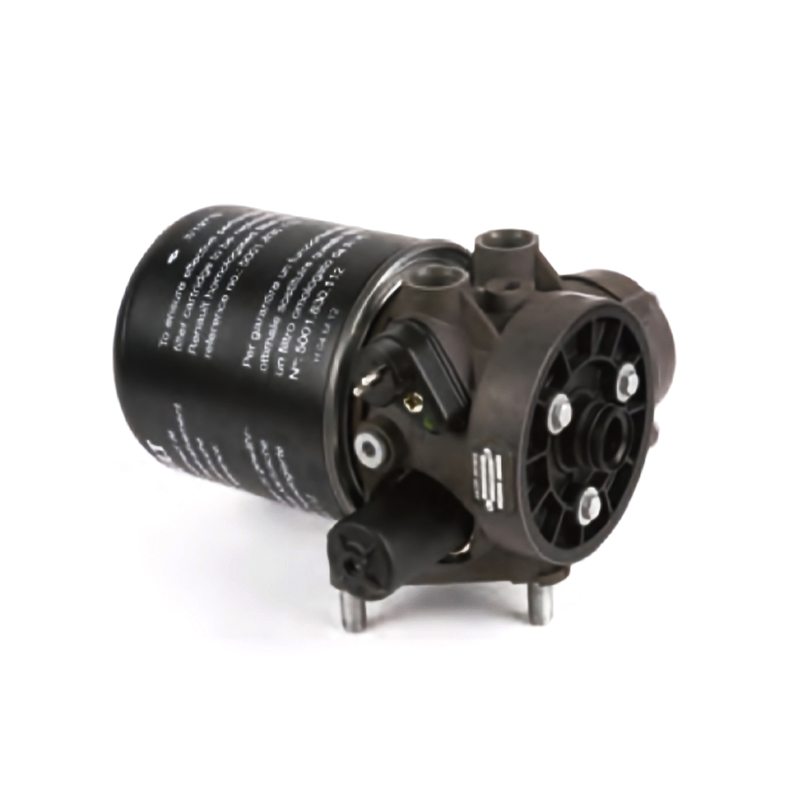
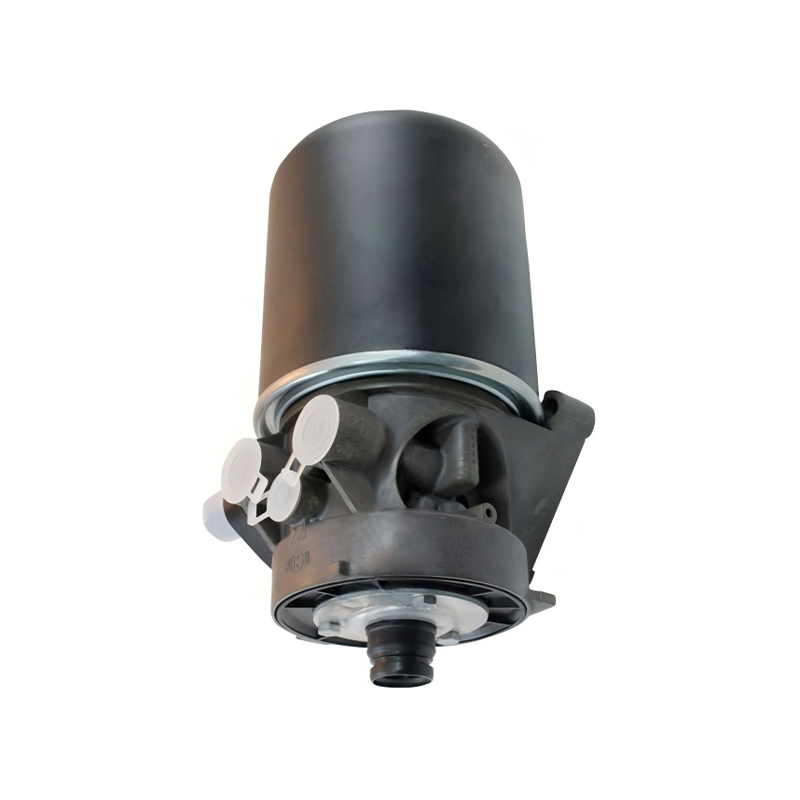 Custom Heavy-Duty Truck Air Dryer with Desiccant CartridgePositioned between compressor and reservoir, this custom dryer removes moisture, oil mist, and particulates to help protect downstream brake valves and chambers.View Product →
Where the Dryer Sits in the Air Brake Circuit
The compressor sends hot, saturated air to the dryer inlet. Inside the dryer, the air passes through a coalescing or filtration stage, then through a desiccant bed that attracts water vapor. The purge cycle releases collected moisture and oil residue to the atmosphere. After that, the dried air moves to the governor and reservoirs, then to the foot brake valve, hand brake valve, relay valves, ABS/EBS modulators, brake chambers, and trailer control lines. Each of those downstream parts expects air that is dry enough and clean enough to move seals and pistons without contamination.
A properly specified heavy-duty truck air dryer assembly also supports the governor and purge behavior that the circuit needs. If the dryer is undersized, mounted poorly, or serviced late, the entire circuit sees the result. Moisture does not stay in one component; it travels to the lowest point and then appears as a drain-valve leak, a slow relay response, or a chamber that will not release evenly.
| Circuit area | What dry air protects | What moisture or oil carryover causes |
|---|---|---|
| Governor and purge circuit | Stable cut-in and cut-out behavior | Short cycling, purge valve sticking, and inconsistent reservoir pressure |
| Relay and quick-release valves | Fast piston movement and clean exhaust | Sluggish release, delayed brake application, and seal swelling |
| ABS/EBS modulators | Clean solenoid passages and predictable pressure control | Contaminated seats, slow modulation, and diagnostic faults |
| Brake chambers | Diaphragm flexibility and corrosion-free internal surfaces | Rough return, diaphragm wear, and uneven braking force |
| Trailer control lines | Reliable coupling pressure and release timing | Freezing at couplers, pressure drop, and trailer brake drag |
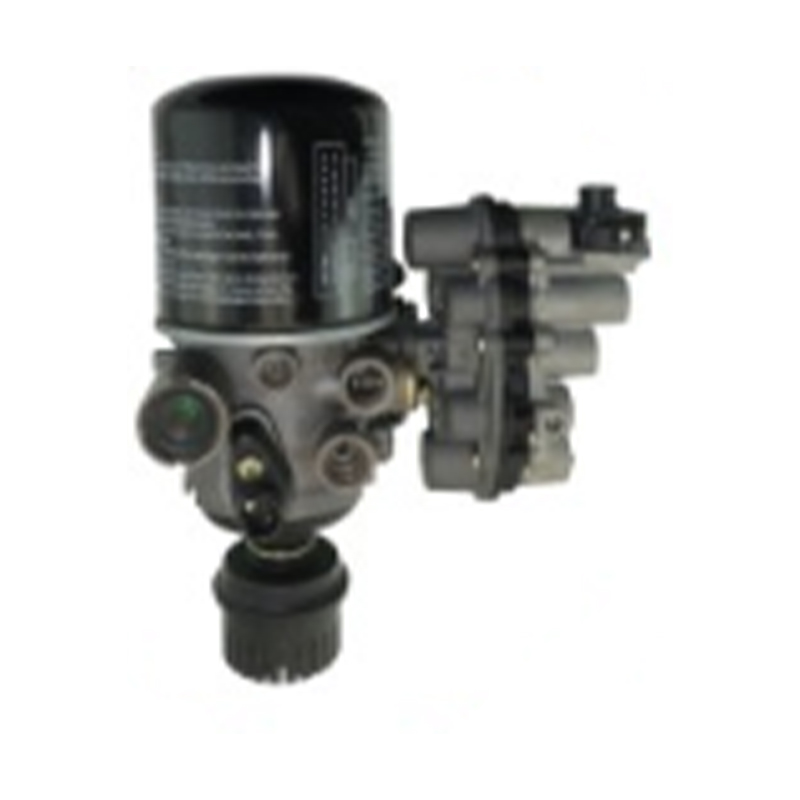 Integrated Air Processing Unit for Heavy-Duty Brake SystemsCombines drying and pressure regulation in a compact unit, helping protect brake circuits from moisture, corrosion, and freezing in demanding commercial vehicle service.View Product →
Moisture, Oil, and Heat: The Three Contaminants That Drive Cost
Water is the most visible contaminant, but oil aerosol and heat are equally important. Oil carryover from the compressor can coat desiccant beads, reduce their water-holding capacity, and form a sticky film on valve seats. Heat affects how much water vapor the air can hold before it cools in the reservoir. A dryer that works well on a mild day can behave differently in winter, when condensed water freezes at drain ports, couplers, or valve exhausts. The result is not only a brake fault; it is a roadside event that could have been avoided with the right dryer specification and service interval.
Water vapor
Cooling air releases liquid water in reservoirs and lines. The dryer must remove vapor before that cooling takes place downstream.
Oil aerosol
Compressor oil carryover can blind filtration media and contaminate seals. Coalescing capacity matters on high-hour vehicles.
Heat load
Hot compressor discharge shortens desiccant life and can distort low-quality housings. Mounting location and airflow matter.
Moisture risk by operating condition
For vehicles that combine high moisture load with limited space, an integrated air processing unit can simplify the layout by combining drying, pressure regulation, and circuit protection. The key is to match the unit to the actual duty cycle rather than choosing by housing size alone.
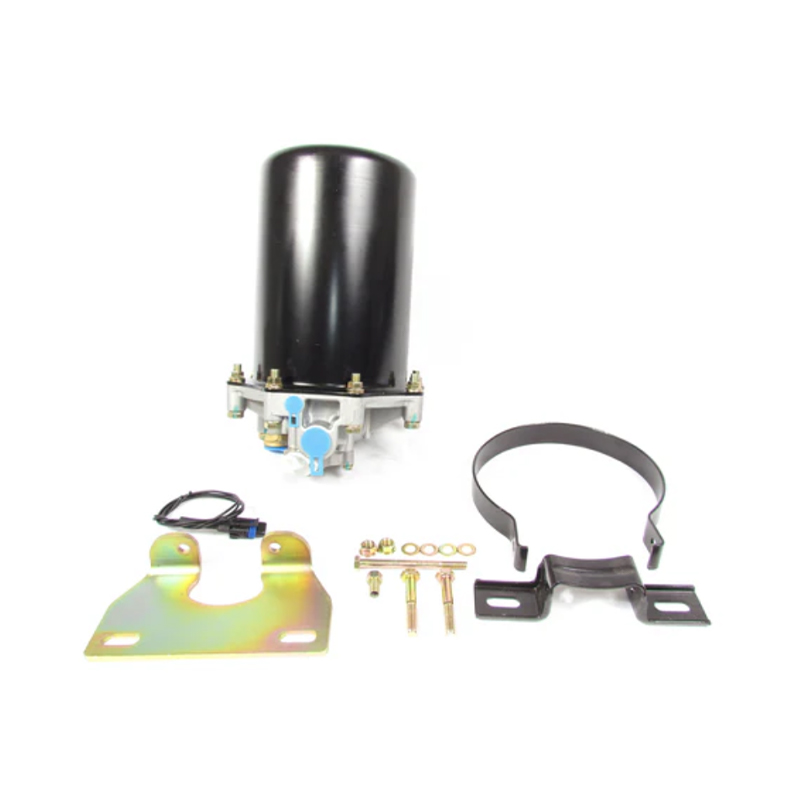 AD-9 Series Air Dryer Assembly with Mounting BracketThe A34108 assembly removes water, oil aerosols, and solids before reservoirs; its bracket and heater suit vocational vehicles with frequent air cycles and cold operation.View Product →
How to Match an Air Dryer to a Truck or Trailer Platform
Selection starts with the air demand of the vehicle and the installation envelope. A tractor with a large reservoir, trailer supply lines, and high compressor output needs a dryer with enough flow and purge volume. A trailer-specific installation may prioritize compact mounting, corrosion resistance, and reliable coupling pressure. Voltage, heater requirement, port type, bracket pattern, and cartridge availability all affect whether the unit can be serviced in the field without adapters or delays.
For a deeper walk-through of the regeneration cycle and purge behavior, see how brake air dryers work. In specification terms, the most useful comparison is not simply European versus American platform; it is the combination of port standard, electrical interface, mounting, and service access.
| Decision point | What to verify | Why it affects the purchase |
|---|---|---|
| Air flow and purge volume | Compressor output, reservoir size, and trailer demand | An undersized dryer passes moisture during high demand and may short-cycle the governor |
| Port and interface standard | Thread type, port size, and connection style | Correct interfaces reduce installation time and leak risk |
| Electrical and heater requirement | 12V or 24V system, heater need, sensor interface | Cold-climate operation and electronic control depend on matching the vehicle circuit |
| Mounting and access | Bracket pattern, frame space, cartridge clearance | Service access determines whether maintenance is done on time |
| Cartridge and repair strategy | Replacement cartridge availability and kit contents | Field service life and total cost depend on simple, repeatable replacement |
Installation and Service Details That Decide Whether the Dryer Performs
Even a good dryer can perform poorly if the installation allows vibration, heat soak, or trapped moisture. Mount the unit where the purge exhaust can flow freely and where road spray does not pack the housing with debris. Keep line lengths reasonable, support the housing, and follow the specified torque for inlet and outlet fittings. On a replacement job, confirm that the old cartridge has not left a seal or spacer behind, and check that the governor signal and purge line are clear before the vehicle returns to service.
- Record the original dryer part number, port type, voltage, and mounting pattern before removal.
- Inspect the compressor discharge line for oil buildup, carbon, or restricted flow.
- Replace the cartridge at the interval recommended for the duty cycle, not only when a fault appears.
- Check reservoir drain valves and trailer couplers after service to confirm no downstream water remains.
- Run the engine and observe purge behavior, governor cut-in, and cut-out before releasing the vehicle.
Service intervals should reflect the operating environment. A vehicle on dusty construction routes, short urban delivery cycles, or winter roads may need closer inspection than a long-haul tractor. The dryer is often the first place where oil carryover becomes visible, so cartridge inspection also gives useful information about compressor condition and air system health.
Diagnostics: What Moisture in the System Looks Like Before a Failure
Moisture rarely announces itself with a single warning. It appears as small, repeatable symptoms that are easy to dismiss until they combine. A driver may report slow release, a sticking hand brake valve, or a trailer that feels delayed. A workshop may find water in a reservoir that was drained recently. In cold weather, the first sign may be a frozen purge line or a coupler that will not seal. These are system-level clues, and they should be read together.
Repeated water at drain valves
A small amount of condensate can be normal, but frequent water after a short run suggests the dryer is saturated or the cartridge is overdue.
Slow brake release
Moisture and oil can make relay or quick-release pistons hesitate. The brake may release, but not with the timing the system expects.
Purge valve not cycling
A blocked purge path or failed heater can leave the desiccant wet. Check the exhaust flow and governor behavior before replacing parts.
Oil film in the housing
Oil carryover reduces drying capacity and points to compressor condition. Cleaning the housing without correcting the source rarely lasts.
When diagnosing, start at the dryer and work downstream. Confirm that the purge exhaust is clear, the heater circuit works where fitted, and the cartridge is correct for the housing. Then check reservoirs, drain valves, relay valves, and chambers for evidence of carryover. Replacing a dryer without removing existing water from the circuit can leave the same symptoms in place.
FAQ: Air Dryer Purpose, Selection, and Service
What is the purpose of an air dryer in one sentence?
Its purpose is to remove moisture and oil contamination from compressed air so the brake system can operate predictably and downstream components can last longer.
Is an air dryer the same as an air filter?
No. A filter captures particles, while an air dryer uses desiccant and a regeneration or purge cycle to remove water vapor. Many dryers also include filtration and coalescing stages, but the drying function is the defining role.
How often should the cartridge be replaced?
The interval depends on duty cycle, climate, compressor condition, and the manufacturer’s service guidance. High moisture load, short trips, and oil carryover shorten service life, so inspection should be based on operating conditions rather than a single calendar rule.
Can a bad air dryer affect braking performance?
Yes. Moisture can freeze, corrode, or contaminate valves and modulators, which may cause slow release, pressure instability, or ABS/EBS faults. The dryer itself is not the brake, but it protects the air that the brake system depends on.
What should be checked after installing a replacement dryer?
Check for leaks at the inlet and outlet, confirm purge exhaust flow, verify governor cut-in and cut-out, and inspect reservoirs and trailer couplers for remaining water. A short road test should confirm normal brake release and pressure recovery.
Our Main Products
Copyright © Zhejiang Gongzheng Machinery Co., Ltd. All Rights Reserved.
