


Gongzheng
Gongzheng
Gongzheng
Gongzheng
Gongzheng
Gongzheng
Gongzheng
Gongzheng
Gongzheng
Gongzheng
Gongzheng
Gongzheng
Gongzheng
Gongzheng
Gongzheng
Gongzheng


Content
A truck driver on a long downhill grade applies the service brake and notices the pedal travel feels slightly longer than before. Later, a line mechanic opens the reservoir drain cock and water pours out. This is the classic warning that the air brake dryer has failed, or that the vehicle is operating without one. If you are looking for a clear answer to the question “What is an air brake dryer?”, the short version is this: it is the component that cleans and dries compressor discharge air before that air enters the rest of the pneumatic system. Without it, water, oil and abrasive particles would quickly damage brake valves, brake chambers, and every other component downstream of the compressor.
What Is an Air Brake Dryer?
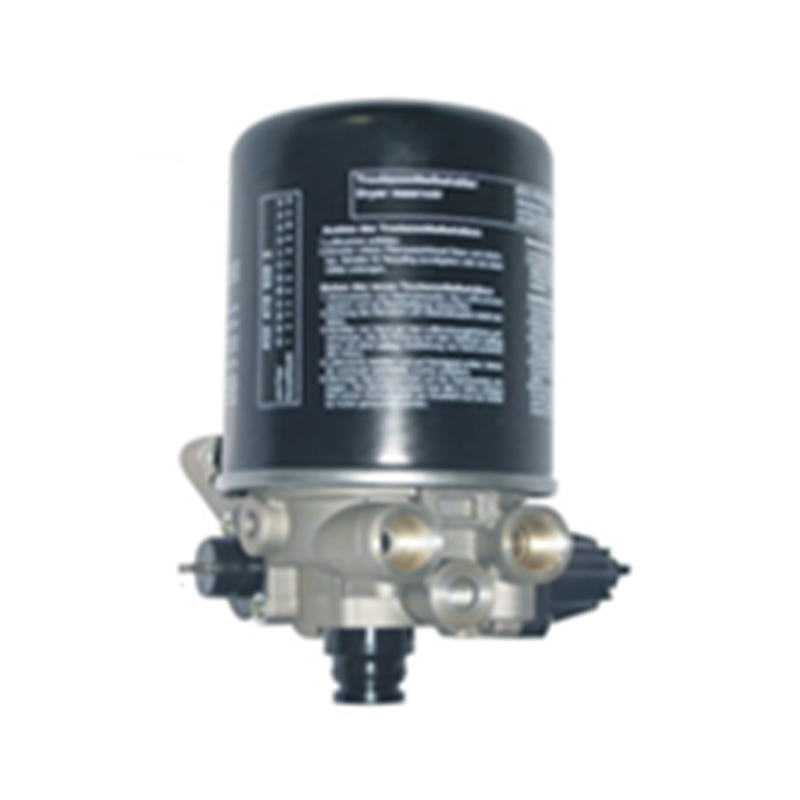
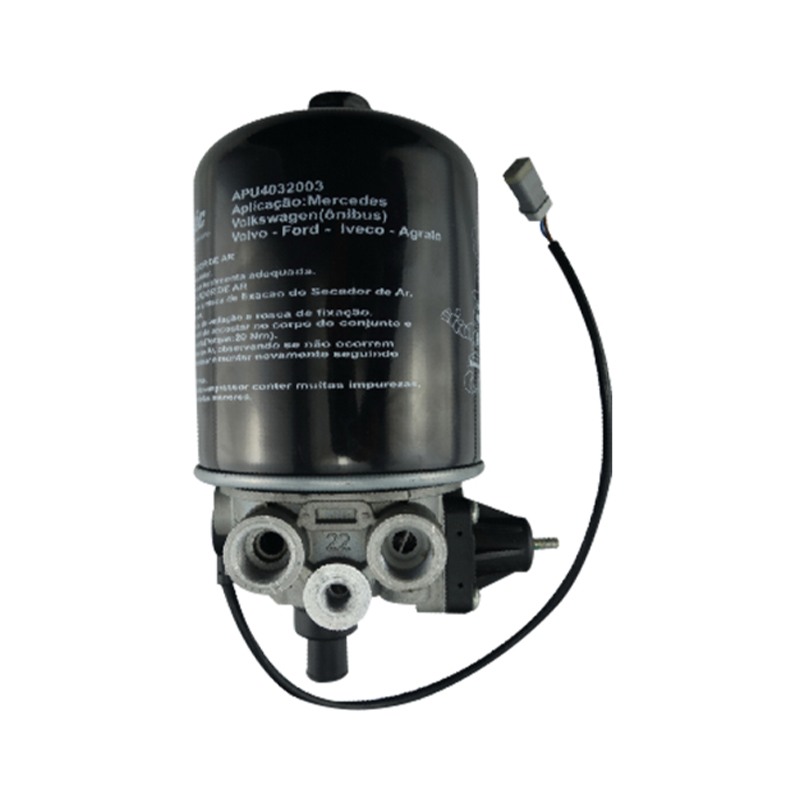
An air brake dryer is a desiccant-type inline filtration device mounted between the air compressor and the primary reservoir, usually on the frame rail or close to the compressor itself. Its job is to remove liquid water, water vapour, oil aerosols and solid contaminants from the hot, high-pressure air leaving the compressor. The core of the dryer is a replaceable desiccant cartridge that attracts and holds moisture. When the compressor reaches its cut-out pressure, the dryer vents a small burst of air through the desiccant, pushing the collected moisture out through the purge valve. This two-cycle process keeps the rest of the brake system clean and dry.
Quick answer: An air brake dryer is a filtration and moisture-removal unit placed after the air compressor. It protects the entire air brake system from water, oil and corrosion by drying compressed air before it reaches the reservoirs and valves.
Why Compressed Air Needs Drying
Compressed air is never dry. When the compressor pulls in ambient air, it also draws in humidity. Compression raises the air temperature and increases the partial pressure of water vapour. As the hot air cools in the piping and reservoirs, the water vapour condenses into liquid water. The compressor oil also carries over as a fine mist. Without an air dryer, the brake system becomes a resting place for water, oil and dirt.
The practical consequences are predictable:
- Water freezes in air lines during cold weather, blocking brake response.
- Moisture causes corrosion inside steel reservoirs and valves, leading to premature failure.
- Oil contaminates rubber diaphragms, seals and O-rings, causing them to swell and lose elasticity.
- Dirt and carbon particles score valve seats, creating leaks and pressure loss.
- Even if a driver drains reservoirs daily, internal moisture in hard-to-reach valve passages remains a risk.
Air dryers eliminate most of this moisture at the source. For a more detailed look at where the dryer sits in the overall brake system, see our article on the brake air dryer system.
Start
Compress
Cut-in
Cut-out
Purge
Idle
How an Air Brake Dryer Works
An air dryer’s operation is divided into two phases: the charge cycle and the purge cycle. Understanding both phases helps with diagnostics and maintenance.
Charge Cycle
During the charge cycle, the compressor is pressurizing the system. Hot, humid air enters the dryer body and first passes through an oil separator or coalescing section. Larger oil droplets and some liquid water are removed here. The air then flows downward through the desiccant bed. Water vapour and oil vapour are adsorbed onto the desiccant surface, while dry air continues to an internal one-way check valve and exits to the wet tank or primary reservoir. The purge valve stays closed, and the desiccant becomes progressively saturated with moisture during this phase.
Purge Cycle
When system pressure reaches the governor’s cut-out setting, the compressor unloads and stops compressing. The dryer then enters the purge cycle. A purge valve in the end cover opens, venting the air trapped around the desiccant. At the same time, a small volume of clean, dry air from the reservoir flows backwards through the desiccant. This reverse flow carries absorbed moisture and oil residue out through the purge valve and exhaust port. The desiccant is regenerated and ready for the next charge cycle. The whole purge process takes a few seconds and may be heard as a short blast of air.
What the Desiccant Actually Does
The desiccant is not a simple filter that traps particles. It is a hygroscopic material, typically activated alumina or silica gel, that adsorbs water molecules on its surface area. Because the effective surface area of a desiccant bed is enormous, a relatively small cartridge has enough capacity to dry the air supply for every brake application during a single trip. Over time, the desiccant can fracture, become contaminated with oil, or simply lose its capacity, which is why periodic replacement of the cartridge is essential.
Key Components in a Typical Air Dryer
Although air dryers vary slightly by OEM and model, most units contain the same set of core components. The table below shows what each component does.
| Component | Function |
|---|---|
| Desiccant cartridge | Adsorbs water vapour and oil vapour from compressed air |
| Oil separator | Removes bulk oil and liquid water before the desiccant bed |
| Purge valve | Opens during regeneration to vent moisture to atmosphere |
| Check valve | Prevents pressurized air from the reservoir flowing backwards into the dryer |
| Heater (optional) | Prevents purge valve and desiccant from freezing in cold climates |
| End cover | Houses the purge valve and provides mounting points |
How to Select the Right Air Brake Dryer
Choosing an air dryer is not a one-size-fits-all decision. It affects brake reliability, maintenance costs and vehicle uptime. Here are the main selection points to consider before buying a replacement or specifying a new unit.
- Compressor output and system pressure: The dryer must be sized to handle the compressor’s airflow rate and the vehicle’s normal pressure range, usually 100 to 130 psi.
- Port type and mounting: Check the inlet, outlet and purge port threads, as well as whether the dryer mounts directly to the compressor or on a remote frame bracket.
- Heated versus non-heated: Trucks operated in cold regions should use a heated air dryer to prevent the purge valve and desiccant from freezing.
- Integrated purge volume: Some models use an internal purge volume built into the end cover, while others need external tubing to a remote reservoir. Confirm what your vehicle is wired and plumbed for.
- Service interval and cartridge availability: Look for a dryer with a widely available replacement cartridge, not a proprietary design that becomes expensive to service.
- Test standards: Verify that the dryer meets relevant commercial vehicle standards and that the factory can provide quality documentation.
If you are replacing an old unit, the safest route is to match the existing mounting and port pattern. Our product range includes multiple air dryer configurations with different port sizes and heater options, so you can find a direct fit without reworking the air lines. You can also review our factory profile to understand our testing and quality control approach: why fleets and OEMs work with our factory.
Installation and Maintenance Tips
Installing an air dryer looks simple, but a few mistakes can reduce its effectiveness. Always mount the dryer in a position that allows the purge exhaust to point downward and stay clear of wiring and hoses. Use the correct torque on the mounting bolts and air fittings to avoid stress cracks. If the dryer is heated, make sure the electrical connector is live only when the ignition is on, and verify that the heater draws the intended current.
Preventive Maintenance Schedule
- Daily: Listen for a brief purge sound when the compressor reaches cut-out pressure.
- Monthly: Drain the reservoirs manually and check for water or oil. Water in the tanks usually means the dryer is not working.
- Every 12 months or 100,000 km, whichever comes first: Inspect the dryer body for leaks, replace the desiccant cartridge, and clean the oil separator area.
- After replacing the cartridge: Cycle the compressor several times and check that the purge valve opens and closes without leaking.
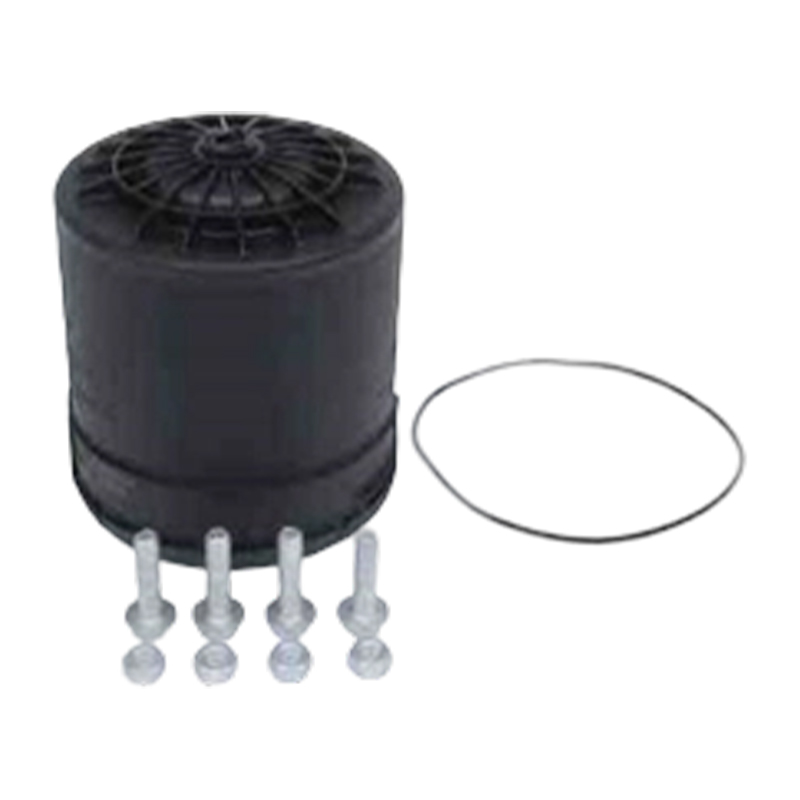
Keeping spare cartridges in stock is the most cost-effective way to avoid unplanned downtime. A fresh desiccant cartridge restores the dryer to full performance. When you are ready to service a unit, check the replacement cartridges available in our range to match the exact size and filter media for your dryer body.
Common Failure Signs and What They Mean
Even a well-maintained air dryer eventually shows symptoms of wear or contamination. The table below lists the most common issues that a technician will encounter.
| Symptom | Likely Cause | Recommended Action |
|---|---|---|
| Water in brake reservoirs | Saturated desiccant cartridge, stuck purge valve, or air bypassing the dryer | Replace cartridge and verify purge valve operation |
| Oil in air lines | Excessive compressor oil carryover or oil separator overload | Check compressor rings; clean or replace oil separator |
| Continuous air leak from purge exhaust | Purge valve stuck open or damaged seal | Replace purge valve assembly |
| No purge sound at cut-out | Purge valve stuck closed, blocked orifice, or faulty governor signal | Inspect purge valve, governor and air lines |
| Slow pressure build-up | Clogged desiccant or restricted inlet filter | Replace cartridge and clean inlet screens |
Frequently Asked Questions
Is an air dryer the same as an air filter?
No. A standard air filter removes dust and particles, but it cannot remove water vapour. An air dryer removes both contaminants and moisture. In many modern commercial vehicles, the air dryer also contains a small amount of particulate filtration, but its primary job is drying.
Can a truck run without an air brake dryer?
Technically, yes, but it is not advisable. A system without a dryer requires daily manual draining of every reservoir, and even then, corrosion and valve contamination happen much faster. In freezing weather, moisture can freeze in the lines and stop the brakes from releasing. The cost of replacing failed valves and brake chambers far exceeds the cost of a dryer.
How often should the desiccant cartridge be replaced?
A typical service interval is every 12 months or 100,000 km, but severe duty cycles, high humidity and oil contamination can shorten that interval. If any water is found in the reservoirs, the cartridge should be replaced immediately rather than waiting for a scheduled service.
What does the heater do on a heated air dryer?
The heater warms the purge valve and the area around the desiccant discharge, preventing ice formation in cold weather. If the heater fails, the dryer can still dry air, but the purge valve may freeze, causing pressure build-up and reduced dryer performance.
Why is there oil in the air dryer?
Some oil carryover is normal because the compressor lubricates its own moving parts. The air dryer removes much of it. However, if the dryer becomes saturated with oil, it is usually a sign that the compressor piston rings, discharge valve or oil separator is worn, allowing excessive oil to enter the air stream.
Our Main Products
Copyright © Zhejiang Gongzheng Machinery Co., Ltd. All Rights Reserved.
