


Gongzheng
Gongzheng
Gongzheng
Gongzheng
Gongzheng
Gongzheng
Gongzheng
Gongzheng
Gongzheng
Gongzheng
Gongzheng
Gongzheng
Gongzheng
Gongzheng
Gongzheng
Gongzheng

Industry News
How Does an Air Dryer Work? Working Principle of Air Dryers in Truck Air Brake Systems

Content
- 1 What Does an Air Dryer Do in a Compressed Air System?
- 2 How Does an Air Dryer Work? The Charge and Purge Cycle
- 3 Working Principles of Different Air Dryer Designs
- 4 How to Select an Air Dryer for a Truck or Fleet
- 5 Air Dryer Maintenance and Cartridge Replacement
- 6 Why Air Dryer Quality Matters for Brake Performance
- 7 Air Dryer FAQ
How does an air dryer work? In a truck air brake system, the air dryer works between the compressor and the storage tanks. It removes moisture, oil vapor, and solid contamination from the air, then discharges what it catches. This charge-and-purge routine happens automatically on every compressor cycle, and it is the main reason a modern air brake system can operate through cold winters and high-humidity routes without constant valve failure.
What Does an Air Dryer Do in a Compressed Air System?
When the air compressor compresses atmospheric air, it also concentrates water vapor. Hot compressed air can hold more moisture while it is hot, but as the air cools in the discharge line, reservoir, or valve body, that moisture condenses into liquid water. A little water in an air brake system can lead to much bigger problems than a damp tank.
Water Vapor and Pressure Dew Point
The key measure is pressure dew point. This is the temperature at which water vapor begins to condense at system pressure. A dryer that can lower the pressure dew point far enough keeps the whole air system dry at the lowest expected ambient temperature. For a commercial vehicle air brake system, a desiccant dryer is usually expected to deliver a pressure dew point in the range of minus 40 degrees Celsius to minus 20 degrees Celsius.
Without proper air drying, common consequences include:
- Frozen brake lines and valves in cold weather.
- Corrosion inside reservoirs, brake chambers, and valve bores.
- Washed-away internal lubrication in moving pneumatic valves.
- Contaminated brake circuits that cause uneven pressure build-up or slow release.
- Faster degradation of seals, diaphragms, and compressor components.
How Does an Air Dryer Work? The Charge and Purge Cycle
The simplest way to understand a truck air dryer is to look at its two operating cycles. During the charge cycle, the dryer cleans and dries the air flowing from the compressor to the reservoirs. During the purge cycle, it removes the captured water and oil from the dryer itself so the desiccant can dry again for the next cycle.
Charge Cycle
Warm, humid compressed air enters the dryer from the compressor. The air passes through an oil separator and then through a desiccant bed. The desiccant adsorbs water vapor from the air, while liquid oil and water droplets are trapped by the internal filter structure. Dried air then flows through a check valve into the air reservoirs.
Purge Cycle
When the governor reaches the cut-out pressure, the compressor unloads. The dryer opens a purge valve, allowing a small volume of stored dry air to expand and flow back through the desiccant bed. That reverse airflow pushes water and oil out through the exhaust port. Once the purge is complete, the dryer is ready for the next charge cycle.
On many dryers, a heater and thermostatically controlled purge valve help prevent freeze-ups. The purge valve timing must be correct. If the purge is too short, moisture stays in the desiccant. If it is too long, the system wastes dry stored air and takes longer to rebuild pressure.
Working Principles of Different Air Dryer Designs
There are several types of compressed air dryers, but not every type is equally suitable for a truck air brake system. The main difference between them is how they remove moisture and what pressure dew point they can achieve.
Refrigerated Air Dryers
A refrigerated dryer cools the compressed air to around 3 degrees Celsius to 10 degrees Celsius. At this temperature, water vapor condenses into liquid water, which is then drained away. Refrigerated dryers are common in industrial plants, but they are less common as the primary dryer on a truck because their pressure dew point remains above freezing. If air lines are exposed to very low ambient temperatures, moisture can still condense and freeze downstream.
Desiccant Air Dryers
Desiccant dryers use a replaceable cartridge filled with activated alumina or a similar desiccant material. Water vapor is adsorbed onto the surface of the desiccant as the air passes through the bed. Because the desiccant can be regenerated by purge air, the same cartridge can be used for thousands of operating cycles. This is the standard solution for truck air brake systems because it can reach a much lower pressure dew point than a refrigerated dryer.
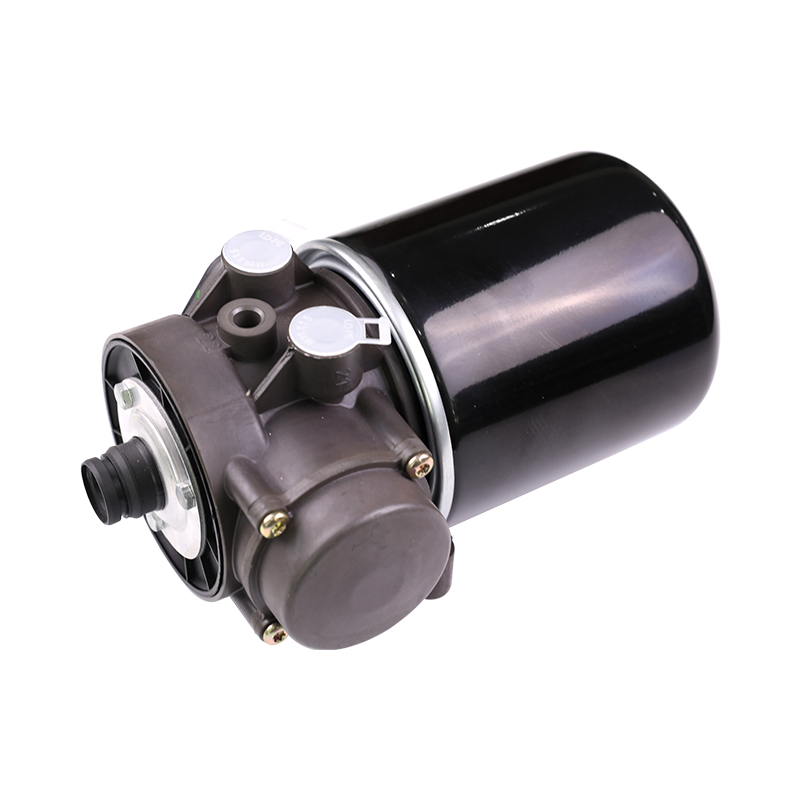 Air Dryer for Commercial Vehicle Air Brake SystemsReview this desiccant air dryer as the recommended choice for truck brake systems, offering low dew point performance without an electric chiller and designed for OEM applications.View Product →
Membrane Air Dryers
Membrane dryers use bundles of hollow membrane fibers. Water vapor permeates through the membrane walls faster than the main air flow, and a small sweep of dry air carries the moisture away. Membrane dryers are compact and have no moving parts, but they are usually used for lower-flow point-of-use drying rather than as the main dryer for a full air brake system.
Deliquescent Dryers
A deliquescent dryer uses a chemical desiccant tablet that dissolves slowly as it absorbs moisture. The liquid solution is drained away from the bottom of the vessel. This design is simple and requires no power, but the desiccant is consumed and must be refilled regularly. It also has a limited dew point depression, which makes it less attractive for modern truck air brake systems.
| Air Dryer Type | Working Principle | Typical Pressure Dew Point | Best Application |
|---|---|---|---|
| Refrigerated | Cool compressed air to force water vapor to condense and drain. | 3 degrees Celsius to 10 degrees Celsius | Industrial compressors, general plant air, controlled indoor environments. |
| Desiccant | Adsorb water vapor on desiccant media, then regenerate with purge air or heat. | -40 degrees Celsius to -20 degrees Celsius | Truck air brakes, outdoor mobile equipment, high-purity pneumatic systems. |
| Membrane | Separate water vapor through membrane fibers with a sweep flow. | -40 degrees Celsius to 0 degrees Celsius | Point-of-use drying, instrumentation air, lower-flow applications. |
| Deliquescent | Dissolve chemical tablets to absorb moisture and drain liquid. | Dependent on ambient temperature and tablet type | Portable or temporary systems where simple operation is more important than very low dew point. |
Refrigerated
Desiccant
Membrane
Deliquescent
How to Select an Air Dryer for a Truck or Fleet
Air dryer selection is not just about matching the old cartridge number. You need to consider how much air the compressor produces, how much reservoir volume the system has, what ambient temperatures the truck will see, and how often the vehicle can be serviced.
The selection process should cover these points:
- Compare the dryer flow rating with the compressor free air delivery.
- Define the required pressure dew point for the operating environment.
- Check maximum inlet temperature, because hot compressor air affects desiccant capacity.
- Consider available installation space and mounting orientation.
- Check whether the dryer can tolerate normal oil carryover from the compressor.
- Look at replacement cartridge price, availability, and service interval.
For most commercial vehicles, a desiccant dryer with a reliable purge valve and a replaceable cartridge is the correct approach. It gives low dew point performance without requiring an electric chiller, and it can be serviced during routine maintenance.
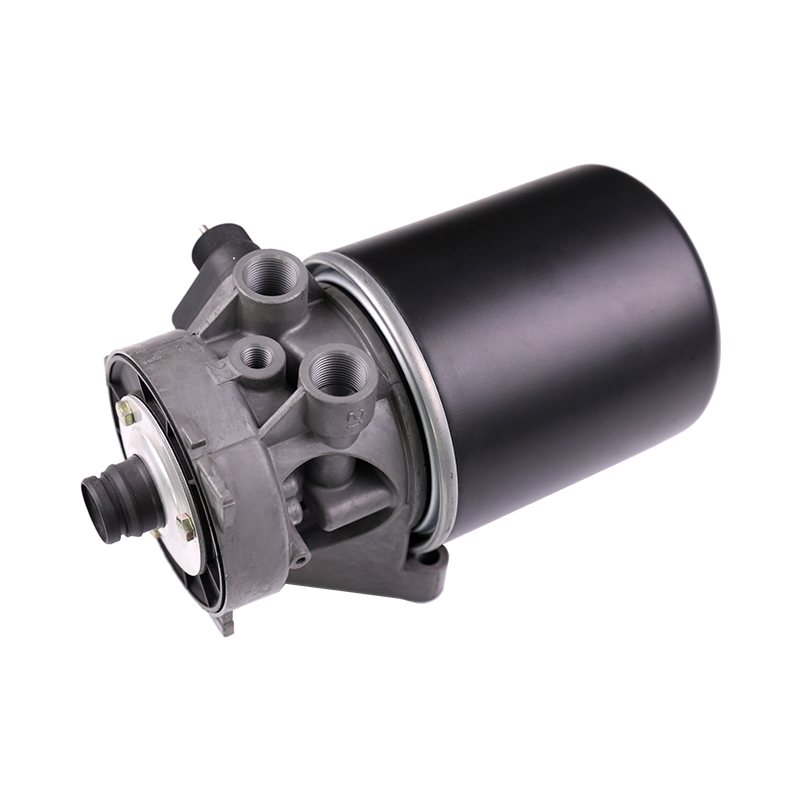 Serviceable Desiccant Air Dryer with Purge ValveConsider this desiccant dryer when planning routine maintenance, as it supports low dew point operation and easy cartridge replacement for commercial brake systems.View Product →
Air Dryer Maintenance and Cartridge Replacement
The air dryer will not protect the brake system forever. The desiccant gradually loses capacity, the purge valve can collect oil residue, and the internal filter can become contaminated. Regular inspection is essential.
Recommended maintenance practices include:
- Listen for a clear purge exhaust at governor cut-out pressure.
- Check the compressor discharge pipe for heavy oil residue.
- Inspect electrical connections and the heater function before cold weather.
- Replace the air dryer cartridge at the intervals given by the vehicle manufacturer.
- Use the correct replacement cartridge rather than an undefined imitation unit.
In severe operating conditions, the cartridge should be replaced more often. High ambient humidity, dusty roads, and excessive compressor oil carryover all reduce the service life of the desiccant bed. If the brake system already shows signs of moisture, the dryer should be checked before simply draining the tanks. You can also read more about air dryer cartridge replacement and selection.
Why Air Dryer Quality Matters for Brake Performance
An air dryer is not just a metal canister with desiccant inside. It must maintain stable check valve sealing, consistent purge timing, low pressure drop, and enough desiccant volume to handle the compressor output. If any of these details is wrong, the dryer may look fine on the outside while allowing moisture to pass through.
When we manufacture air dryers at our factory, we focus on the details that affect real brake performance: sealing of the internal check valve, consistency of the desiccant fill, corrosion resistance of the housing, and reliability of the purge mechanism. The same factory quality system covers air dryer cartridges, brake chambers, solenoid valves, relay valves, and related pneumatic products. We follow ISO/TS 16949 and IATF 16949 quality management requirements in production.
For a closer look at the production scope and company background, you can review our factory profile.
Air Dryer FAQ
How does an air dryer work in a truck?
It first dries the compressed air from the compressor during the charge cycle, then expels the collected moisture during the purge cycle. Desiccant inside the dryer adsorbs water vapor before the air reaches the brake reservoirs.
Why does an air dryer need a purge cycle?
Because the desiccant bed must be regenerated. Purge air flows backward through the desiccant and carries moisture out of the dryer, so the next charge cycle can begin with dry desiccant.
What is the difference between refrigerated and desiccant air dryers?
A refrigerated dryer cools the air to condense and drain moisture. A desiccant dryer uses desiccant media to adsorb water vapor. Desiccant dryers normally reach much lower pressure dew point, which is why they are preferred for truck air brake systems.
When should I replace an air dryer cartridge?
Follow the manufacturer interval for the specific vehicle model. Many commercial vehicles are scheduled around one year or 100,000 kilometers, but shorter intervals may be needed in humid climates or when the compressor has high oil carryover.
Our Main Products
Copyright © Zhejiang Gongzheng Machinery Co., Ltd. All Rights Reserved.
