


Gongzheng
Gongzheng
Gongzheng
Gongzheng
Gongzheng
Gongzheng
Gongzheng
Gongzheng
Gongzheng
Gongzheng
Gongzheng
Gongzheng
Gongzheng
Gongzheng
Gongzheng
Gongzheng


Content
- 1 Why the Replacement Interval Is Not a Fixed Number
- 2 Typical Truck Air Dryer Replacement Intervals
- 3 Inspect the Air Dryer Before You Decide on a Replacement
- 4 Cartridge Replacement: The Most Common Maintenance Step
- 5 Complete Air Dryer Replacement vs. Cartridge Swap
- 6 Duty Cycle and Environmental Risk Factors
- 7 Build Air Dryer Service Into the Maintenance Schedule
- 8 Choosing the Right Replacement Air Dryer
- 9 Factory Perspective: What We Check Before Recommending a Full Dryer Replacement
- 10 Frequently Asked Questions
- 10.1 Can I replace only the cartridge instead of the whole air dryer?
- 10.2 How do I know if the air dryer is already saturated?
- 10.3 Does a rebuilt compressor change the replacement interval?
- 10.4 What happens if I leave the air dryer too long without replacement?
- 10.5 Should I replace the air dryer every time I replace the compressor?
A line-haul truck often covers more than 120,000 miles per year. In that time, its air dryer may process hundreds of thousands of compressor cycles while removing moisture, oil vapor, and dust from the air supply. Without regular replacement, the dryer stops protecting brake valves, air tanks, and other pneumatic components.
The short answer is that most trucks need a new air dryer cartridge every 12 to 24 months, or roughly every 100,000 to 200,000 miles, depending on the duty cycle, the air compressor’s condition, and the operating environment. A complete air dryer unit may last longer, but it still needs regular inspection and filter replacement. Waiting until moisture appears at the drain valves is already too late.
Quick answer: In normal line-haul service, plan on cartridge replacement at 24 months or about 200,000 miles. In pick-up and delivery, construction, and high-humidity work, move that interval up to 12 months or about 100,000 miles.
Why the Replacement Interval Is Not a Fixed Number
The air dryer does not fail on a strict calendar schedule. It wears out faster when the air compressor passes oil vapor into the discharge line, or when the desiccant becomes saturated by water and cannot regenerate during the purge cycle. That is why the same truck model can need a new cartridge at 12 months in one fleet and last 24 months in another.
Several factors have a direct effect on service life:
- Compressor oil carryover: worn rings and oil-lubricated cylinders put oil into the air stream.
- Ambient humidity and temperature: coastal and tropical climates load the desiccant more heavily.
- Air demand: stop-and-go vocational work causes more compressor cycles than steady highway running.
- Undetected air leaks: constant compressor cycling leaves little time for the dryer to purge moisture.
- Purge valve performance: a sticky or restricted purge valve reduces regeneration of the desiccant bed.
- Filter quality and desiccant capacity: original-grade cartridges with the correct desiccant volume dry more air between replacements.
If a truck idles for long periods with high accessory air demand, the compressor may never stop cycling. In that case, the air dryer cartridge is doing a larger volume of work than the odometer suggests. Service intervals should be based on compressor hours or the number of purge cycles whenever possible.
Typical Truck Air Dryer Replacement Intervals
Below is a practical planning table used by many maintenance teams. Always confirm the final decision with the vehicle manufacturer’s service manual.
| Application | Typical interval | What influences the interval |
|---|---|---|
| Line-haul tractor | 24 months / 200,000 miles | Low compressor load, steady highway speeds, fewer brake applications |
| Regional pick-up and delivery | 12–18 months / 100,000 miles | More brake cycles, more engine braking, shorter runs |
| Construction, dump, and mixer | 12 months / 100,000 miles | Dust, vibration, frequent idling, high air demand |
| Transit bus or refuse truck | 12 months | Frequent stops, high air consumption, constant compressor activity |
| Hot and humid climates | 12 months or less | High humidity saturates the desiccant faster |
| Known compressor oil carryover | 6–12 months | Oil contamination reduces drying capacity quickly |
These ranges are not an excuse to postpone maintenance. A dryer cartridge is a wear item, not a lifetime component. If the air system shows moisture or oil contamination, replace the cartridge even if it has not reached the planned mileage interval.
Inspect the Air Dryer Before You Decide on a Replacement
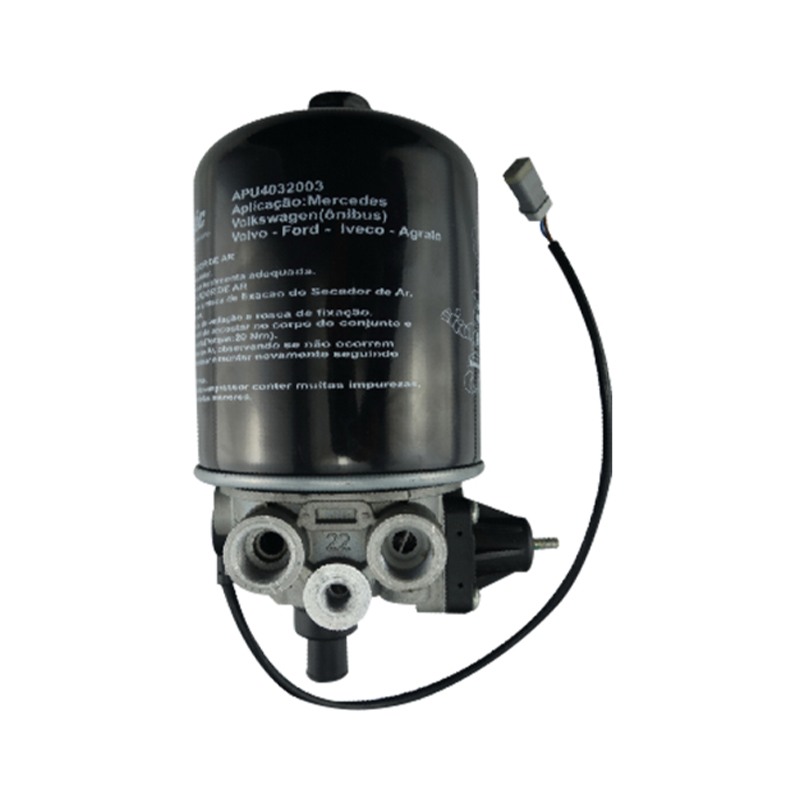
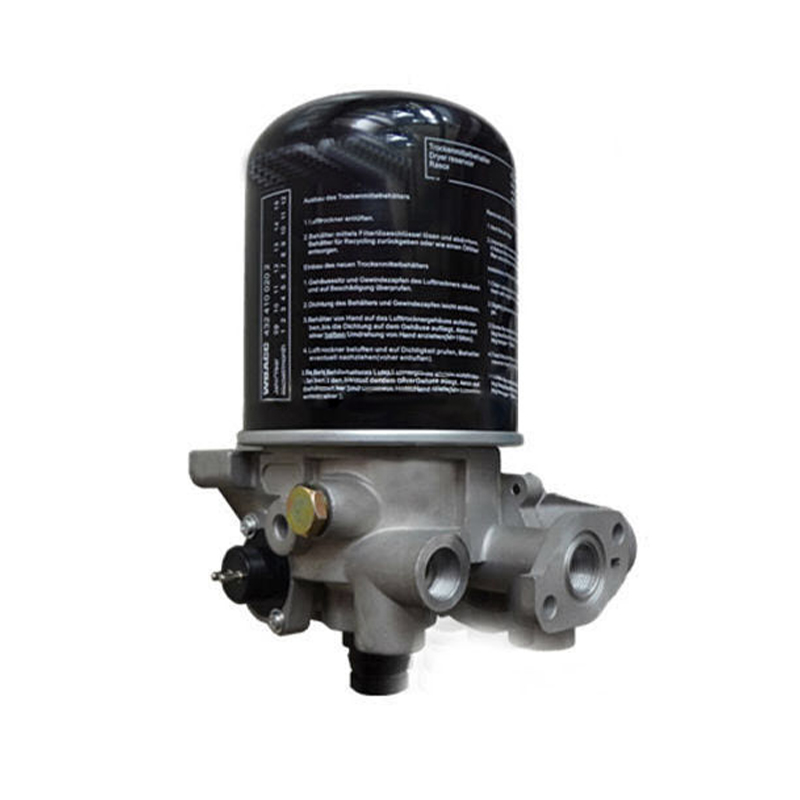
A replacement decision should start with a visual inspection. Look at the complete air dryer, not just the cartridge. The housing, purge valve, heater connector, check valves, and mounting points all affect performance.
Oil residue around the purge valve
Oil contamination usually comes from compressor blow-by. It coats the desiccant and reduces the cartridge’s ability to hold moisture.
Moisture in the air tanks
If the wet tank collects water beyond a few drops after the compressor has run, the dryer is no longer doing its job.
Desiccant dust or granules
Dust near the purge exhaust or mounting flange suggests a damaged cartridge or failed internal filter.
Corrosion and damaged heater wiring
Corrosion weakens the housing, while a failed heater allows freeze-ups in cold weather.
If the housing is sound and the problem is limited to the desiccant bed, replacing the cartridge is the correct and lower-cost repair. If the dryer body is corroded or the check valves leak, a complete air dryer replacement is more reliable.
Cartridge Replacement: The Most Common Maintenance Step
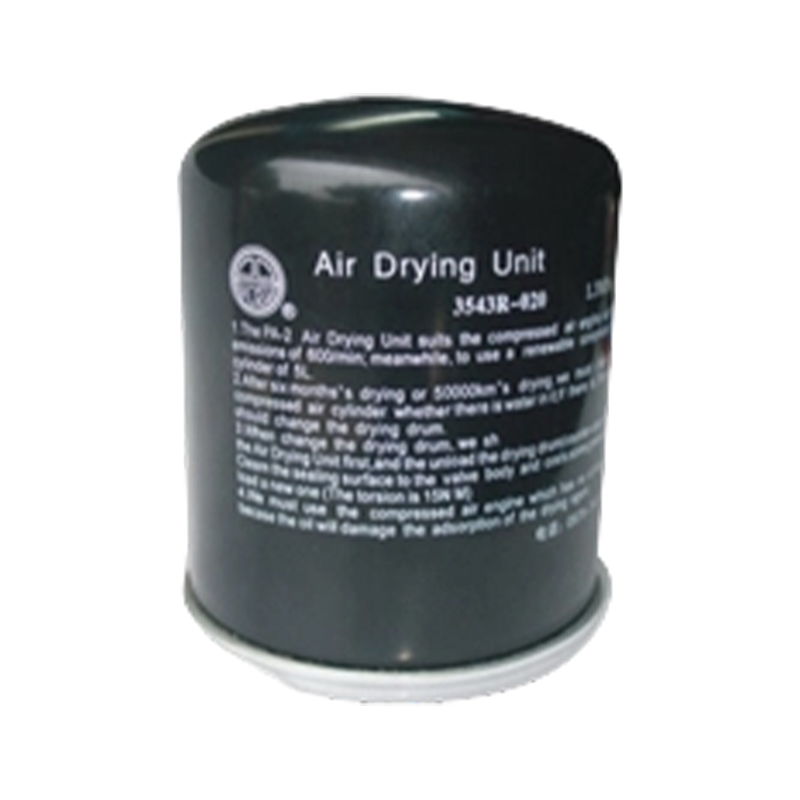
In most cases, replacing the desiccant cartridge is the fastest way to restore drying performance. The cartridge should be changed before the desiccant becomes completely saturated, because a saturated desiccant bed can no longer absorb moisture from compressed air.
A simple air dryer cartridge check should happen each time the oil is changed. Remove the cartridge when the compressor is cool, inspect the desiccant for oil staining and hardening, and look at the purge valve seat for carbon buildup. If the desiccant feels hard or crumbles easily, it needs replacement.
Complete Air Dryer Replacement vs. Cartridge Swap
Cartridge replacement is not always enough. The complete dryer unit should be replaced when the housing is corroded, the check valve seat is damaged, the heater connector is broken, the mounting bracket has cracks, or the purge valve body cannot be resealed. These structural problems cannot be solved by installing a new cartridge.
| Service option | When to choose it | Expected result |
|---|---|---|
| Replace the desiccant cartridge | Dryer body and valves are in good condition, but the desiccant is saturated | Restores moisture removal at a lower replacement cost |
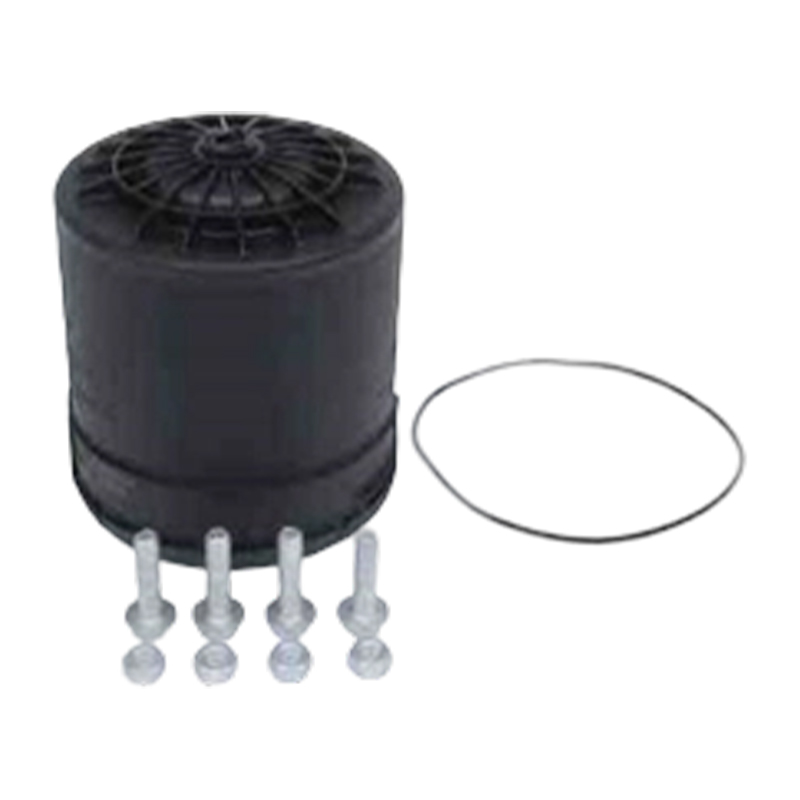
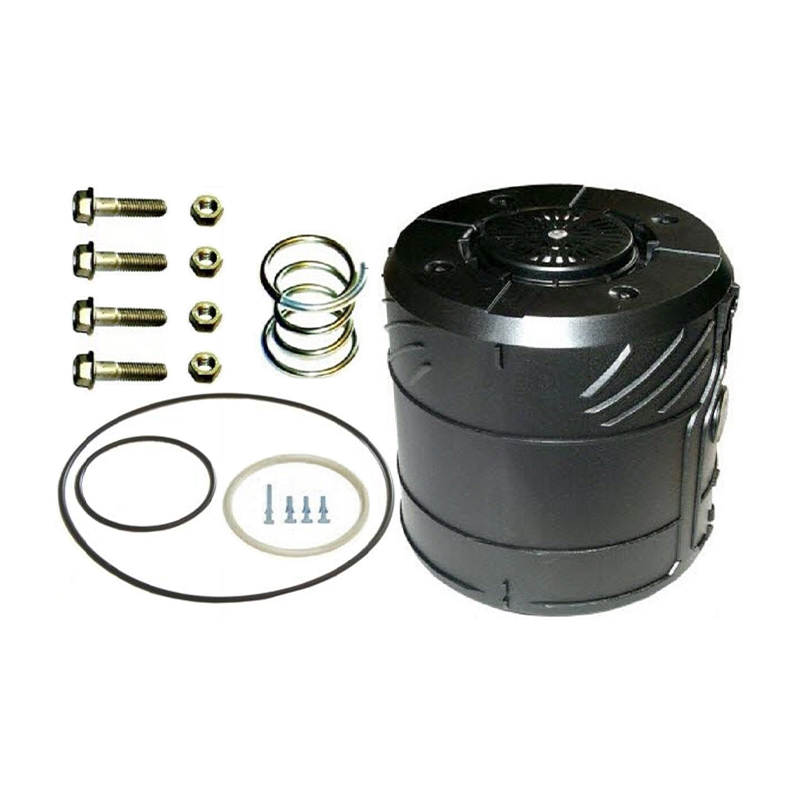
| Install a rebuild kit with purge valve and seals | Small purge valve leak, light oil residue, or worn O-rings | Fixes air loss and helps the dryer regenerate normally |
| Replace the complete air dryer unit | Corroded housing, damaged check valve, broken heater, cracked bracket, or unknown service history | Provides a predictable service life with fresh internal components |
For a fleet manager, replacing the complete air dryer is often the right decision when the truck has covered more than 500,000 miles and the dryer housing shows signs of being removed many times. A new unit also removes uncertainty about the condition of internal check valves and purge timing.
Duty Cycle and Environmental Risk Factors
Some fleets operate in conditions that make a 24-month interval too long. The chart below shows the factors that most commonly push the service interval shorter.
Compressor oil carryover 95% effect
High average humidity 90% effect
Frequent stop-and-go air demand 75% effect
Undetected air system leaks 70% effect
Long idling hours 60% effect
These percentages are illustrative, not laboratory values. They represent patterns seen in field service where a dryer that could have lasted two years needs replacement in less than one year because of a mechanical or environmental cause.
Build Air Dryer Service Into the Maintenance Schedule
Air dryer replacement should not be an emergency repair. It should be planned at the same time as oil changes, brake inspections, and compressor service. A scheduled approach reduces downtime and prevents moisture from reaching expensive components.
- Daily: Drain the air tanks and note whether water is present.
- Monthly: Listen for the purge cycle and check the purge valve for oil residue.
- At every oil change: Inspect the air dryer cartridge, mounting bolts, and heater wiring.
- Annually or every 100,000 miles: Replace the cartridge in severe-service and high-humidity operations.
- Every 24 months or 200,000 miles: Replace the cartridge in normal line-haul operations.
- After compressor replacement: Replace the cartridge to remove contamination left by the old compressor.
Pay attention to the brake air dryer system as a whole. The dryer cartridge is the main consumable part, but purge valves, check valves, and air lines also need periodic inspection.
Choosing the Right Replacement Air Dryer
When the original dryer reaches the end of its service life, the replacement unit must match the vehicle’s pneumatic configuration. A wrong mounting pattern, wrong port size, or wrong heater voltage can create air leaks and electrical failures.
- Mounting dimensions: the new dryer must fit the original bracket position without modification.
- Port size and thread type: supply port, purge port, and governor ports must match the air lines.
- Heater voltage: use 12V or 24V according to the vehicle’s electrical system.
- Desiccant cartridge compatibility: the replacement cartridge must fit the dryer body and have enough desiccant volume.
- Unloader and governor integration: some dryers include a built-in unloader valve or governor port.
Choosing the correct component is just as important as choosing the right service interval. A new air dryer installed with incompatible ports or the wrong cartridge will produce the same moisture problems as an old dryer.
Factory Perspective: What We Check Before Recommending a Full Dryer Replacement
As a manufacturer of air dryers and pneumatic brake components, we look at the problem from both the production and maintenance side. A dryer that fails early is usually not a sudden part failure. It is the result of oil entering the desiccant, purge valve malfunction, or a housing that has been damaged during removal and installation.
Before replacing the complete dryer, we check the same points a careful technician should check:
- Is the mounting surface flat and free of cracks?
- Does the purge valve close tightly after the compressor unloads?
- Is the check valve between the dryer and wet tank seating correctly?
- Is the heater connector corrosion-free?
- Does the desiccant cartridge match the dryer model and application?
If the housing is still sound, a new cartridge and rebuilt purge valve can restore the dryer's performance. If the housing is distorted, cracked, or severely corroded, a complete replacement is the safer choice for the brake system.
Frequently Asked Questions
Can I replace only the cartridge instead of the whole air dryer?
Yes, when the dryer housing, purge valve, check valves, and heater connections are in good condition. The cartridge is the wear item that contains desiccant and filters. If the rest of the unit has no mechanical damage, a cartridge replacement is usually sufficient.
How do I know if the air dryer is already saturated?
The most obvious signs are moisture in the air tanks, oil residue around the purge valve, slow air pressure build-up, and repeated contamination in brake valves. Another sign is a compressor that cycles more often than normal because the system cannot keep itself dry.
Does a rebuilt compressor change the replacement interval?
It can. After a compressor overhaul, the new rings and cylinder components may pass less oil into the air system, which helps a fresh dryer cartridge last longer. However, if the old desiccant was contaminated by oil, it should be replaced at the same time as the compressor work.
What happens if I leave the air dryer too long without replacement?
Moisture and oil can reach the air tanks, brake valves, relay valves, and other pneumatic controls. In cold weather, water can freeze and block air lines. In normal conditions, contaminated air can cause valve sticking, uneven brake application, and accelerated compressor wear.
Should I replace the air dryer every time I replace the compressor?
Not always, but the cartridge should be inspected and usually replaced. The old compressor may have pushed oil into the dryer, and that oil contamination can remain in the desiccant bed even after the compressor is rebuilt or replaced.
Copyright © Zhejiang Gongzheng Machinery Co., Ltd. All Rights Reserved.
