


Gongzheng
Gongzheng
Gongzheng
Gongzheng
Gongzheng
Gongzheng
Gongzheng
Gongzheng
Gongzheng
Gongzheng
Gongzheng
Gongzheng
Gongzheng
Gongzheng
Gongzheng
Gongzheng

Industry News
Why Is Your Truck Air Brake System Air Dryer Failing and Causing Pipeline Moisture

Content
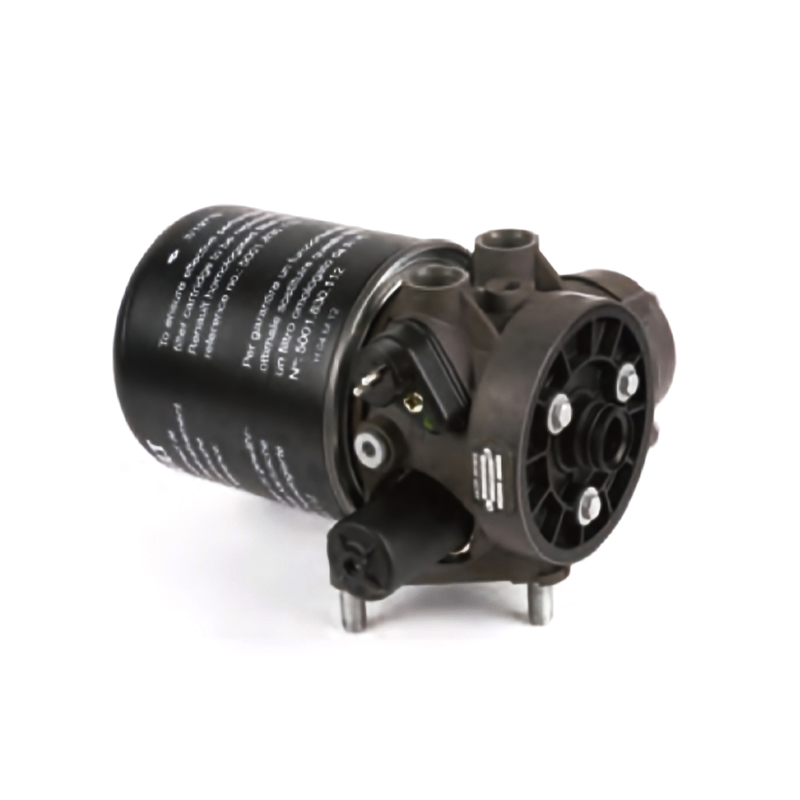
The safety and reliability of a pneumatic braking system are directly related to the driving safety of heavy-duty trucks. In the entire air brake circuit, the Brake Air Dryer plays a vital role. The compressed air produced by the compressor often contains a large amount of moisture, oil particles, and impurities. If these contaminants enter the braking pipeline directly, they will not only lead to rust and seizure of valve components but may also cause icing in winter, leading to the serious consequence of brake failure.
This article will analyze the high-efficiency application of the air brake system air dryer from three dimensions: technical principles, core parameter comparison, and common troubleshooting.
Core Working Principle: Why an Air Dryer is Essential for the System
When the compressor inhales and compresses ambient air, the water vapor in the air condenses into liquid water due to pressure increases and temperature changes. The primary function of the air dryer for truck brakes is to completely remove this moisture before it reaches the air reservoir.
The core internal component is the desiccant beads (usually molecular sieves). As hot, humid compressed air flows through the dryer cartridge, moisture is firmly captured by the desiccant. During the "unload" phase (when the compressor stops pumping), the system uses a small portion of dry reverse airflow to "regenerate" and dehydrate the desiccant, discharging accumulated moisture and oil through the exhaust valve. This is why we hear a sharp "hiss" of exhaust when a truck stops or reaches its pressure limit.
Comparison of Core Parameters and Mainstream Specifications
When selecting or replacing an air brake air dryer, understanding its core technical parameters is crucial. Different vehicle models and operating conditions (such as long-haul transport vs. urban dump trucks) have different requirements for the dryer's processing capacity. Below is a comparison of technical parameters for two mainstream types of dryer configurations:
| Technical Parameter Index | Standard Single Cartridge | Coalescing Twin Cartridge |
|---|---|---|
| Application Scenario | Long-haul transport, conventional air consumption | Frequent braking, high air consumption (e.g., bus, dump truck) |
| Rated Working Pressure | 12.0 bar — 13.0 bar | 12.5 bar — 14.0 bar |
| Max Inlet Air Flow | 350 L/min — 500 L/min | 600 L/min — 800 L/min |
| Oil-Water Separation Efficiency | ≥ 95% (Water) / Conventional De-oiling | ≥ 99.9% (Water) / Deep Coalescing De-oiling |
| Heater Power (24V) | 100W — 120W (with thermostat) | 120W — 150W (with thermostat) |
| Regeneration Air Ratio | Approx. 8% — 10% | Approx. 5% — 7% |
As shown in the comparison, an air dryer brake system with deep coalescing de-oiling functions can more effectively intercept oil contamination from compressor blow-by. Once oil enters the dryer cartridge, it covers the surface of the desiccant, making it permanently ineffective. Therefore, in high-saturation and high-load conditions, upgrading to a twin-cartridge or a dryer with high-efficiency de-oiling is key to reducing pipeline maintenance frequency.
Common Fault Diagnosis and Solution Paths
To help technicians and fleet managers quickly locate problems, the following summarizes the two core faults most commonly encountered during the daily operation of the air brake system air dryer and their solutions:
Frequent Exhausting or Failure to Unload
Phenomenon: The dryer makes frequent exhaust sounds, or the pressure gauge shows the rated pressure has been reached, but the dryer fails to cut off the pumping action.
Analysis: This is usually caused by air leaks in the control line (signal line), a stuck reverse check valve, or worn seals inside the unload valve, preventing the maintenance of the unload signal pressure.
Solution: Check the pipeline from the air reservoir to the dryer control port for leaks; disassemble the unload valve to check if the spring is broken, and replace with a standard maintenance kit if necessary.
Significant Water Accumulation in Air Reservoir
Phenomenon: During daily drainage of the first reservoir (wet tank), a large amount of water or an oil-water mixture is found.
Analysis: This means the air brake air dryer cartridge has reached adsorption saturation. Possible causes include: the cartridge has reached the end of its service life, the integrated heater failed in winter causing the exhaust port to freeze and prevent drainage, or severe oil blow-by from the compressor poisoned the molecular sieve.
Solution: First, test whether the heater is properly powered and heating at low temperatures; second, if the cartridge has exceeded the specified mileage (or over one year), replace it immediately with a new high-performance dryer cartridge.
Efficient Maintenance Cycle Recommendations
The secret to the long-term operation of the air dryer for truck brakes lies in preventive maintenance.
Daily Inspection: After ending operations, manually drain the residue from the bottom of the first air reservoir. If there is continuous water mist, it indicates the dryer performance has declined.
Seasonal Maintenance: In late autumn and early winter, focus on checking the dryer's heating resistor. In cold regions, if the heater is damaged, small droplets will freeze instantly at the exhaust valve, causing the air brake system pressure to be too high or preventing air replenishment.
Regular Replacement: For conventional road vehicles, it is recommended to replace the dryer cartridge every 100,000 to 120,000 kilometers or once a year; for construction vehicles in harsh conditions, it is recommended to shorten the replacement interval to half a year.
Keeping the air brake air dryer clean and efficient is the absolute guarantee for the safety of the truck's braking system. By accurately matching parameters and performing regular maintenance, the service life of the entire vehicle's braking valves can be significantly extended, eliminating hidden dangers in the air circuit system.
Our Main Products
Copyright © Zhejiang Gongzheng Machinery Co., Ltd. All Rights Reserved.
