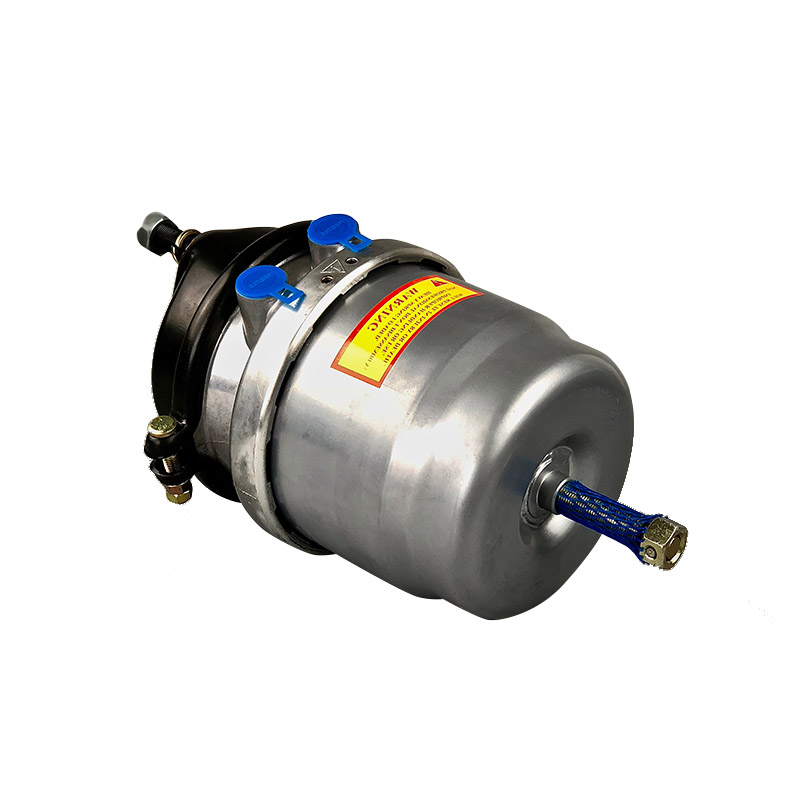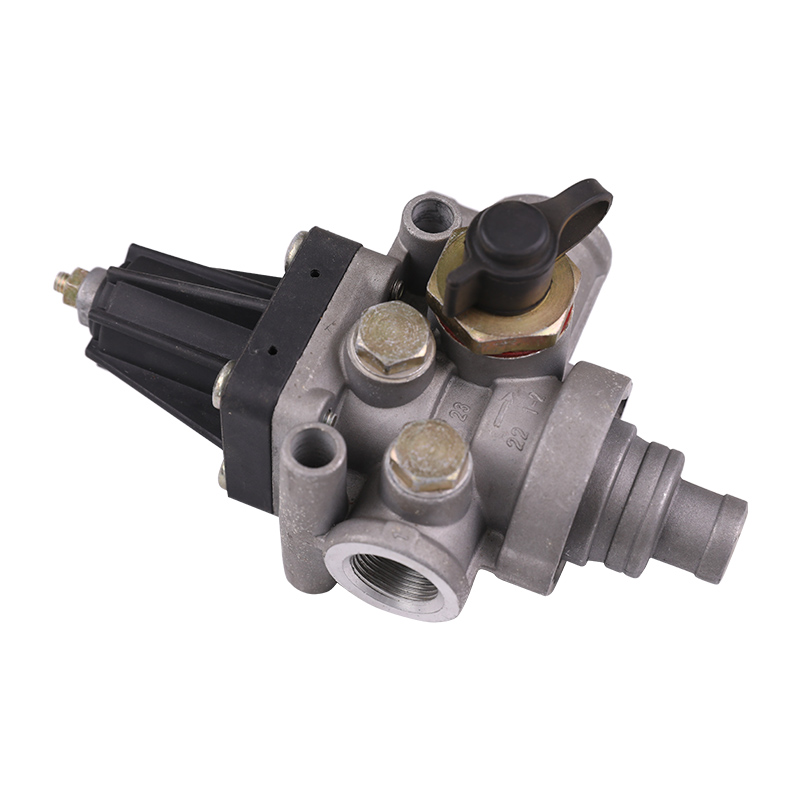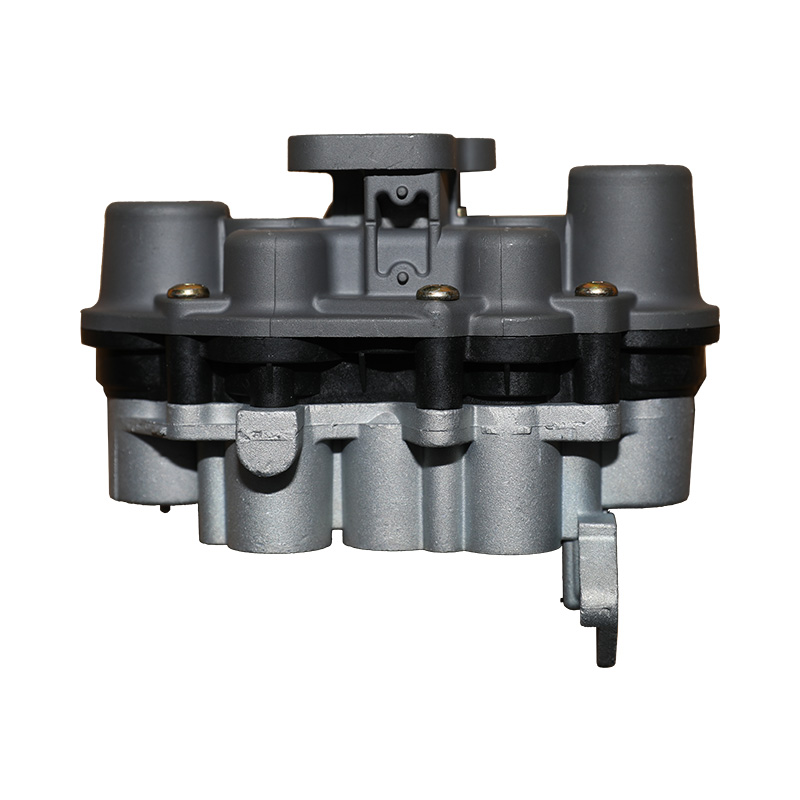
Key Role of Brake Valves in Pneumatic Systems
In the operational framework of heavy machinery, commercial trucks, and large passenger vehicles, the air brake system serves as the core barrier for road safety. Unlike the hydraulic brakes found in passenger cars, air brake systems use compressed air as the power source, distributing, regulating, and releasing pressure through a series of precision-engineered valve bodies. Within this complex network, the brake valve acts as the "commander."
Anatomy of the Air Brake System
The basic working principle of an air brake system involves storing air generated by a compressor in air tanks. When the driver operates the braking device, the brake valve opens the corresponding channels based on the force applied, delivering high-pressure air to the brake chambers. This pushes the brake shoes against the drum or disc surface to generate braking force. If a brake valve fails, the entire pneumatic balance is disrupted, leading to brake lag or total failure.
Defining the Primary Control Valve
The primary brake valve (commonly referred to as the foot valve) is responsible for service braking while the vehicle is in motion. It is a proportional control valve capable of precisely controlling the output pressure according to the depth of the pedal press. However, the foot valve does not work in isolation; it must coordinate with auxiliary control systems to ensure vehicle stability under various conditions.
Function of the HAND BRAKE VALVE
The HAND BRAKE VALVE is an indispensable component of the system, primarily responsible for parking brakes and emergency braking. In trailer operations, it also handles the task of controlling the trailer brakes.
Parking: When the vehicle is stationary, operating the HAND BRAKE VALVE exhausts air from the spring parking brake chamber. This allows a powerful spring to act on the brakes, locking the wheels.
Emergency Braking: If the service brake system (foot brake) fails or leaks air, the driver can operate the HAND BRAKE VALVE to achieve a progressive deceleration, preventing loss of control.
Hill Start Assist: When starting on an incline with a heavy load, the HAND BRAKE VALVE provides stable braking force to prevent the vehicle from rolling backward.
Dynamic Pressure Balance
A functional brake valve must maintain a delicate balance between the reservoir pressure (usually 0.8-1.0 MPa) and the pressure required by the actuators. The internal design of the HAND BRAKE VALVE includes precision return springs and sealing components to ensure that air does not leak when not in operation and that pressure output remains smooth during operation.
Parameter Comparison: Foot Valve vs. HAND BRAKE VALVE
| Performance Parameter | Foot Valve | HAND BRAKE VALVE |
| Main Function | Deceleration and stopping during travel | Long-term parking, emergency braking, trailer control |
| Control Method | Foot pedal, linear proportional control | Hand lever, usually with a locking position |
| Working Pressure Range | 0.4 - 0.8 MPa | 0.6 - 0.85 MPa |
| Response Speed Requirement | Extremely high (milliseconds) | High (requires progressive feel for emergencies) |
| Sealing Requirement | Dynamic seal, allows minimal exhaust | Strict static seal, no pressure drop allowed during parking |
| Exhaust Characteristics | Instant large-flow exhaust when released | Rapid inflation when releasing, exhaust during parking |
| Typical Installation | Cab floor or firewall | Center console or dashboard side |
Common Symptoms of Brake Valve Failure
Brake systems rarely collapse without warning; they usually signal trouble through physical changes, sounds, or pressure fluctuations. For heavy vehicles, timely identification of symptoms in the HAND BRAKE VALVE and related valves is key to preventing major accidents.
Abnormal Air Leakage Sounds
Leakage is the most intuitive sign of a HAND BRAKE VALVE fault, but the source of the sound determines the specific location of the failure:
Continuous Hissing: If a hissing sound persists around the handle or under the dashboard when the HAND BRAKE VALVE is in the "running" position (non-parked), the internal O-rings or valve seat seals are likely worn.
Exhaust Port Leakage: Many hand brake valves feature an exhaust protection valve. If air flows continuously from the exhaust port, it usually indicates the internal piston is not returning properly or is stuck due to debris.
Slow Leak During Parking: If the HAND BRAKE VALVE fails to lock pressure while parked, air will slowly leak from the reservoir, causing a gradual reduction in parking brake force and increasing the risk of rolling.
Delayed Brake Response (Brake Lag)
If there is a noticeable time gap between operating the HAND BRAKE VALVE and the vehicle reacting, it is known as "brake lag."
Cause: Dried lubricant or excessive carbon buildup increases the resistance of the HAND BRAKE VALVE piston movement.
Danger: If the HAND BRAKE VALVE releases too slowly during a hill start, it causes brake drag, wearing down brake drums and increasing fuel consumption.
Insufficient Braking Power
Based on the physical principle where output pressure depends on input minus internal loss, output pressure cannot reach the rated value if the HAND BRAKE VALVE suffers from internal cross-leaking or spring fatigue.
Manifestation: Even with the HAND BRAKE VALVE in the parked position, a heavily loaded vehicle may still move slightly on a slope.
Parameter Change: In a normal state, parking chamber exhaust pressure should drop to 0 MPa; when faulty, pressure may remain around 0.1-0.2 MPa, preventing the brake shoes from fully engaging.
Abnormal Handle Feel (Mechanical Failure)
The feel of the HAND BRAKE VALVE is a direct reflection of its physical state:
Sticking or Jamming: If the handle does not move smoothly, the internal camshaft or return spring may be rusted or unlubricated.
Automatic Snap-back: This is extremely dangerous. If the HAND BRAKE VALVE cannot stay in its set position, the positioning pin or locking mechanism is damaged, which could lead to accidental parking while driving.
Parameter Comparison: Normal vs. Failing Pressure Response
| Monitoring Indicator | Healthy Parameters | Failing Manifestation | Potential Root Cause |
| Release Time | Less than 1.0 second | More than 2.5 seconds or irregular delay | Piston resistance or line blockage |
| Pressure Drop | Less than 5 kPa per hour | More than 20 kPa per hour | HAND BRAKE VALVE internal seal damage |
| Operating Force | 15 - 30 N | Less than 10 N or more than 50 N | Broken spring or internal rust |
| Residual Exhaust Pressure | 0 MPa (Full exhaust) | 0.05 - 0.2 MPa | Restricted piston stroke |
| Dynamic Sensitivity | Linear change with handle | Stepped change or no response | Internal feedback hole blocked |
Failure Inducements and Physical Mechanisms
To understand why the HAND BRAKE VALVE fails, one must look at the physical environment of the pneumatic system.
Pneumatic Contamination and Chemical Erosion
Compressed air often contains moisture, oil mist, and solid particles. When these enter the HAND BRAKE VALVE, they trigger several reactions:
Lubricant Emulsification: Oil from the compressor mixed with condensation causes the specialized grease to lose its properties, making the HAND BRAKE VALVE operation heavy.
Seal Swelling: Non-oil-resistant O-rings swell when exposed to excessive oil mist, causing the piston to jam.
Mechanical Fatigue and Material Degradation
Spring Stiffness Decay: After tens of thousands of cycles, the internal spring's resistance decreases, resulting in insufficient sealing preload.
Valve Seat Erosion: High-velocity air through small gaps creates a "throttling effect," where the airflow erodes the valve seat over time, creating irreversible internal leaks.
Extreme Temperature Impacts
Freezing: In cold climates, moisture inside the HAND BRAKE VALVE freezes, locking the handle mechanism.
High-Temperature Aging: Valves located near the engine or exhaust harden and crack the rubber seals due to heat.
Parameter Comparison: Environmental Impact on Valve Life
| Physical Indicator | Ideal Conditions | Harsh Conditions | Impact on System |
| Seal Hardness (Shore A) | 70 - 75 (Elastic) | Greater than 90 (Brittle) | Leaks at the handle base |
| Friction Coefficient | 0.05 - 0.1 | 0.3 - 0.5 | Increased force, slow response |
| Spring Length Change | Less than 0.5% | Greater than 2.0% (Permanent) | Insufficient locking torque |
| Internal Buildup | Less than 0.01 mm | Greater than 0.5 mm | Blocked exhaust, brake drag |
| Design Cycle Life | Over 200,000 cycles | Under 50,000 cycles | Increased maintenance costs |
Diagnostic Procedures and Key Tools
Standardized diagnosis ensures you don't replace a functional HAND BRAKE VALVE due to an external issue.
Static Soap Bubble Test
Apply soapy water to the HAND BRAKE VALVE handle base, pipe joints, and exhaust port. If continuous bubbles form at the handle base in the "run" position, the shaft seal has failed.
Pressure Drop Observation
Monitor the system for 5 minutes with the engine off. The pressure drop should not exceed 7 kPa/min. Test the HAND BRAKE VALVE independently by disconnecting trailer lines to rule out trailer-side leaks.
Response Time Test
Measure the time from handle operation to brake chamber movement. A healthy system completes this in under 1 second. Times exceeding 2 seconds indicate internal obstruction or poor lubrication.
Parameter Comparison: Professional Tools vs. General Inspection
| Test Item | General Experience | Precision Instrument | Critical Threshold |
| External Leakage | Listening for hissing | Ultrasonic Leak Detector | Greater than 50 mL/min |
| Output Sync | "Feels strong" | Dual-channel Gauge | Difference over 0.05 MPa |
| Back Pressure | Check for debris | Pressure Sensor | Greater than 0.02 MPa |
| Force Stability | "Feels stiff" | Digital Torque Meter | Fluctuation over 10 N |
| Response Cycle | Visual feedback | Oscilloscope curve | Steps or oscillations in curve |
Preventive Maintenance and System Care
To extend the life of the HAND BRAKE VALVE, focus on "Dryness, Cleanliness, and Lubrication."
Air Dryer Maintenance: Replace the dryer cartridge every 30,000 km or as per operating conditions.
Manual Tank Drainage: Even with automatic valves, pull the manual drain weekly. If the discharge is milky or contains metal flakes, the HAND BRAKE VALVE seals are at risk.
Regular Function Cycling: For vehicles parked long-term, operate the HAND BRAKE VALVE periodically to prevent seals from sticking to the valve seat.
FAQ:
Why does my hand brake valve make a loud "POP" when I release it?
This is usually normal. When you release the HAND BRAKE VALVE, the system rapidly exhausts air from the parking chambers. If the sound becomes muffled or disappears, the exhaust port may be clogged with sludge.
Can I replace just the internal O-rings instead of the whole valve?
Yes. Repair kits (Seal Kits) are available. These cost about 15% - 25% of a complete unit, but require an extremely clean environment for installation.
Do the parking and service brakes use the same brake pads?
Yes. On most air-braked trucks, they share the same drums/discs and shoes. The difference is the power source: foot brakes "push" with air, while parking brakes (controlled by the HAND BRAKE VALVE) "release" air to let springs apply the brakes.
Why does the hand brake valve freeze in winter?
This is a sign of excessive moisture in the lines. Water freezes at the valve core. Never use an open flame to thaw the HAND BRAKE VALVE, as it will destroy the rubber seals.
If I find a small leak, can I keep driving?
Highly discouraged. A small leak in the HAND BRAKE VALVE can lead to sudden pressure loss. If pressure drops below 0.45 MPa, the parking brakes may automatically lock while driving, causing a dangerous wheel lock-up.
Science Table: Judging Valve Status via Gauge Readings
| Gauge Behavior | Physical State | Suggested Action |
| Slow pressure rise after start | Serious leak in HAND BRAKE VALVE "run" position | Check exhaust port for air flow |
| Pressure gone overnight | Static system leak | Perform soap bubble test |
| Pressure drops sharply on operation | Ruptured line or massive internal bypass | Stop immediately; do not drive |
| Pressure jitters around 0.7 MPa | Half-open valve or fatigued spring | Replace valve core or assembly |