Introduction: The Driver's Primary Brake Control
When you press the brake pedal in a heavy truck, you are not pulling a cable or pushing fluid through a hose. You are operating a foot brake valve, also called a treadle valve, that sits under the cab floor or on the firewall. This valve controls how much compressed air from the air tanks reaches the brake chambers at each wheel. Push the pedal further and the valve sends more air, producing stronger braking. Release the pedal and the valve opens its exhaust port, letting the air out so the brakes release.
That simple description is the core answer to the question "what does a foot brake valve do?" It is the driver's primary control for the service braking system. Understanding what happens inside the valve helps you diagnose failures, choose a replacement, and appreciate why modern trucks use dual-circuit designs.
How a Foot Brake Valve Works in an Air Brake System
Inside the valve, a system of pistons and springs translates pedal travel into air pressure. When the pedal is at rest, the inlet is closed and the exhaust port is open, so no pressure reaches the brake chambers. When you press the pedal, the force compresses the valve's internal spring, which shifts a piston. This opens the inlet port and closes the exhaust port. Compressed air from the supply tanks then flows past the valve into the service brake lines.
Try thinking of it as a precise faucet for air. The deeper you push the pedal, the more the valve opens, and the higher the delivery pressure at the brake chambers. Because the output pressure is proportional to pedal position, you can apply light braking for a gentle stop or full pressure for an emergency stop. A foot brake valve cannot deliver more pressure than what is stored in the air tanks, so system pressure is always the ceiling.
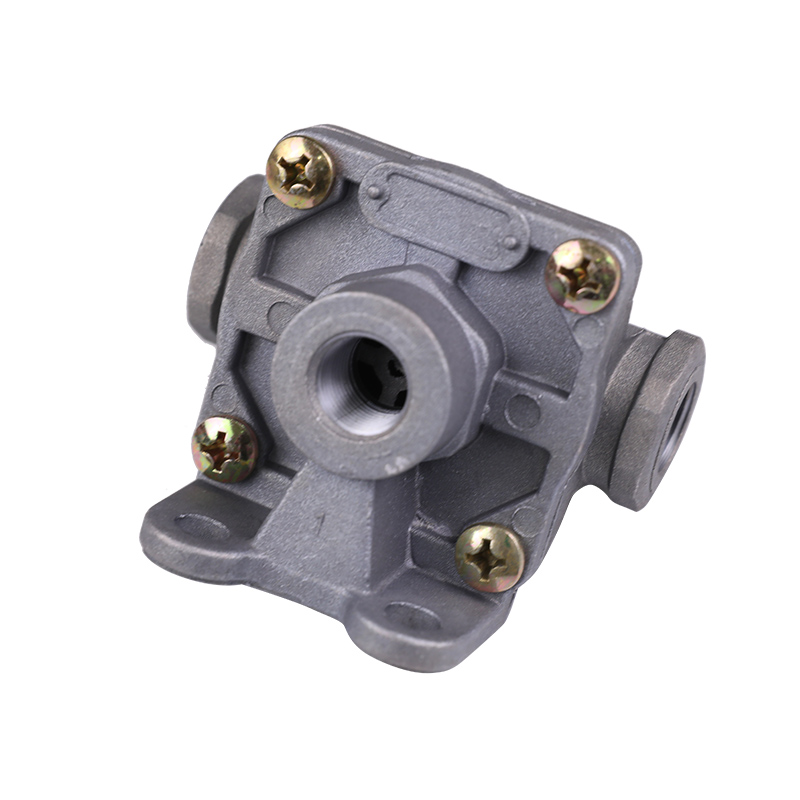
From the valve, the air travels in two directions: directly to some brake chambers and, on many trucks, to a relay valve that serves the rear axle or trailer. The relay valve receives a control signal and uses local air supply to fill the brake chambers faster, which shortens response time. For a closer look at this component, see how a relay valve works with the foot brake valve in an air brake system.
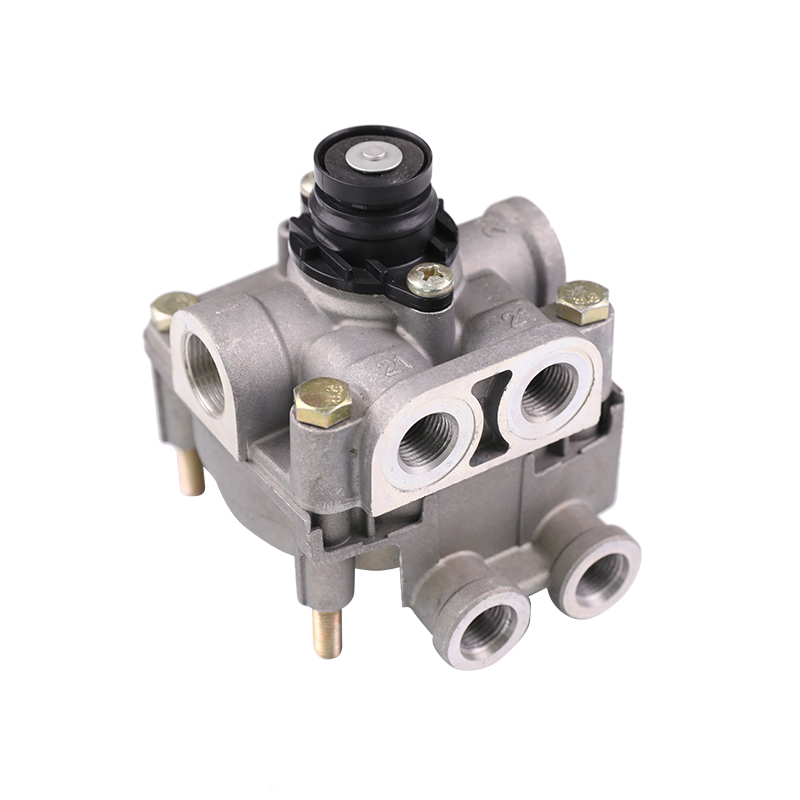
If you want to dive deeper into the internal movement of the valve itself, read our detailed foot brake valve principle guide.
Mounting Styles: Floor-Mounted vs. Overhead
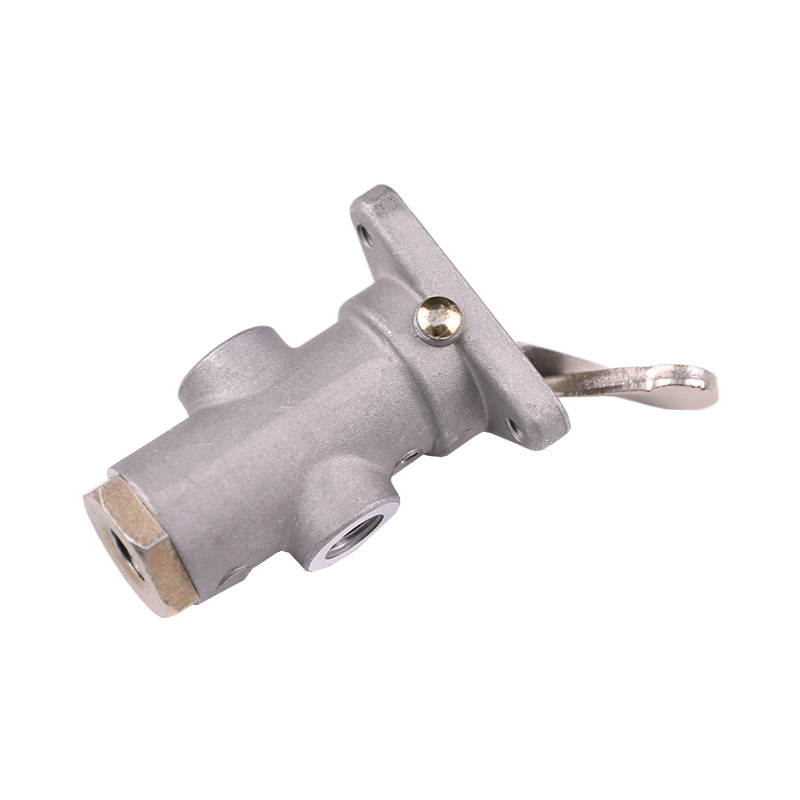
Foot brake valves are built in two common mounting configurations. A floor-mounted valve has a treadle that sits flat on the cab floor, with the pedal plate angled so your foot rests naturally on it. This design is common on conventional trucks and gives the driver a direct, stable pivot point. An overhead style uses a hanging pedal that drops from the underside of the dashboard, often on cab-over trucks where floor space is tight. The internal function is the same in both styles, but the treadle mechanism differs, so a replacement valve must match the original mounting type.
The Dual-Circuit Design: Why Redundancy Matters
Modern air brake systems use dual-circuit foot brake valves for a clear safety reason: redundancy. A dual-circuit valve has two independent supply ports and two independent delivery circuits. One circuit typically serves the front brakes, while the other serves the rear brakes, or one serves the tractor and the other serves the trailer. If a line fails on one circuit, the other circuit continues to supply air, so the driver retains partial braking ability.
This is not the same as full braking power. A single failed circuit reduces total brake force, but it keeps the vehicle controllable enough to slow down and pull off the road. Older single-circuit valves lack this protection; a leak in the only circuit means a complete loss of service braking. For that reason, dual-circuit valves are now the standard in commercial vehicle air brake systems, and the same logic applies whether you are replacing a valve on a straight truck, a tractor, or a heavy-duty trailer combination.
Foot Brake Valve vs. Hand Brake Valve: What's the Difference?
Drivers often confuse the foot brake valve with the hand brake valve because both are mounted inside the cab. The division is simple: the foot brake valve controls the service brakes on the entire vehicle, including the trailer on a combination. The hand brake valve, usually mounted on the steering column, controls only the trailer service brakes or the trailer parking brakes. It is not a substitute for the foot brake valve.
Using the hand brake valve while the vehicle is in motion can cause the trailer brakes to overheat or wear unevenly, because the valve is not designed for continuous service braking. The foot brake valve is the primary control and should be used for normal and emergency braking. During pre-trip checks, verify that both valves respond properly and that the hand brake returns fully to the released position.
Types of Foot Brake Valves
In the aftermarket, you will see foot brake valves labeled as Type A, Type B, or Type E. These designations refer to the internal circuit layout and the era of vehicle they were designed for. The table below summarizes the differences in plain language.
| Type | Circuit Design | Typical Application |
|---|---|---|
| Type A | Single circuit | Older vehicles and some light-duty air brake systems |
| Type B | Dual circuit | Most modern trucks and tractors |
| Type E | Dual circuit with improved control | Newer heavy-duty vehicles and replacement upgrades |
When you replace a foot brake valve, never guess the type. Check the original part number, count the air ports, and match the circuit configuration. Installing a single-circuit valve where a dual-circuit valve is required creates a serious safety hazard.
Common Foot Brake Valve Problems and What They Mean
Foot brake valve failure usually shows up through one of three symptoms. Each symptom is tied to a physical problem inside the valve or its connections.
- Slow or weak braking response. If the truck takes longer to stop or the pedal feels soft, the valve may not be opening far enough, or the inlet port may be partially blocked. Low supply pressure in the tanks can also cause this, so check system pressure first. If pressure is fine, inspect the valve inlet for contamination or internal damage.
- Brake drag. Brakes that stay partially engaged after you release the pedal point to an exhaust problem. If the exhaust port is blocked with dirt or the return spring is weak, the air cannot escape and the brake chambers stay pressurized. Check for a sticking pedal and listen for a delayed or absent exhaust hiss when the pedal is released.
- Air leaks. A steady hiss around the valve or under the cab means air is escaping past a seal, a fitting, or a cracked housing. A soap-and-water solution applied to the valve body and the air line connections will produce bubbles at the leak point. Small leaks can become sudden failures, so address them before putting the truck back into service.
These checks are the starting point. If the valve itself is faulty, repair it or replace it with a certified unit.
What to Look for When Choosing a Replacement Foot Brake Valve
When you are ready to buy, focus on the specifications that affect fit and durability. First, confirm the circuit count. Does your truck use a single-circuit or dual-circuit foot brake valve? In almost every modern commercial vehicle, the answer is dual-circuit, but verify the original part and the air port layout. Second, match the mounting style and pedal geometry so the replacement installs without modifying the cab floor or dash. Third, examine the valve body and seals. A cast aluminum body with high-quality rubber seals holds up better in harsh conditions than thin stamped housings.
Supplier qualification matters as much as the part specification. Zhejiang Gongzheng Auto Parts Factory operates under IATF 16949:2016 and ISO/TS 16949:2009 certifications, which means its production process is documented and audited for consistency. Manufacturers that supply original equipment to truck brands such as FAW, JAC, Auman, and Dongfeng follow the same quality discipline required by commercial vehicle OEMs. That level of control reduces the chance of getting a valve that leaks, sticks, or fails early.
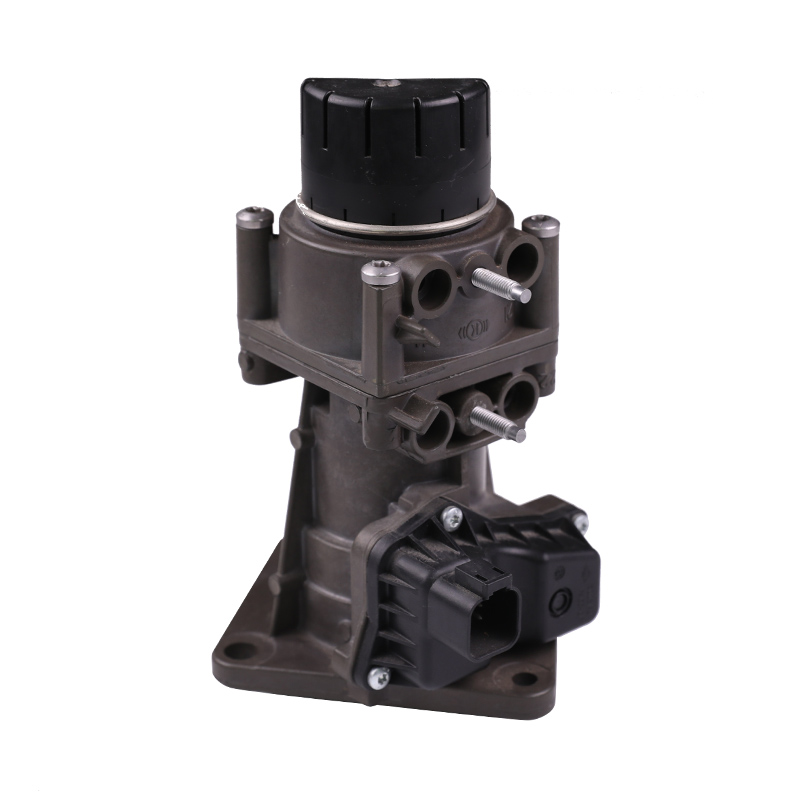
If you are comparing replacement options, browse our foot brake valve collection to see dual-circuit models and mounting styles that fit common truck platforms.
Conclusion
A foot brake valve is the driver's main interface with the air brake system. It converts pedal position into precise air pressure, sends that pressure to the service brakes, and exhausts the air when you release the pedal. Dual-circuit designs protect against total brake loss, and knowing the difference between foot and hand brake valves keeps drivers from misusing the wrong control. When a valve shows signs of slow response, drag, or leakage, inspect it before it becomes a road hazard. When replacing a valve, match the circuit type and mounting style, and choose a supplier with a certified quality system.