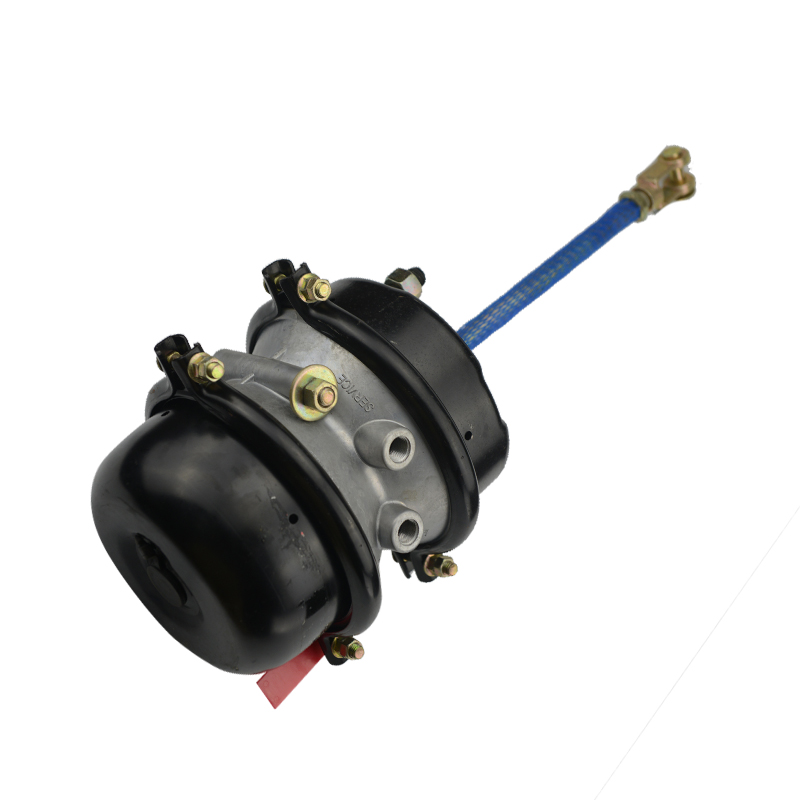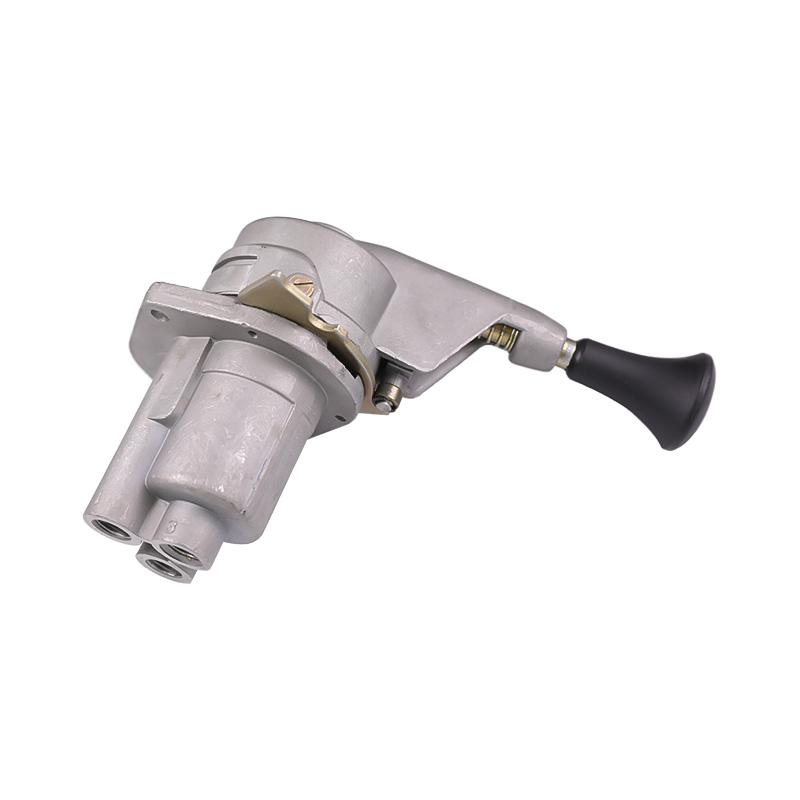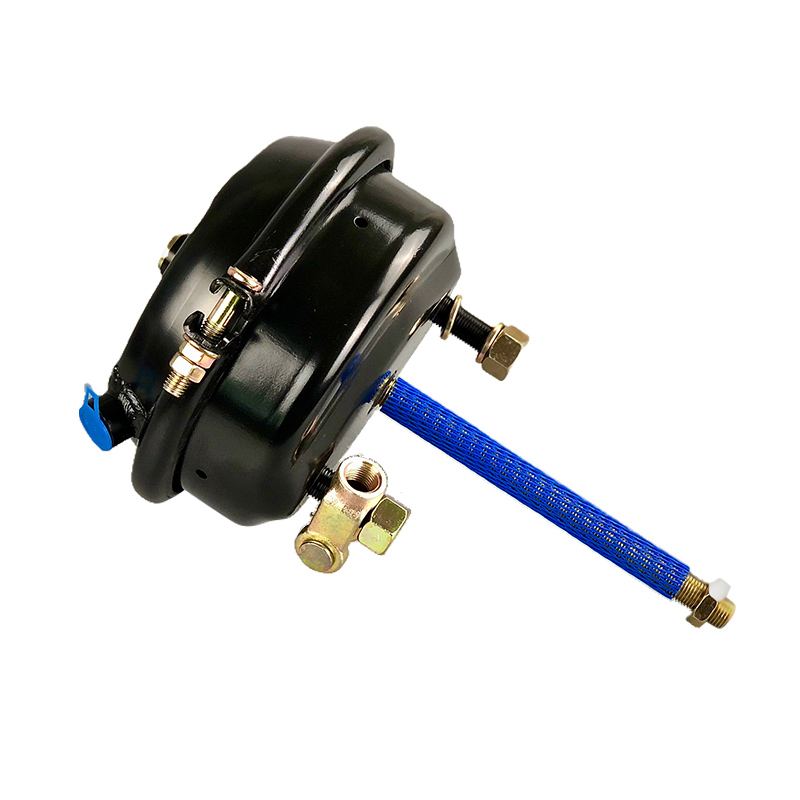
HAND BRAKE VALVE Core Definition and Basic Functions
What is a Hand Brake Valve?
The HAND BRAKE VALVE is a multi-way pneumatic manual directional control valve, typically installed on the control console within the driver's reach. Its primary function is to control the volume of compressed air within the Spring Brake Chamber. In commercial vehicles and heavy machinery pneumatic braking systems, it is the only control component that allows the driver to manually intervene directly in the parking state.
Command Center in the Cab
The driver manipulates the HAND BRAKE VALVE to achieve braking control over the entire vehicle, especially the rear axles and trailers. It not only handles the mechanical locking function when the vehicle is parked but also serves as a secondary braking backup during emergency driving conditions.
Difference from Foot Brake Valves
Unlike traditional hydraulic handbrakes in passenger cars or foot-operated service brakes, commercial vehicles utilize an "inverted braking" logic: Driving State: The HAND BRAKE VALVE delivers compressed air from the air reservoir to the spring brake chamber, compressing the heavy-duty spring to release the brake shoes. Parking State: The HAND BRAKE VALVE exhausts the air from the control line. The spring brake chamber then relies on the mechanical thrust of the internal heavy-duty spring to automatically lock the brakes. This design ensures that if a major air leak occurs in the pneumatic system, the system controlled by the HAND BRAKE VALVE will automatically lock the vehicle, preventing accidental rolling.
HAND BRAKE VALVE Internal Structure and Precision Components
Body Material
A high-quality HAND BRAKE VALVE must maintain extreme sealing integrity under fluctuating temperatures and high-frequency operation. The Valve Body is mostly made of high-strength die-cast aluminum alloy, with an anodized surface to resist moisture and corrosion inside the cab.
Key Internal Components Detailed
Cam and Linkage Mechanism: Converts the driver’s rotational or push-pull movement into the linear motion of the piston. Inlet Valve and Exhaust Seat: Responsible for opening and closing Port 11 (Inlet) and Port 21 (Outlet). Piston, Spring Seat, and Sealing Rings: Ensure the precision of internal air circuit switching. Silencer: Located at the exhaust port (Port 3) of the HAND BRAKE VALVE, it reduces the sharp noise generated by the sudden release of air during parking.
Multi-Port Design
Detailed port positioning: Port 11 (Inlet Port): Connects to the parking air reservoir; air must be dry and filtered. Port 21 (Delivery/Control Port): Connects to the relay valve or directly to the spring brake chamber. Port 3 (Exhaust Port): Responsible for venting the circuit air into the atmosphere.
Pneumatic Logic: How Does the HAND BRAKE VALVE Work?
Releasing the Brake (Charging)
When the driver moves the HAND BRAKE VALVE to the "Running Position," the internal inlet piston is pushed open, connecting Port 11 to Port 21. Compressed air rapidly fills the spring chamber, overcoming the spring's pre-load tension. At this point, the brakes are released.
Parking Brake State (Exhausting)
When the handle is moved back to the "Parking Position" and locked, the HAND BRAKE VALVE cuts off the inlet path from Port 11 and simultaneously opens the channel between Port 21 and the Port 3 exhaust. The compressed air in the spring chamber is rapidly vented through the valve body, allowing the heavy-duty spring to achieve a mechanical lock.
Graduatable Control
Premium HAND BRAKE VALVE units feature graduatable control. During the handle's movement, the output pressure at Port 21 decreases linearly with the handle angle. This allows the driver to achieve smooth emergency deceleration by slowly modulating the air exhaust if the service brakes fail.
Core Technical Parameter Comparison: Standard vs. Enhanced
| Performance Metric | Standard HAND BRAKE VALVE | Enhanced (Multi-function) HAND BRAKE VALVE |
| Max Rated Working Pressure | 8.5 bar | 12.0 bar - 13.0 bar |
| Operating Temperature Range | -40°C to +80°C | -50°C to +100°C |
| Max Deflection Angle | Approx. 75° - 90° | 100° - 110° (Including Test Position) |
| Exhaust Flow (at 6 bar) | 250 - 350 L/min | 450 - 600 L/min |
| Seal Material | Nitrile Rubber (NBR) | Fluororubber (FKM) or Special Silicone |
| Service Life Cycle | 500,000 operations | 1,000,000 operations |
Key Safety Features: Automatic Locking and Test Position
Safety Locking Device
To prevent accidental rolling caused by passengers or drivers mis-touching the controls, the HAND BRAKE VALVE handle usually features a "pull-to-unlock" or "press-to-unlock" mechanism. The handle can only be shifted from the parking to the driving position after overcoming specific mechanical resistance.
Test Position
In tractor-trailer combinations, this position is used to test if the tractor's brakes alone can hold the entire loaded vehicle. In this mode, the HAND BRAKE VALVE supplies air to the trailer to release its brakes while keeping the tractor brakes applied, ensuring safety during hill starts or extreme parking conditions.
Emergency Braking Function
If the service brake fails, the HAND BRAKE VALVE acts as the "last line of defense," controlling vehicle deceleration through gradual air exhaustion.
Common Types and Application Scenarios of HAND BRAKE VALVE
Single-Control vs. Double-Control Valves
Different air circuit logic configurations are used depending on whether the vehicle is a rigid truck or a tractor-trailer combination.
Integrated Relay Valve Type
Modern heavy trucks often use an integrated design to improve response speed and reduce transmission delays across long pneumatic lines.
Installation, Calibration, and Routine Maintenance
Installation Standards
Torque Control: When screwing air pipe fittings into the valve, the precise torque must be applied according to thread specifications (e.g., M16x1.5) to prevent cracking the aluminum body. Sealing Check: After installation, a pressure test at 12 bar must be maintained for 5 minutes to ensure zero bubble formation.
Maintenance Cycle and Parameters
| Maintenance Item | Daily/Weekly Inspection Standard | Deep Maintenance Parameters (Yearly) |
| Operation Torque | Smooth movement | 2.5 - 5.0 N·m |
| Static Leakage Rate | 0 bar/min (Audible) | Lower than or equal to 5 cm3/min |
| Exhaust Time | Instantaneous | 7 bar to 0 bar in 1.5s or less |
HAND BRAKE VALVE Troubleshooting and Diagnostics
Symptom 1: Continuous Leaking at the Exhaust Port
Analysis: Worn O-rings inside the valve, improper sealing of the inlet valve seat, or a ruptured diaphragm in the downstream spring brake chamber causing back-leakage.
Symptom 2: Handle Difficult to Return or Jammed
Analysis: Worn internal positioning cams or a broken safety lock spring. Manual tethering is strictly prohibited; the entire assembly must be replaced.
Symptom 3: Slow Brake Release
Analysis: Clogged inlet filter, restricted piston stroke, or kinks and restrictions in the air lines.
FAQ: Common Questions Regarding HAND BRAKE VALVE
Q: Why does my HAND BRAKE VALVE freeze in winter?
Knowledge: This is usually due to moisture in the pneumatic system freezing inside the valve. As compressed air passes through the valve ports, the temperature drops further. It is recommended to check the air dryer cartridge and regularly drain the air reservoirs.
Q: Do I need to "bleed" the system after replacing a HAND BRAKE VALVE?
Answer: Pneumatic systems do not require "bleeding" like hydraulic systems, but a comprehensive airtightness pressure test is mandatory to ensure all fittings are leak-free.
Q: If air is leaking from the hand valve, is the valve definitely broken?
Knowledge: Not necessarily. If air leaks while the brakes are released, it could be an "illusion" caused by a downstream component (like the spring brake chamber) leaking air back through the control line and out of Port 3 of the HAND BRAKE VALVE.
Q: Why is there a loud "hiss" when releasing the handbrake?
Knowledge: This is normal. When switching to the parking position, the valve body must rapidly exhaust about 8 bar of compressed air from the control lines. The high-speed airflow creates this sound as it passes through the silencer.
Q: How can I tell if the internal seals of the HAND BRAKE VALVE are aging?
Knowledge: Check for oil stains oozing from the base of the handle. Since the air circuit contains trace amounts of compressor oil, aging seals will allow oil vapor to leak out. Additionally, if parking pressure drops significantly overnight, the valve's integrity should be inspected.